The tear bottle was not a Victorian mourning clock
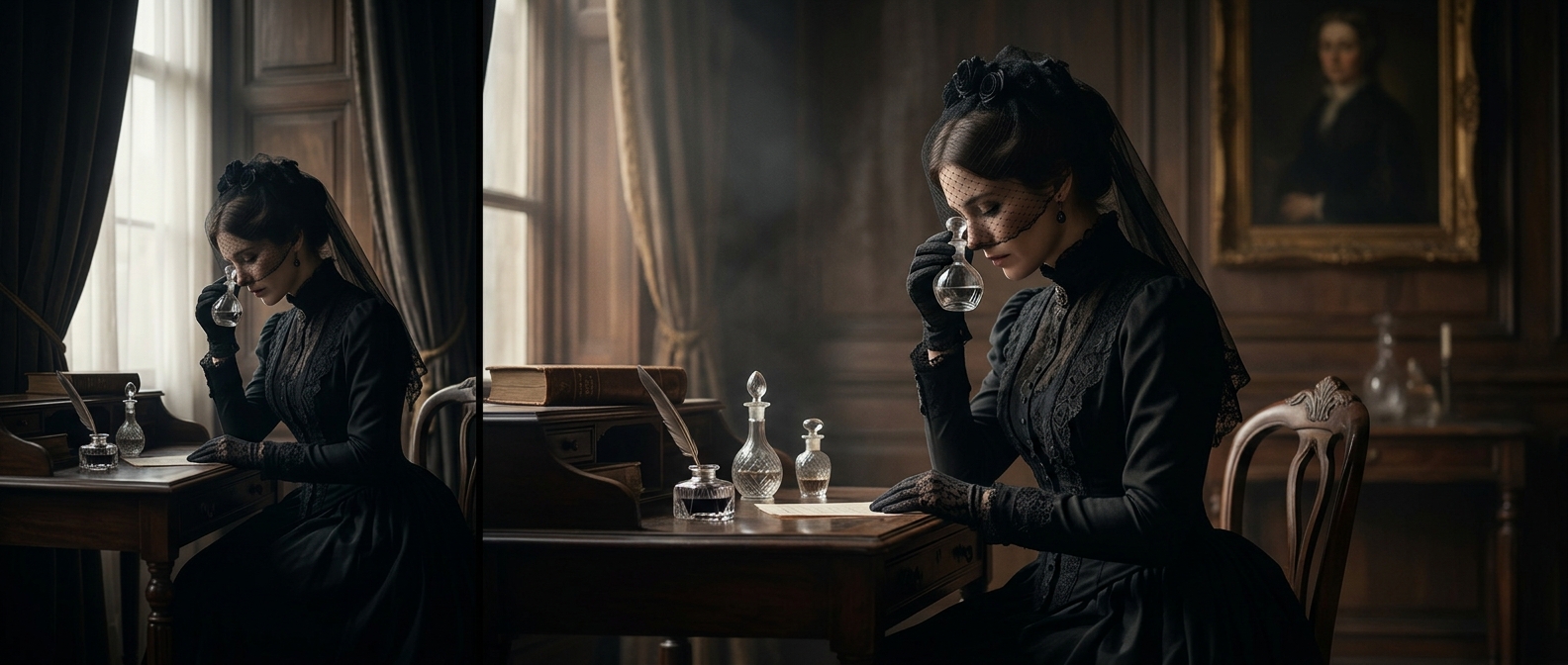
The story is appealing because it turns an invisible emotion into something a family could watch: collect tears, wait for the bottle to dry, and then end mourning. But there is little reliable evidence that Victorians commonly followed this ritual. Small glass vessels now marketed as “tear catchers” are often presented as proof, yet their historical use is uncertain—and many similar ancient bottles were containers for perfume, oil, or other substances, not tears.
Why the story sounds convincing
Victorian mourning really was highly visible and carefully marked. After a death, people observed conventions around clothing, social visits, and the length of mourning, especially following the loss of a close relative. Keepsakes could make grief tangible too: mourning jewelry sometimes incorporated a lock of the dead person’s hair. A bottle said to hold tears fits neatly into that world of objects and rules.
That fit, however, is not evidence that the custom existed. The claim may have grown from later interpretations of old glass vessels and from the broader association between tears and mourning. Repetition in popular accounts can make a plausible story seem like a documented practice.
What the bottles can—and cannot—tell us
A small stoppered vessel shows that someone made or used a small vessel; by itself, it cannot establish what went inside or what its owner believed it meant. Nor does the existence of elaborate mourning customs prove that families timed grief by waiting for tears to evaporate.
The distinction matters: Victorian mourning had real rules and rituals, but the tear bottle’s “visible timer” is best treated as a romantic legend, not a reliable account of how people ended mourning.