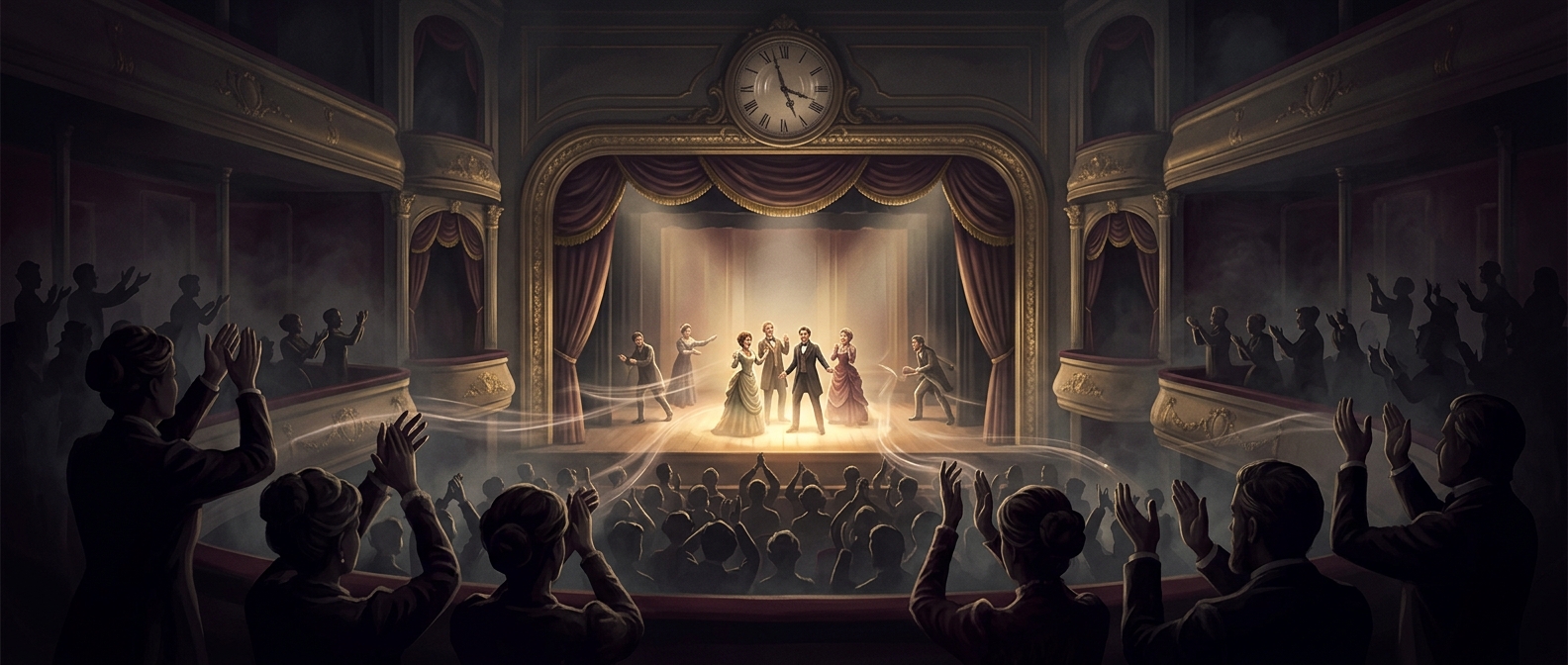
A performance could become a conversation
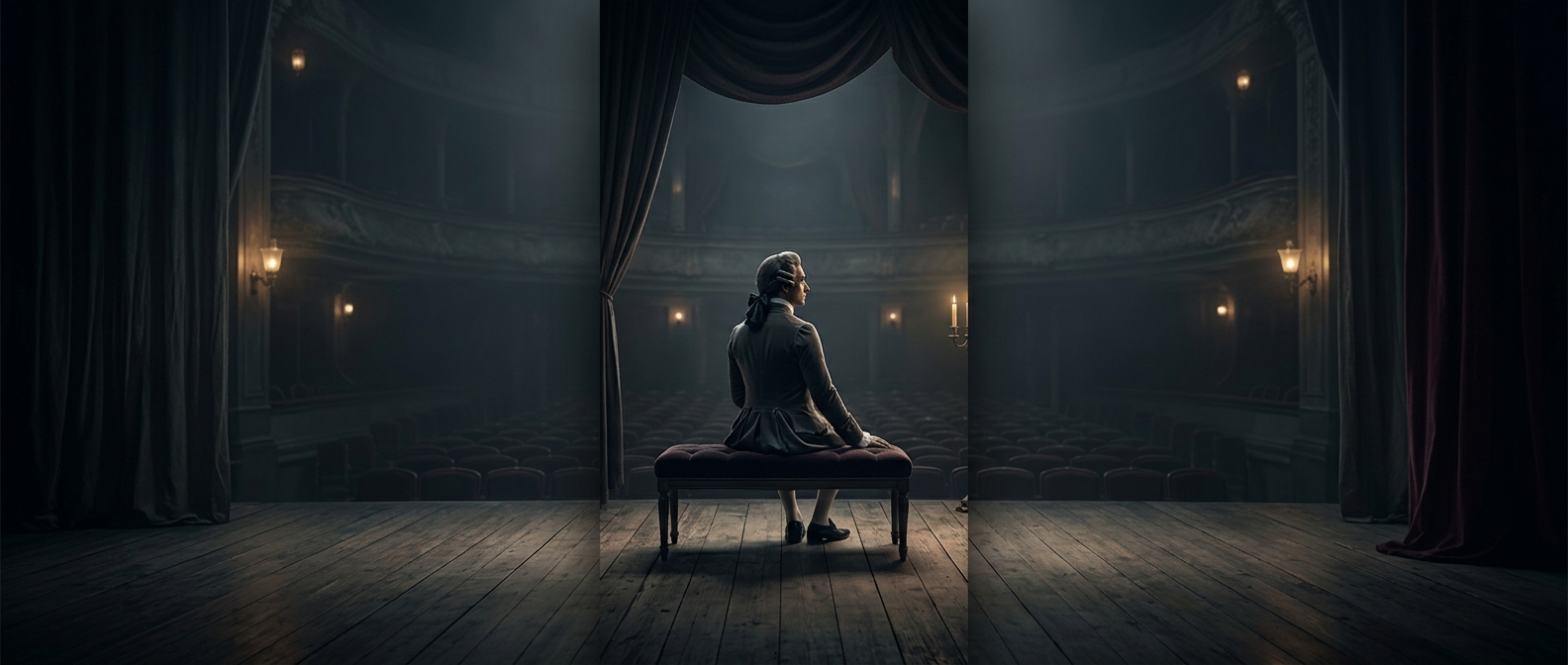
In a live theater, the audience’s response was part of the event, not something saved for after the curtain. If a speech landed especially well, spectators could call for it again while the actors were still onstage. The performance might pause as the demand rose, then resume with the popular passage repeated.
That made a play less like a fixed sequence delivered without interruption and more like a shared occasion. The actors had to read the room: continue through the noise, wait for it to settle, or return to a speech the crowd wanted to hear once more. A repeated monologue could bring the action to a halt, but it also gave the audience a direct way to show which moments mattered to them.
The encore changed the rhythm
A monologue is a sustained speech by one character, often a point at which the play concentrates attention on a single voice. Repeating it gave spectators another chance to savor its language or performance, while delaying whatever came next in the plot. The interruption therefore had a small but real consequence: the night’s pacing could be shaped by the crowd as well as by the script.
The scene’s memorable feature is that appreciation was audible and immediate. Instead of waiting until the play was over to praise a performer, an audience could ask for the moment itself to happen again.