A villain had to read from the back row
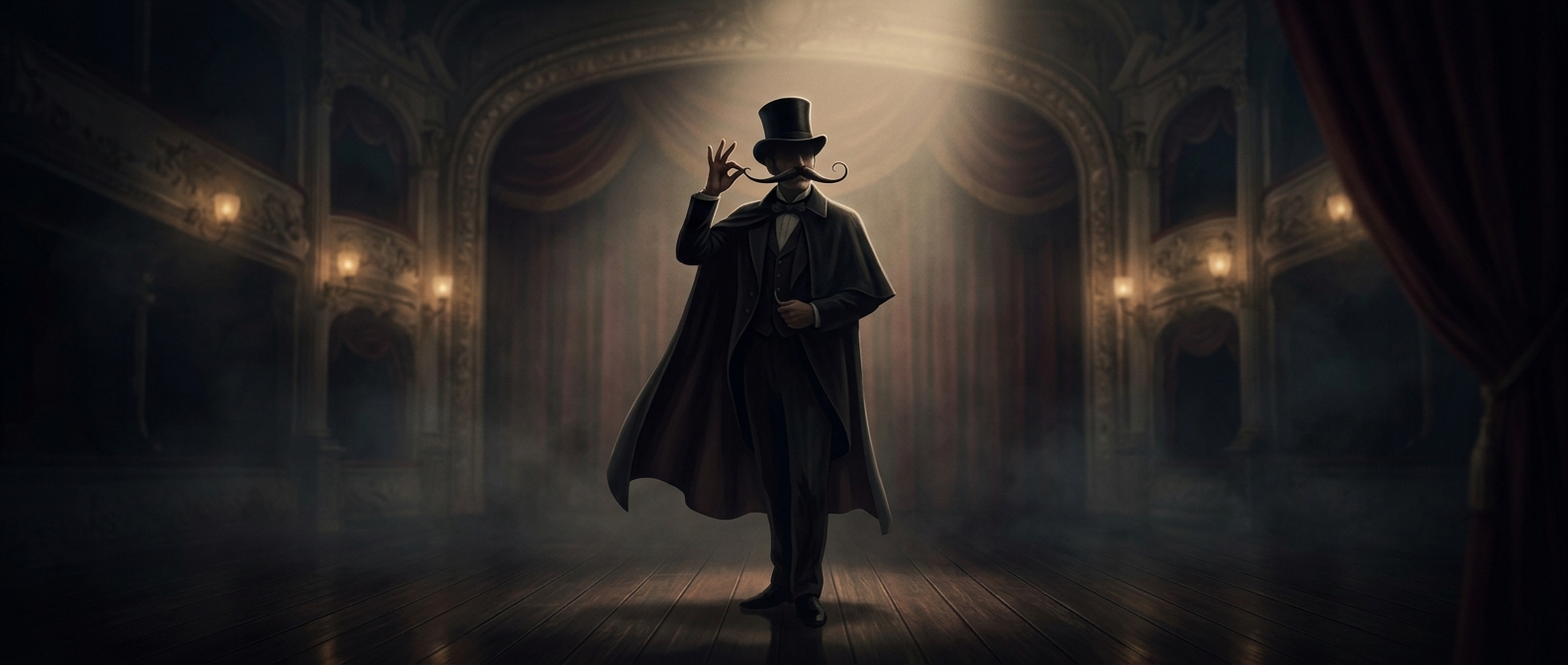
In melodrama, a character’s moral role often needed to register before the plot had time to explain it. The audience might be watching from far from the stage, where subtle expressions and small costume details could disappear. A sharply curled mustache made the villain’s face more legible at a glance: it exaggerated the mouth and gave the actor a distinctive silhouette.
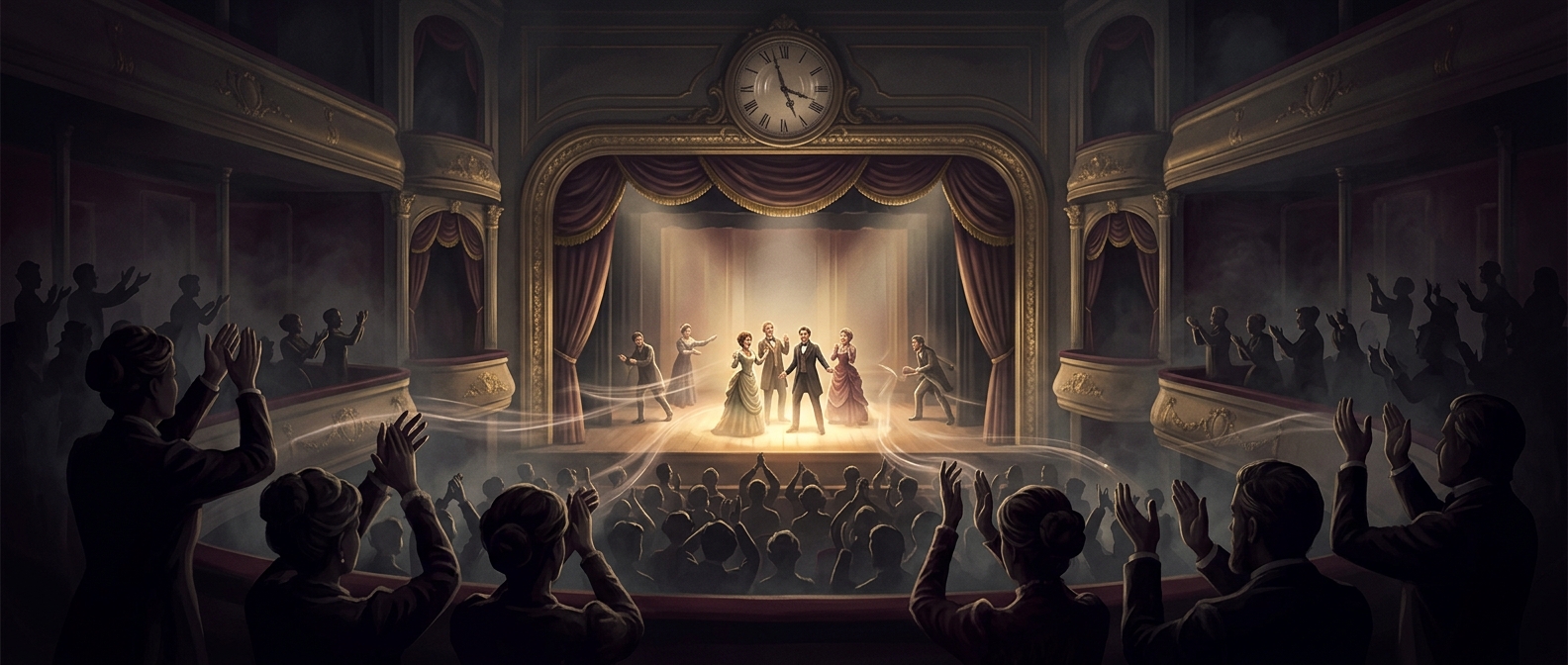
That visual clarity fit melodrama’s broader style. Performers used enlarged gestures and emphatic expressions, while costumes helped sort characters into recognizable types. A virtuous heroine, a threatened victim, and a scheming antagonist were not meant to be mysteries for long. The mustache worked as a quick cue in a theater built around clear, visible contrasts.
A small feature in a world of big signals
The curl was not a secret code with one fixed meaning, nor did every stage villain wear one. It was part of a shared theatrical vocabulary: a familiar look that could make an antagonist seem theatrical and calculating before he spoke. The story then supplied the evidence of his character through his actions.
That is why the image outlasted the particular conventions that produced it. Once audiences learned to connect the curled mustache with a stock villain, illustrators and later performers could use it as visual shorthand too. A few curls above the lip could do, in a single glance, the work of an introduction.