Patolli Turned a Toss Into a Wager
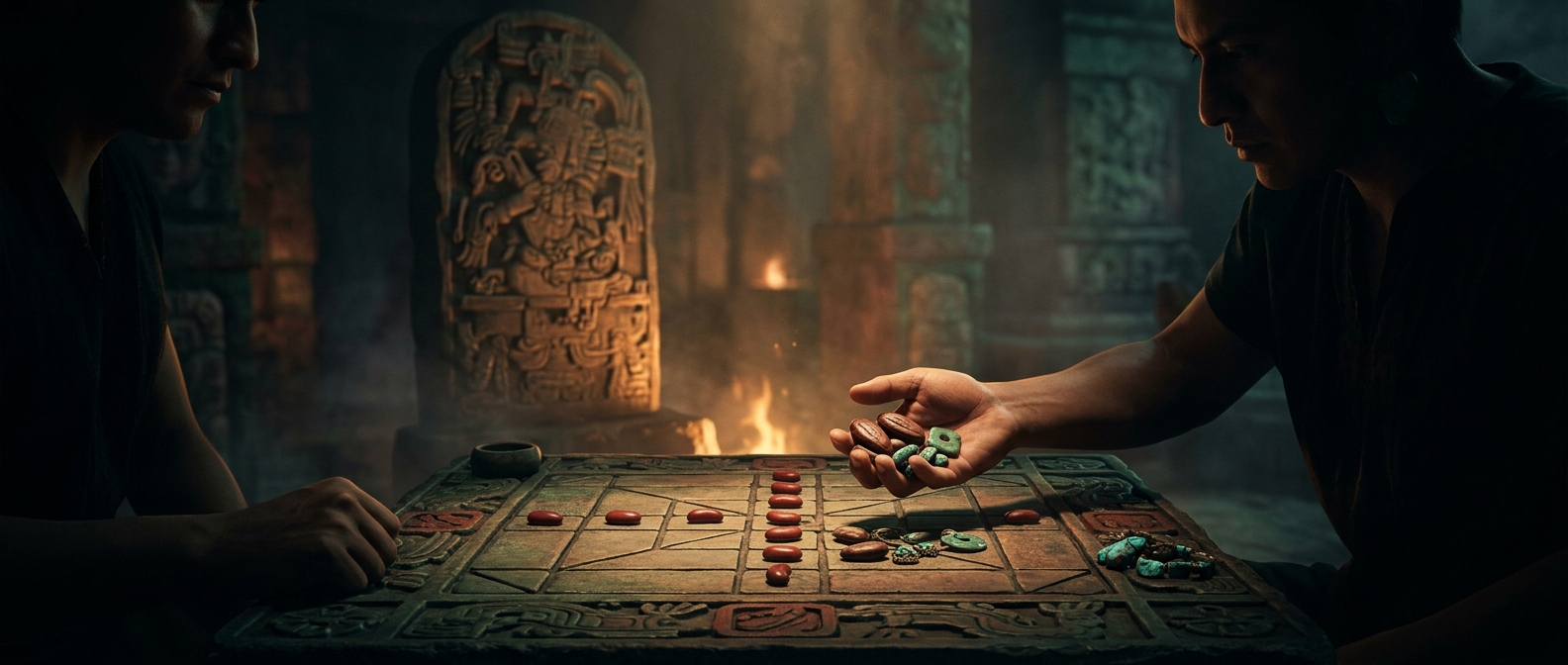
Patolli, a game played in pre-Columbian Mesoamerica, used a cross-shaped board, small markers, and beans marked so their landing positions could determine how far a player moved. The beans served much like dice: players could plan where to move, but they could not choose the result of a toss. A favorable throw might advance a marker; an unfavorable one could leave a player exposed or force a costly setback.
Chance Made the Stakes Personal
The game’s uncertainty helped make it a gambling contest, not just a test of strategy. Players could wager possessions such as clothing or a home, and accounts of the game describe freedom itself among the possible stakes. That meant a sequence of throws could have consequences well beyond losing a turn: a player might risk something essential in hopes of winning from an opponent.
The cross-shaped path made the contest visible and social, while the beans kept its outcome unpredictable. Players could make choices about their markers, but each turn began with a toss they could not control. The striking part of patolli is that the same simple motion—a handful of marked beans landing on a mat—could decide whether someone gained an advantage or lost something as fundamental as liberty.