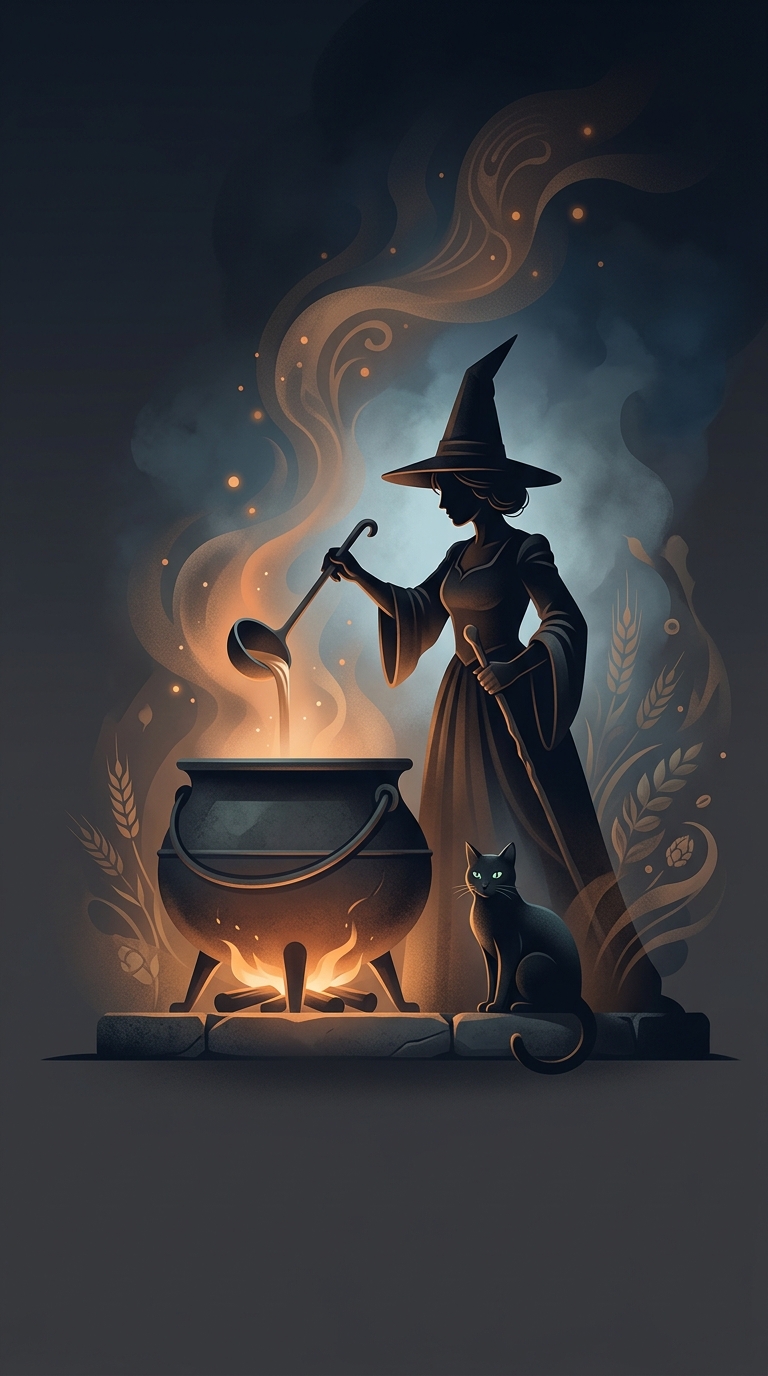
The alewife behind the witch’s silhouette
In medieval and early modern communities, brewing was often household work, and women known as alewives could sell extra ale locally. Before reliable clocks and standardized labels, a distinctive outfit could help a seller stand out in a crowded market. The familiar story says tall hats served that purpose, while cats helped keep mice away from stored grain.
That is a plausible explanation for practical details—but the leap from market clothing to the modern witch’s costume is less certain. There is no strong evidence that alewives’ hats and cats directly created the witch stereotype. The pointed hat, black cat, and broom became a recognizable bundle through many layers of art and storytelling, and the evidence does not establish a single origin in women’s brewing.
How ordinary work acquired an ominous meaning
The connection remains compelling because brewing and selling gave some women visible roles in local commerce. A woman working independently in a market could attract suspicion as well as customers, especially in a period when ideas about proper female behavior were tightly policed. Brewing also involved unfamiliar equipment, bubbling liquid, and specialized knowledge—details that could be recast as sinister in a tale about magic. Those parallels help explain why the alewife makes such a persuasive figure in modern retellings, even without proof that her work clothes supplied the witch’s standard look.
The cat has an especially ordinary explanation: grain stores attracted rodents, and cats hunted them. The striking contrast is what makes the image memorable—a market worker’s practical companion and distinctive dress, later read through the far darker lens of witchcraft.