A meal designed to feel like an occasion
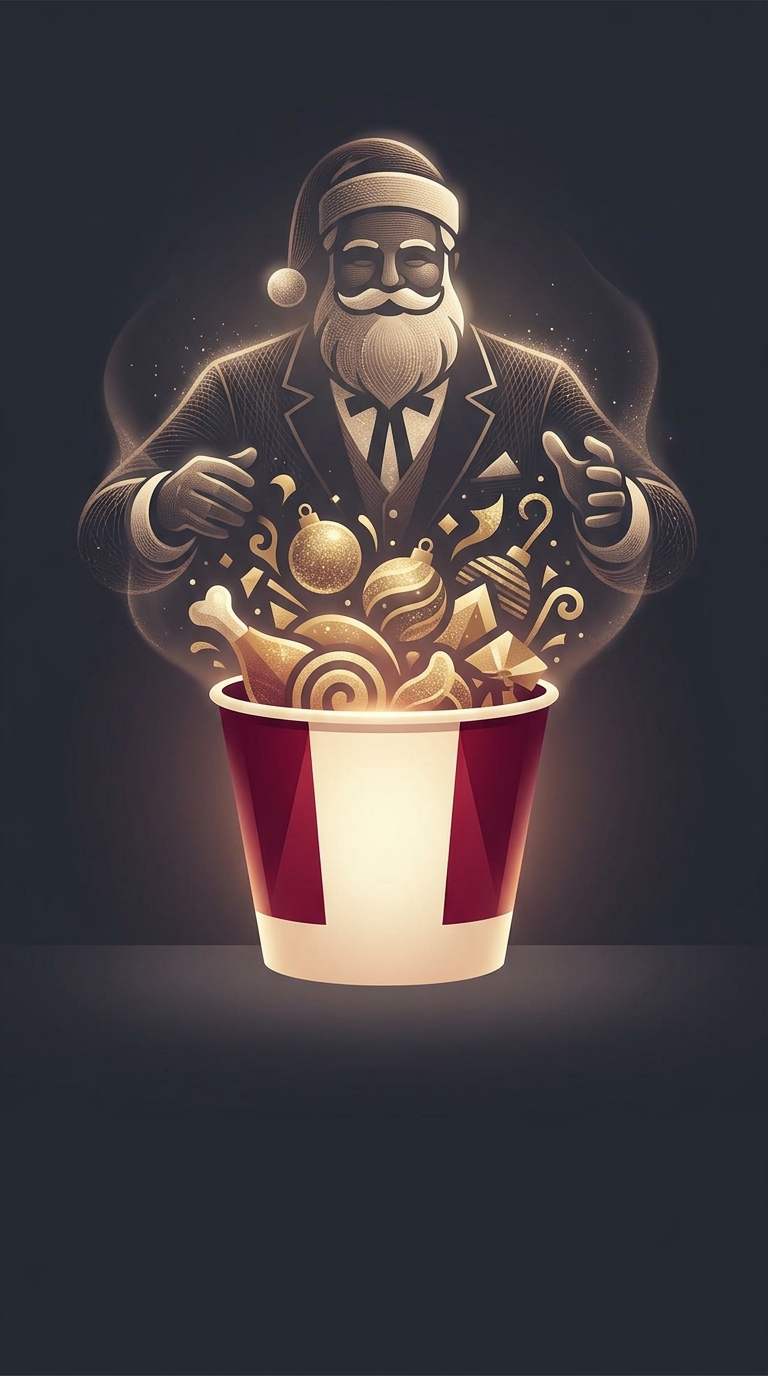
In 1970s Japan, Christmas did not come with the same established home-menu tradition that turkey dinner did in the United States. KFC Japan had a practical opening: fried chicken was already familiar, easy to share, and available through the restaurant chain. The company packaged it as a festive meal rather than simply advertising an ordinary bucket. That distinction made the food feel like a solution to a seasonal question: what should we serve?
The campaign’s success depended on giving customers a repeatable script. A family could order a special meal, bring it home, and make that meal part of the holiday. The recognizable packaging and Christmas imagery helped turn a purchase into a ritual—one that was easy to explain and reproduce the following year.
How an advertisement became a custom
A custom can outlast the ad that introduced it when people begin passing it along through habit. Parents who served KFC at Christmas could make it the expected meal for their children; those children could later recreate it for their own households. Each repetition strengthened the association between the holiday and the brand, even for families who had no memory of the original campaign.
That shift also changed the marketing problem. Once customers expected the meal at Christmas, KFC was no longer only trying to persuade people to try something new. It had to meet seasonal demand from people who already considered the food part of their plans. The campaign’s lasting achievement was to make a branded meal feel like a family tradition—and then let families keep the tradition alive.