A stage effect becomes a grievance
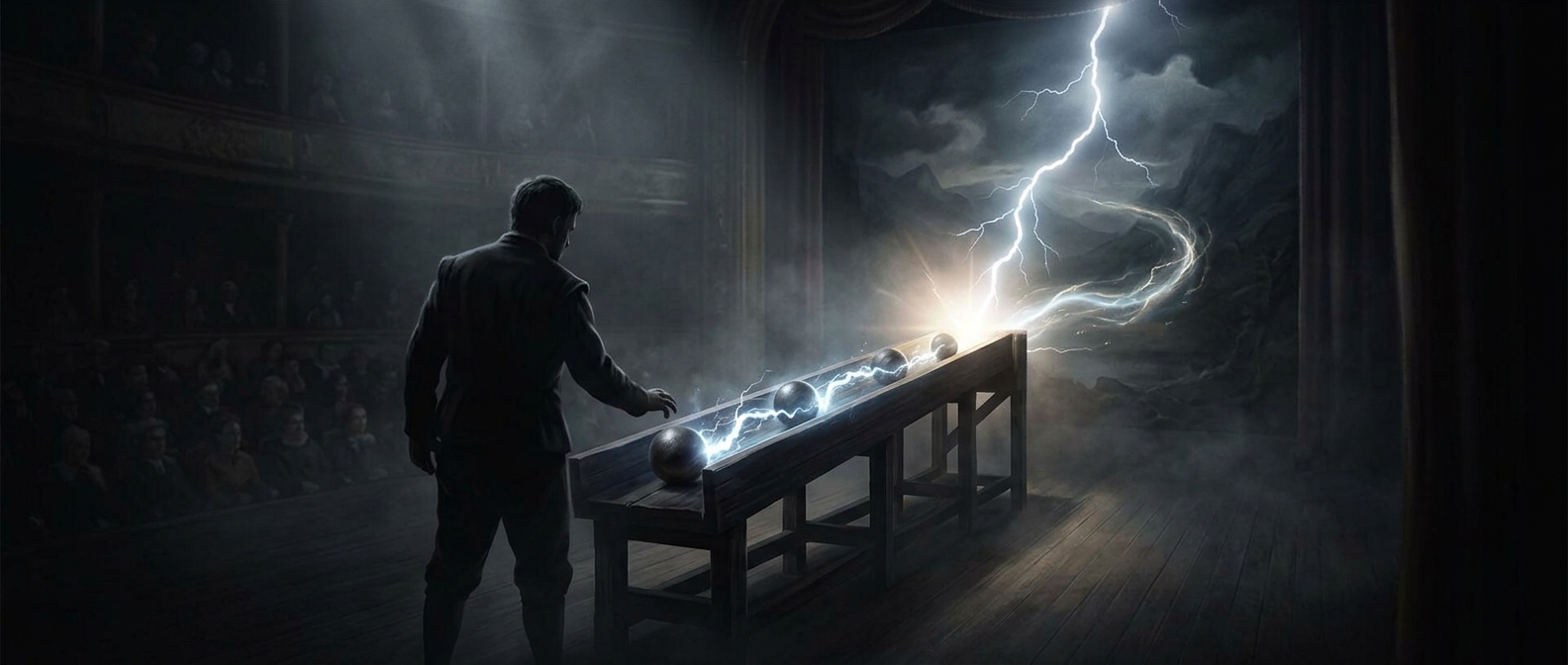
In early-18th-century theater, convincing thunder was a practical challenge: the sound had to reach an audience from the stage without a storm anywhere nearby. Playwright John Dennis devised a machine to produce it for his play Appius and Virginia. The device turned thunder from something actors merely described into a sound the theater could perform.
The play did not last, but the effect did. When Dennis later heard a rival theater use the same trick, he recognized his own theatrical innovation in someone else’s production. His complaint that they had “stolen his thunder” made the stage sound effect a metaphor for having an idea or accomplishment taken over by another person.
From literal thunder to stolen credit
The phrase endured because it captures a familiar social slight: someone else gets the attention, surprise, or recognition that you expected for yourself. The “thunder” might be a reveal, a clever idea, or a moment of triumph; to steal it is to preempt that moment or claim its impact.
Dennis’s machine therefore survives in language more vividly than his play. A piece of theater equipment became a compact way to describe the sting of watching another person make your contribution the centerpiece of their own performance.