How Three Puppeteers Make One Character Move
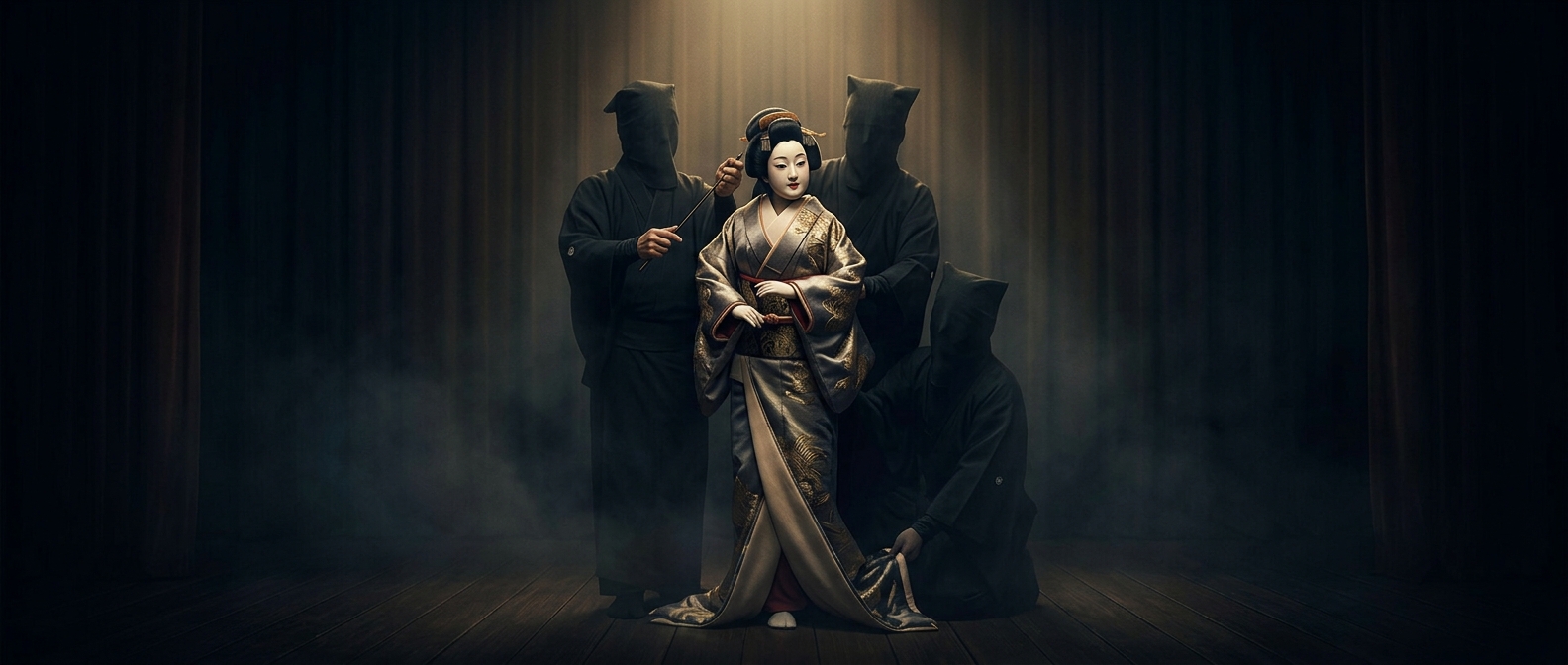
In bunraku, the Japanese puppet theater, a puppet’s movements are divided among three performers. The principal puppeteer guides the head and right arm, while assistants control the left arm and the legs. That division lets the puppet perform gestures too coordinated and expressive for one person to manage alone—but it also creates a demanding problem: every movement must look as if it comes from a single body.
Training Through Shared Movement
The principal performer leads, and the others learn to anticipate the timing and direction of each action. A turn of the head, for example, has to meet the movement of the arms and legs; otherwise, the puppet appears to be several parts working separately. The assistants therefore do more than operate limbs on cue. They match the lead performer’s rhythm closely enough to make each gesture feel continuous.
This coordination is built over years of practice. Traditionally, performers advance through roles, beginning with operating the feet before taking on the left arm and, eventually, the principal role. The progression teaches the body’s full choreography from the supporting positions upward.
The Effect on Stage
Bunraku does not conceal the puppeteers. Their visible presence makes the illusion depend not on hiding the machinery, but on disciplined cooperation. When the three performers move in precise agreement, a wooden figure can seem to hesitate, reach, or react with human intention. The audience sees the hands doing the work—and, at the same time, a character whose movements feel like one.