A ghost’s silhouette came at a cost
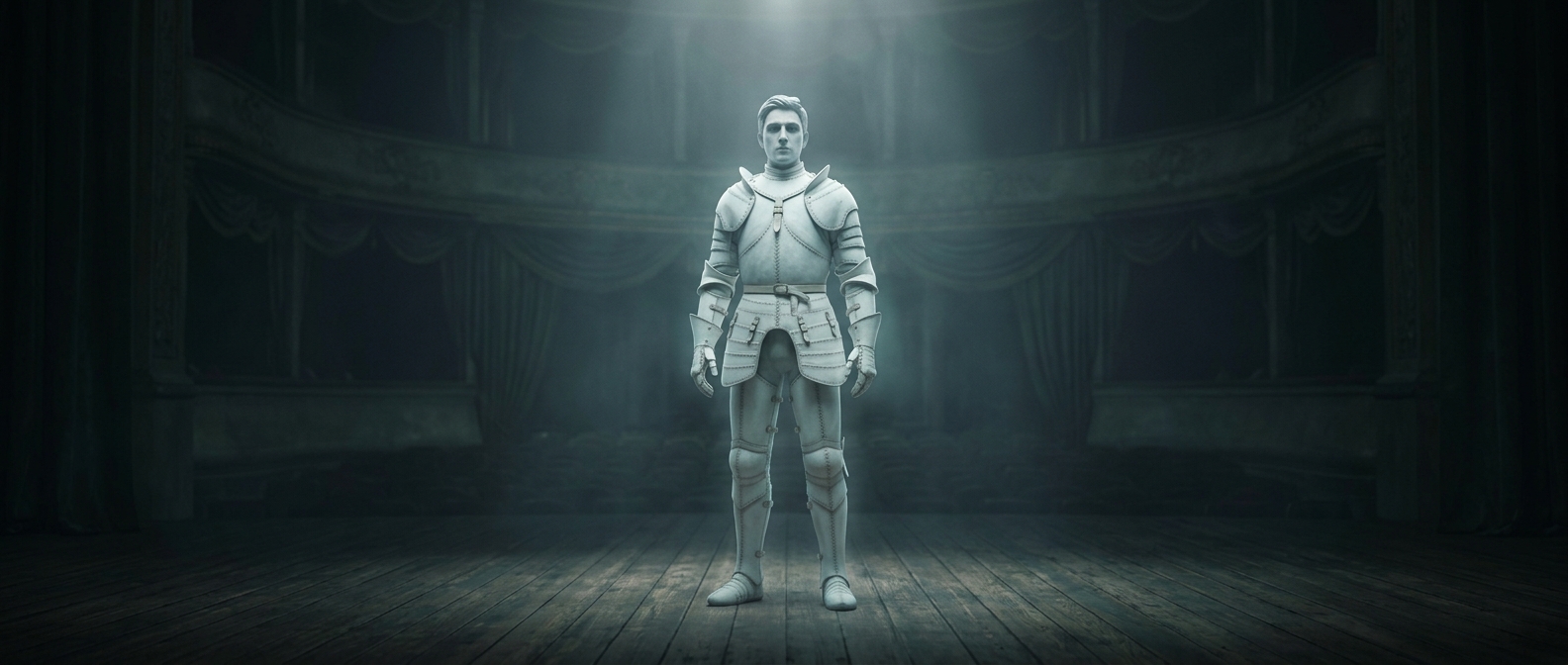
A stage ghost had to read clearly from a distance. Stiff white leather could hold a broad, unnatural shape around an actor, making the figure look less like an ordinary person in a loose garment. But stiffness also made the costume resist movement: when the actor bent or shifted, the leather creased and rubbed, producing squeaks.
When the costume supplied its own sound effects
That noise came from the same property that helped create the ghostly outline. Flexible cloth could move quietly, while rigid leather kept its shape but creaked as its surfaces flexed against one another. Onstage, where a silent entrance or glide might be part of the illusion, an audible squeak could give away the performer’s movement.
The costume therefore solved one theatrical problem and created another: it made the ghost look less human, but made the actor’s motion harder to hide. A spectral shape could be convincing to the eye and conspicuously noisy to the ear.