Why Ancient Stories Often Looked Like the Present
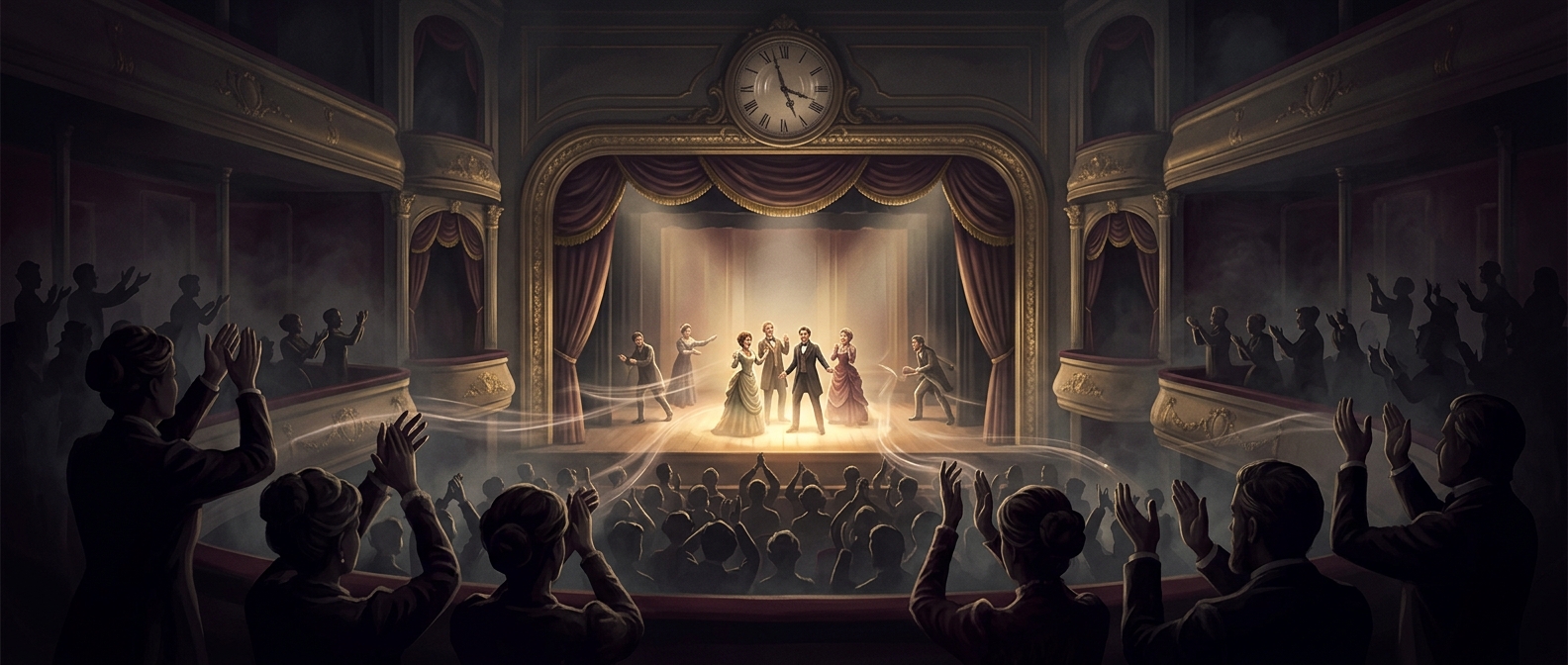
For centuries, many theater companies dressed actors in the fashionable clothes of their own day—even when a play took place in ancient Rome or the distant past. The stage was not always trying to reproduce a historical setting. Audiences could follow a story through its language, scenery, and familiar conventions, while contemporary clothing made characters’ rank and relationships immediately legible.
A richly dressed actor could read as a ruler, courtier, or wealthy lover without the audience needing a historically accurate costume. Clothes also carried meanings people recognized from everyday life: fine fabrics and elaborate decoration suggested status, while plainer garments suggested lower rank. In that sense, a modern outfit could communicate social position more clearly than a carefully researched ancient one.
The Practical Logic of the Wardrobe
The convention also fit the economics of theater. Costumes were expensive, and companies could reuse garments across productions. A striking coat or gown might serve in several plays, even if none was set in the period when that clothing was fashionable. The result was a stage where a Roman general might resemble a contemporary gentleman—not because the company had forgotten the past, but because its available wardrobe and theatrical priorities favored reuse and visual impact.
When Anachronism Became a Choice
Later productions increasingly used historically specific clothing when they wanted to make a period setting vivid or distinguish one era from another. But modern dress never disappeared. Directors may still place an old story in contemporary clothes to make its conflicts feel immediate, or to suggest that power and ambition recur across eras.
The mismatch can change how a story feels: an ancient ruler in familiar dress is no longer safely remote from the audience, but someone who seems to belong to its own world.