Jade made status visible at a glance
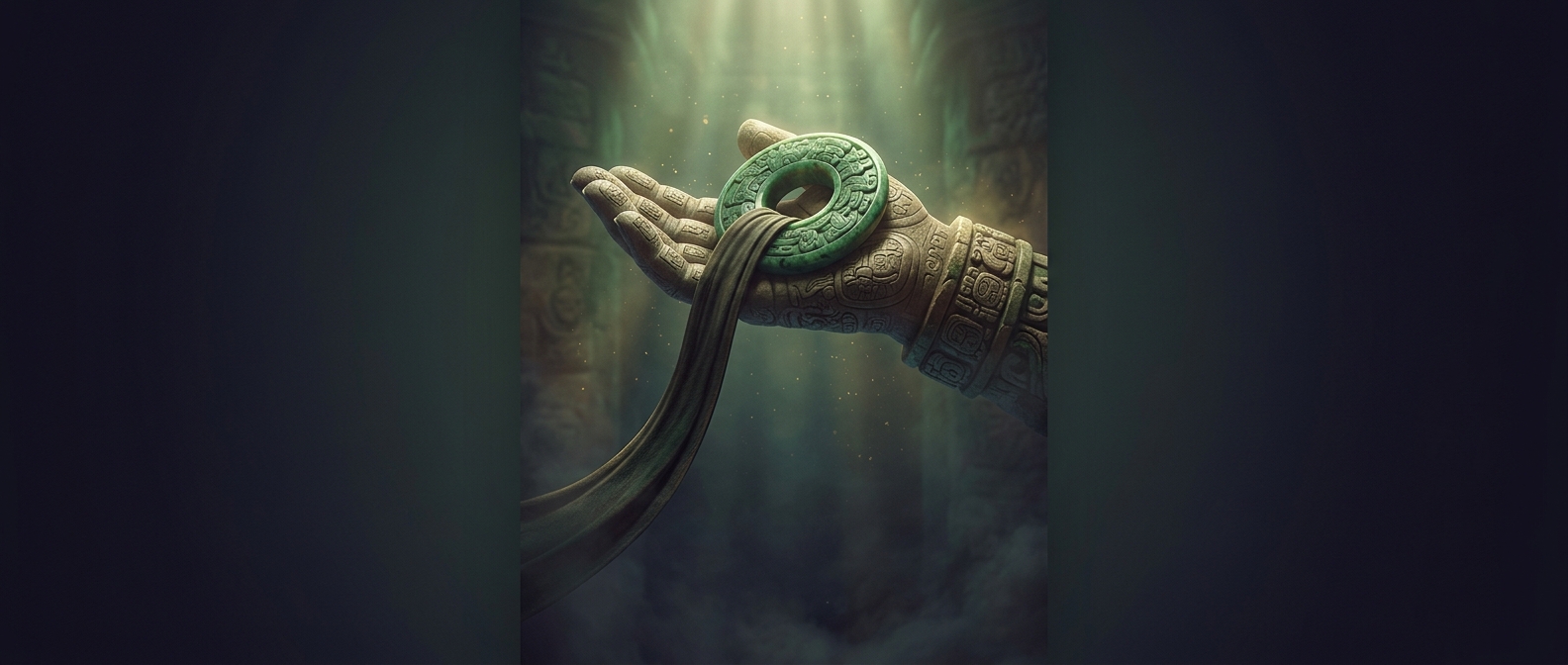
For some Maya, an earspool was more than an ornament: its size and material could announce the wearer’s standing. Jade was especially prized, and a substantial piece made a conspicuous display of access to valued materials and skilled carving. Because the jewelry sat on the body, that display traveled with its owner rather than remaining in a household or on a ceremonial object.
A larger opening required a gradual change
An earspool is a plug-like ornament worn through a pierced earlobe, often with a broad outer rim. To wear a larger one, the opening had to expand; switching to successively larger ornaments allowed the lobe to stretch over time. The jewelry’s increasing scale therefore involved a lasting bodily change, not simply a new accessory.
That change made the signal harder to miss. A larger jade earspool combined a costly material with a visible alteration to the wearer’s appearance. It could mark status in ordinary encounters as well as in formal settings, while the stretched lobe itself showed that the wearer had maintained the look over time. Practices varied among Maya communities and individuals, but the basic logic was clear: the ornament’s scale turned social distinction into something people could see on a person’s body.