What Pressure Does to a Seated Leg
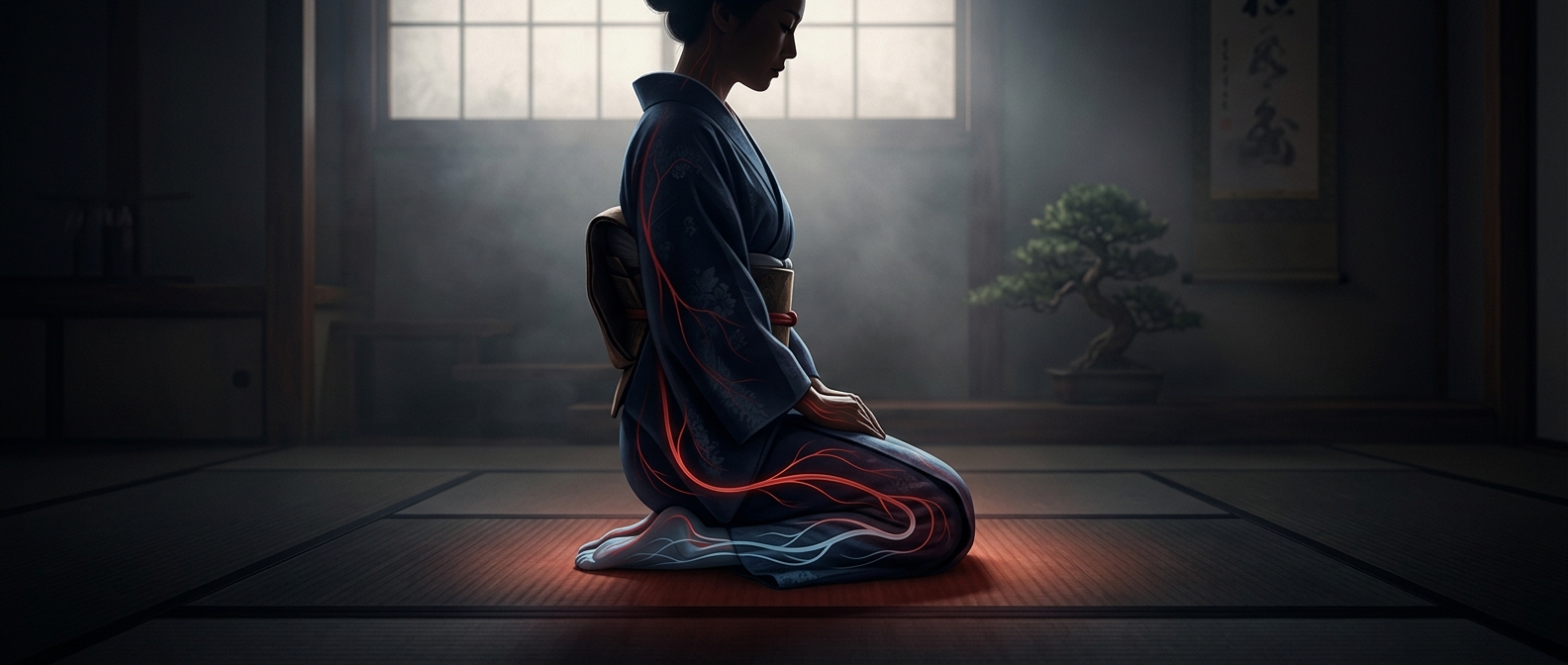
In seiza, the bent knees and folded lower legs bear sustained pressure against the floor and the body’s weight. That pressure can squeeze nerves—especially around the knee and ankle—and restrict circulation in nearby tissues. Nerves carry messages between the legs and the brain; when compressed, they may send distorted signals or temporarily transmit them less effectively.
The result is paresthesia, the medical term for abnormal sensations such as tingling, prickling, or numbness. It is not simply that the leg has “fallen asleep” because its blood supply has stopped. Pressure on nerves is often central, while reduced circulation can contribute to the discomfort.
Why Standing Up Can Feel Worse
Changing position removes the pressure, but the nerves and tissues do not return to normal sensation instantly. As signals resume, tingling or pins-and-needles may briefly become more noticeable. The effect varies with the exact position, how much weight is concentrated on the legs, and a person’s sensitivity; ten minutes is not a universal threshold.
That physical cost helps explain why a posture associated with formal sitting can be difficult to sustain. The body is held still while pressure accumulates at the same contact points. Shifting position or unfolding the legs relieves that load—and is often followed by a brief, vivid reminder of where the pressure had been.