Beauty Was Shaped at the Hairline
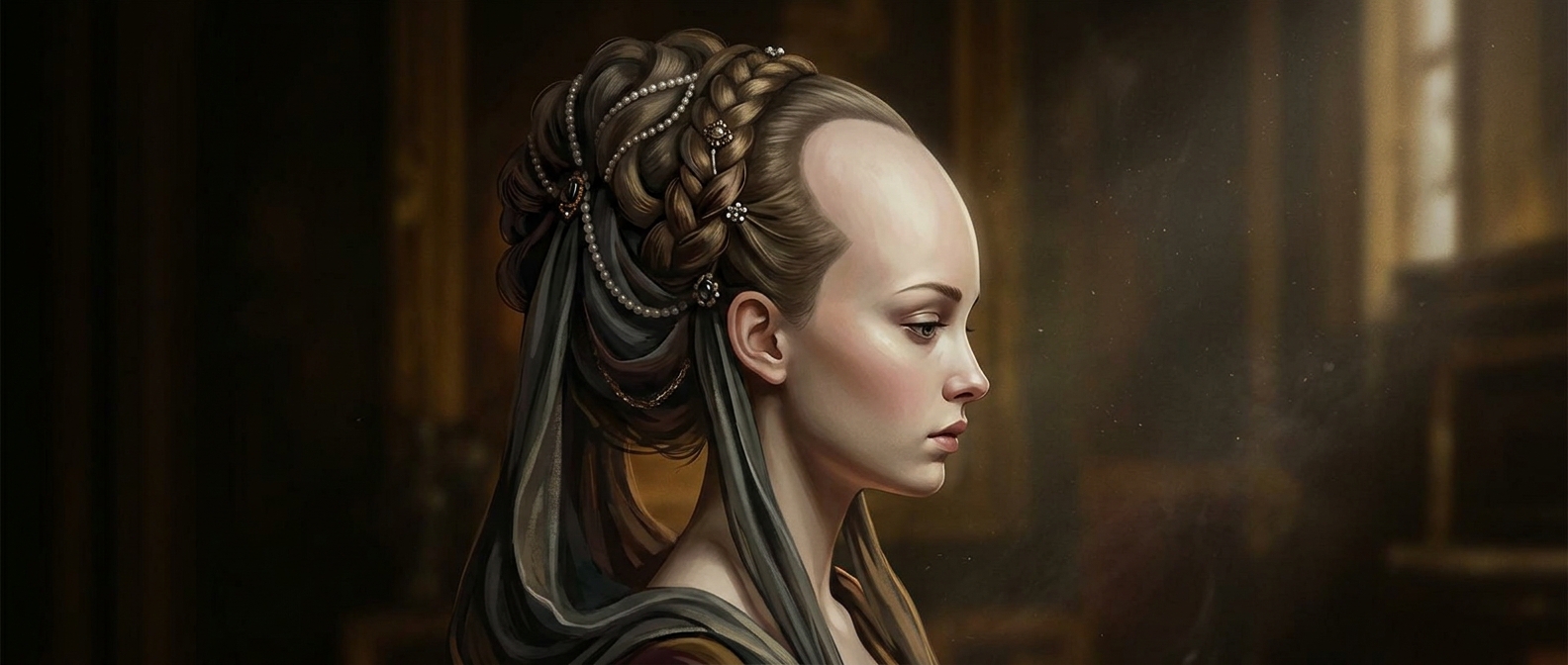
In parts of 15th-century Europe, a woman’s hairline was not simply accepted as nature had made it. Removing hair at the temples and across the forehead could make the face appear longer and more open, while thinning or removing the eyebrows completed the effect. A detail that now reads as unusual was then part of a fashionable ideal associated with aristocratic appearance.
The change was small in area but striking in silhouette. With the hairline pushed back, the forehead became a more prominent feature of the face. The look also depended on contrast: the exposed skin stood out against the hair kept around the head. Tweezing and shaving were ways to alter that visible outline without changing the face itself.
A Fashion With a Maintenance Cost
Unlike a hairstyle that could be undone at the end of the day, a raised hairline required repeated grooming as hair grew back. That made the ideal a routine of removal, not just a single styling choice. It also shows how beauty standards can turn a natural feature into something people feel expected to manage.
The fashion is a reminder that ideals of attractiveness are historically specific. A high forehead was not merely noticed; women could actively reshape the boundary between skin and hair to make it more pronounced.