How one cord becomes a patterned knot
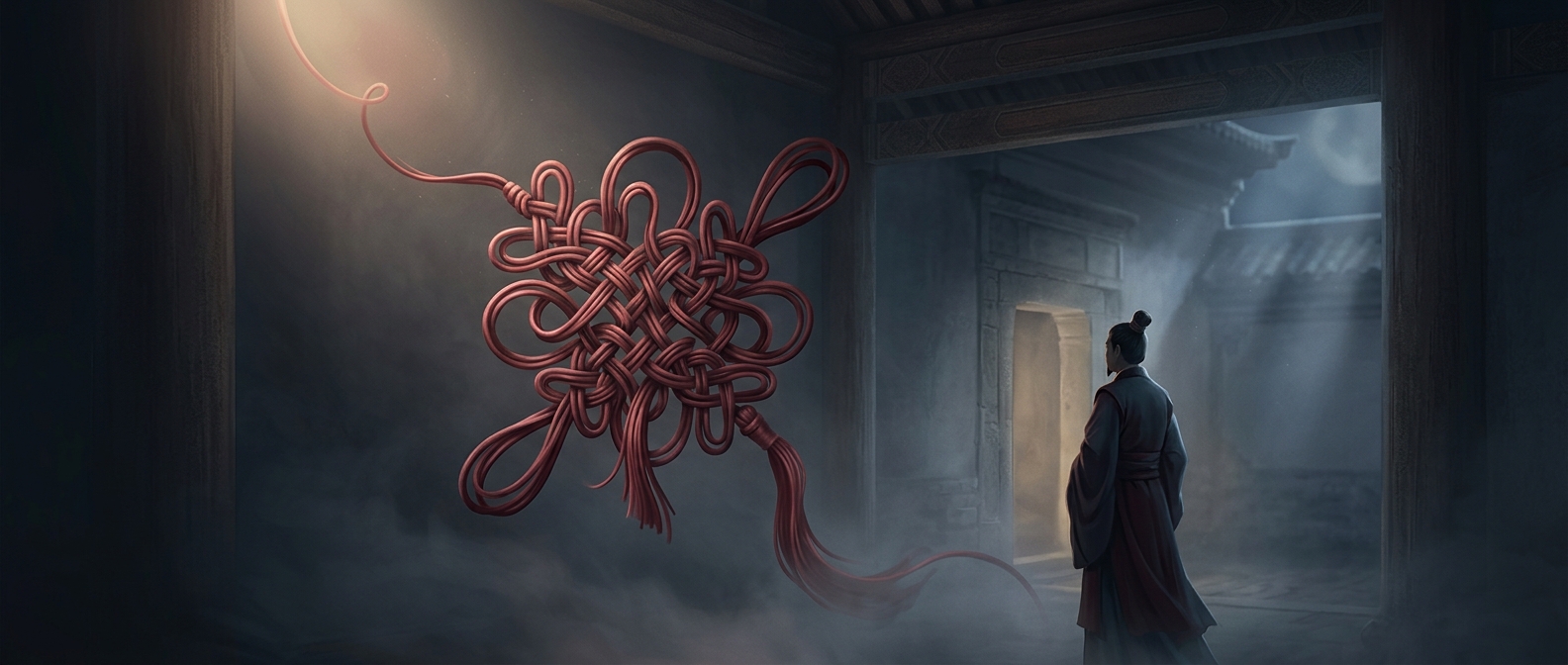
A Chinese decorative knot is built by guiding a cord through repeated loops and crossings, then tightening the arrangement until its parts sit in a balanced pattern. The cord does not simply coil around itself: each pass must follow a planned route, because the placement of one loop determines where the next can go. In a knot made from a single continuous cord, the finished design has no separate strands stitched together to hold its shape.
That makes the work both visual and structural. The maker has to keep track of which section passes over or under another, while leaving enough slack to form later loops. Tighten too soon and there may be no room to complete the pattern; pull the wrong section at the end and the cord can slip out of alignment—or begin to undo.
A craft that makes meaning visible
Chinese knotting developed into a decorative craft in which the arrangement itself carries much of the appeal. Symmetry gives a knot a composed, finished look, while its repeated loops invite the eye to follow the cord’s path. Knots have been used as ornaments on clothing, furnishings, and gifts, where their color and form can make an object feel festive or carry a wish for good fortune.
The single cord is what makes the design especially satisfying: a pattern that appears woven from many parts is, in this example, one continuous line carefully folded back through itself. Its polished surface conceals the maker’s main challenge—keeping every crossing in the right order until the final pull locks the pattern into place.