How Beating Turns Bark Into Cloth
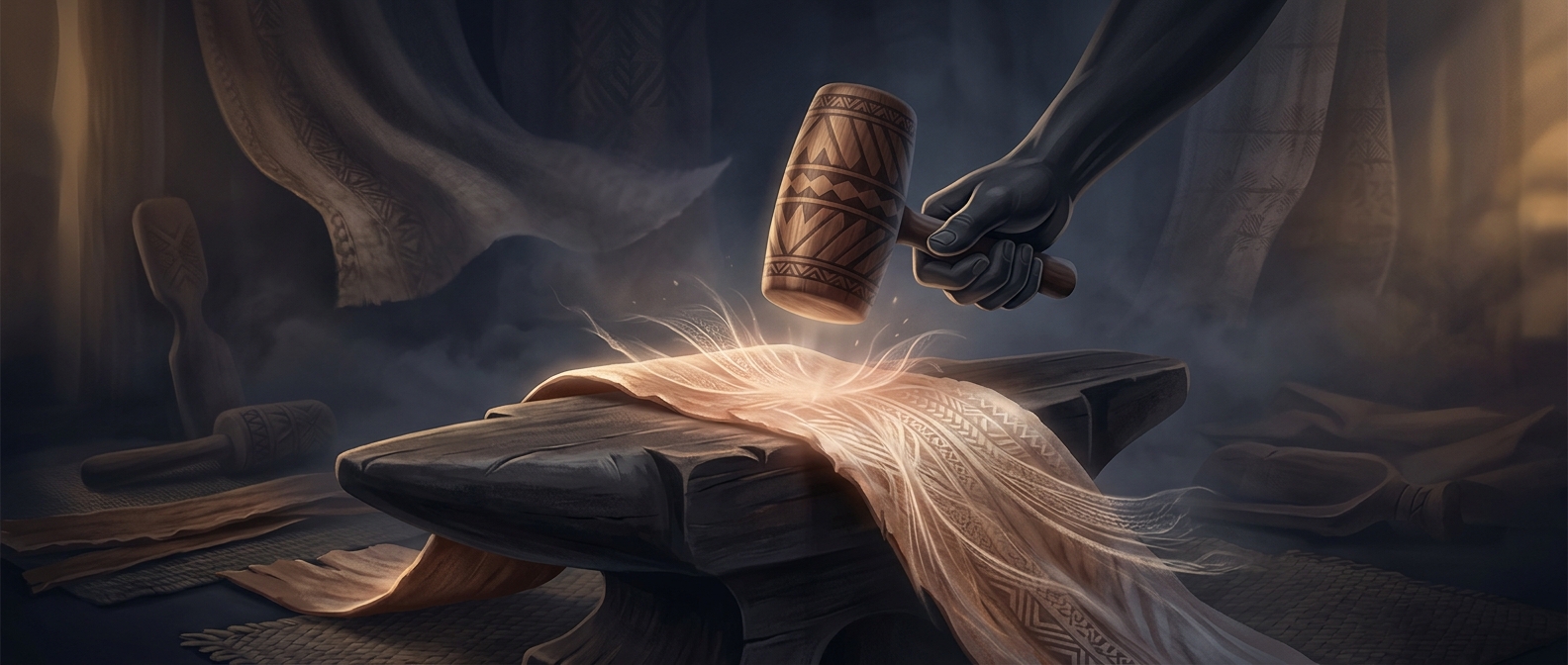
Tapa begins as the inner bark of the paper mulberry tree. After removing the outer bark, makers soak or prepare the inner layer and work it with wooden beaters on a firm surface. Repeated blows flatten and widen the bark, thinning it into a flexible sheet. The cloth is not woven from separate threads: its structure comes from the bark’s fibers being spread and pressed together.
The beating takes both force and judgment. Too little leaves the sheet thick and narrow; continued, even pounding makes it broader and more uniform without tearing it. Makers can join or layer pieces to create larger panels, then dry and finish the cloth. The process turns a narrow strip of tree bark into material suitable for everyday and ceremonial uses.
A Surface Made for Design
Beating leaves tapa with a soft, fibrous texture rather than the smooth, regular surface of woven fabric. That texture is part of its character—and a ground for decoration. Artisans paint or stamp patterns onto the cloth, with designs and techniques varying among Polynesian communities. The visible pattern is only the final stage of a transformation that began with careful preparation of the bark.
Because making tapa involves repeated handwork, producing large pieces can require substantial time and coordinated effort. The result is more than a substitute for woven cloth: it carries the marks of how it was made, from the spread fibers to the designs laid across its surface.