How Silver Becomes Part of the Surface
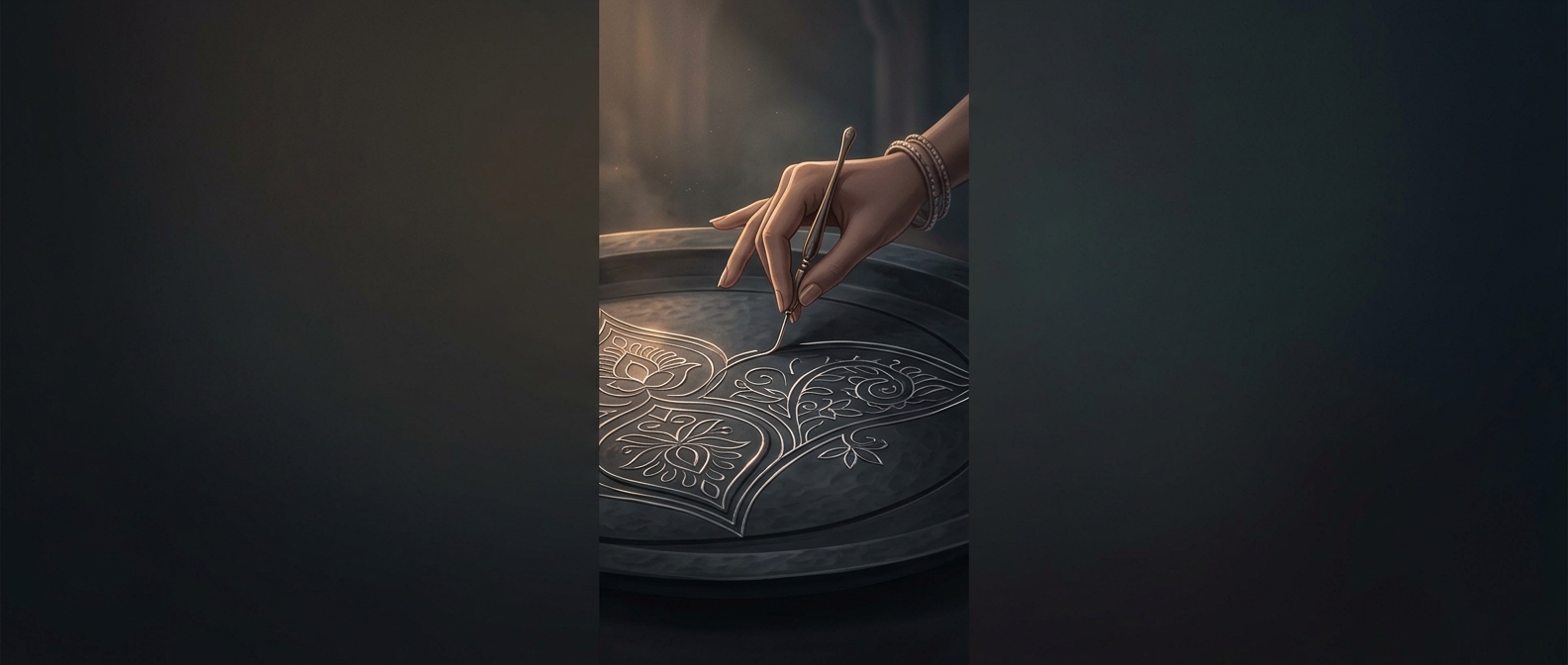
Bidriware is not simply dark metal decorated with silver paint. The silver is physically fitted into the object. An artist cuts a pattern into a body made mainly of zinc, with copper added to the alloy, then taps thin silver wire into the narrow grooves. The wire is secured by the shape of the cut, so the design remains part of the metal rather than sitting on top as a coating.
That precision matters: the grooves must be deep enough to hold the wire, but controlled enough to keep its edges clean. A small slip can blur the pattern or damage the surrounding surface.
The Contrast Comes From a Final Transformation
In the traditional process, the inlay is followed by a treatment that turns the exposed alloy black. The silver resists that darkening, leaving the design bright against the newly blackened ground. The contrast is therefore built through two different materials behaving differently—not added afterward with a layer of black paint.
The order is crucial. The maker must first cut and fit the silver, then darken the alloy without losing the sharpness of the pattern. Polishing brings the two surfaces into clear relief: dark metal around a gleaming line.
A Pattern Made to Last
Because the silver is hammered into grooves, the work depends on patient hand control at every stage. The finished object records that sequence in its surface: each bright line marks a cut made in the alloy and a wire fitted by hand. What looks like a simple color contrast is, in fact, the visible result of careful metalworking.