A tattoo planned around the clothes
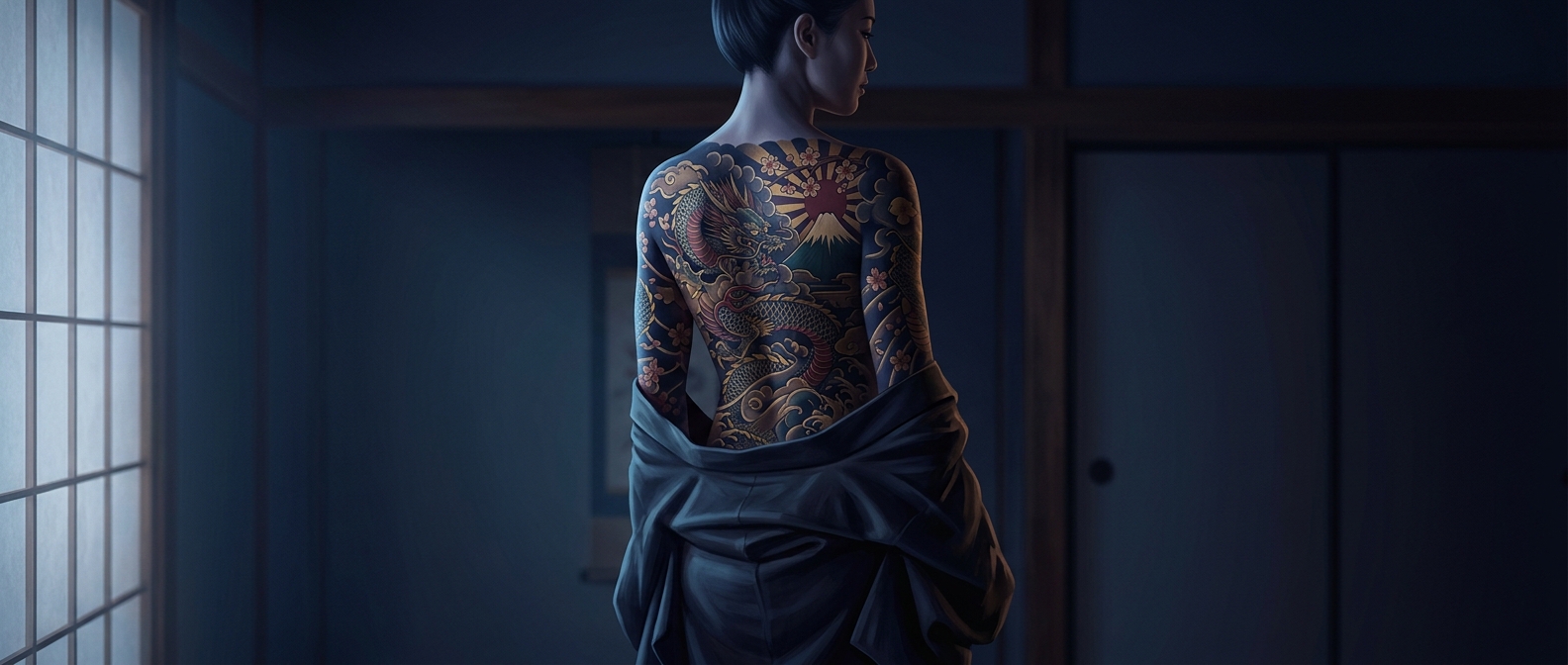
Traditional Japanese body tattoos are often composed as one connected scene rather than a collection of separate images. The artist plans the motifs across the body, accounting for its curves and for the edges of ordinary clothing. A design can cover the back and extend over the arms and thighs, yet stop where a collar or sleeve will conceal its boundary.
That placement makes the tattoo both expansive and selectively visible: the wearer can keep the work private in everyday dress, while revealing more of it by changing clothes. The garment line is not an afterthought; it helps define the composition.
Building the image by hand
In hand-poked work, often called tebori, the artist uses a tool fitted with a bundle of needles and repeatedly presses ink into the skin. A large tattoo therefore develops through many small, controlled marks, with the artist working across a broad area over time. The method gives the artist a direct way to build outlines, shading, and color into a single flowing design.
Because the image spans several parts of the body, its layout has to work from more than one viewpoint. A creature or other motif may continue around a shoulder or thigh, so the scene still reads as the body turns. The clothing boundaries provide a practical frame for that larger picture.
Concealment shaped the tradition
In Japan, tattoos have carried social stigma, and visible body art could invite unwanted attention. Clothing-coverable designs let wearers have elaborate work without displaying it in ordinary public settings. The result is a striking compromise: a scene large enough to transform the body, carefully bounded so that a shirt and trousers can hide nearly all of it.