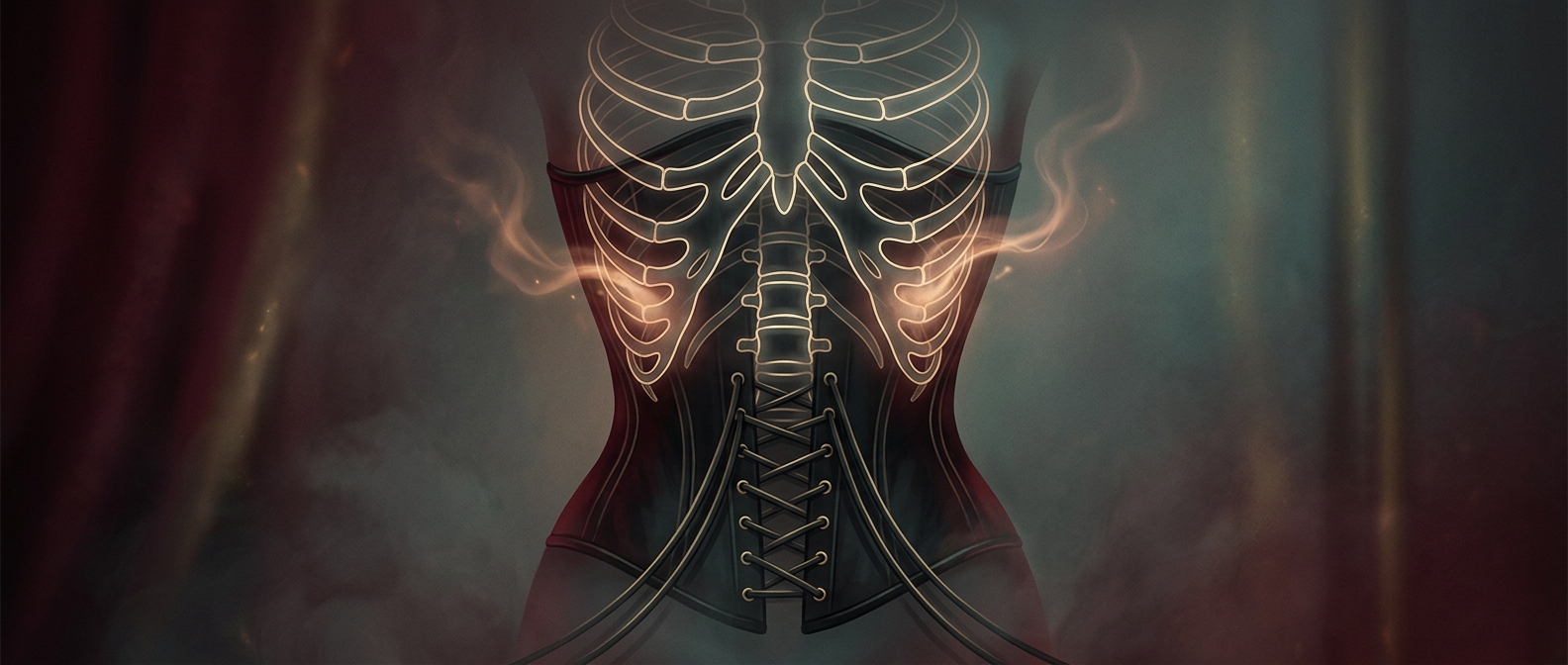
How tight lacing limited a full breath
A tightly laced corset could restrict breathing by squeezing the torso and limiting how far the lower ribs and abdomen could expand. A deep breath is not just air entering the lungs: the rib cage widens and the diaphragm, the broad muscle beneath the lungs, moves downward. When clothing holds the trunk firmly in place, those movements become harder, so breathing may turn shallower—especially during exertion, when the body needs more air.
The effect depended on the garment, the wearer, and how tightly it was drawn. Corsets came in different shapes and fits; tight lacing was an extreme practice, not a uniform daily experience for every woman who wore one. Still, when a narrow waist was the goal, the pull of the laces could make the desired outline physically restrictive.
The silhouette had a bodily cost
The garment’s purpose was to shape the body beneath clothes, creating a fashionable line that could not be achieved by the outer dress alone. That made the corset part of a larger system: clothing, social expectations, and the mirror all rewarded a particular appearance, while the strain of breathing was less visible. A person could look composed even when taking a full breath felt difficult.
The tradeoff became more noticeable in motion. Walking quickly, climbing stairs, or doing other strenuous activity raises the demand for oxygen; shallow breathing makes that effort harder to sustain. The narrow silhouette could therefore be maintained at the cost of comfort and capacity, with the physical consequence hidden under the very clothes designed to display the look.