A raincoat adapted for trench warfare
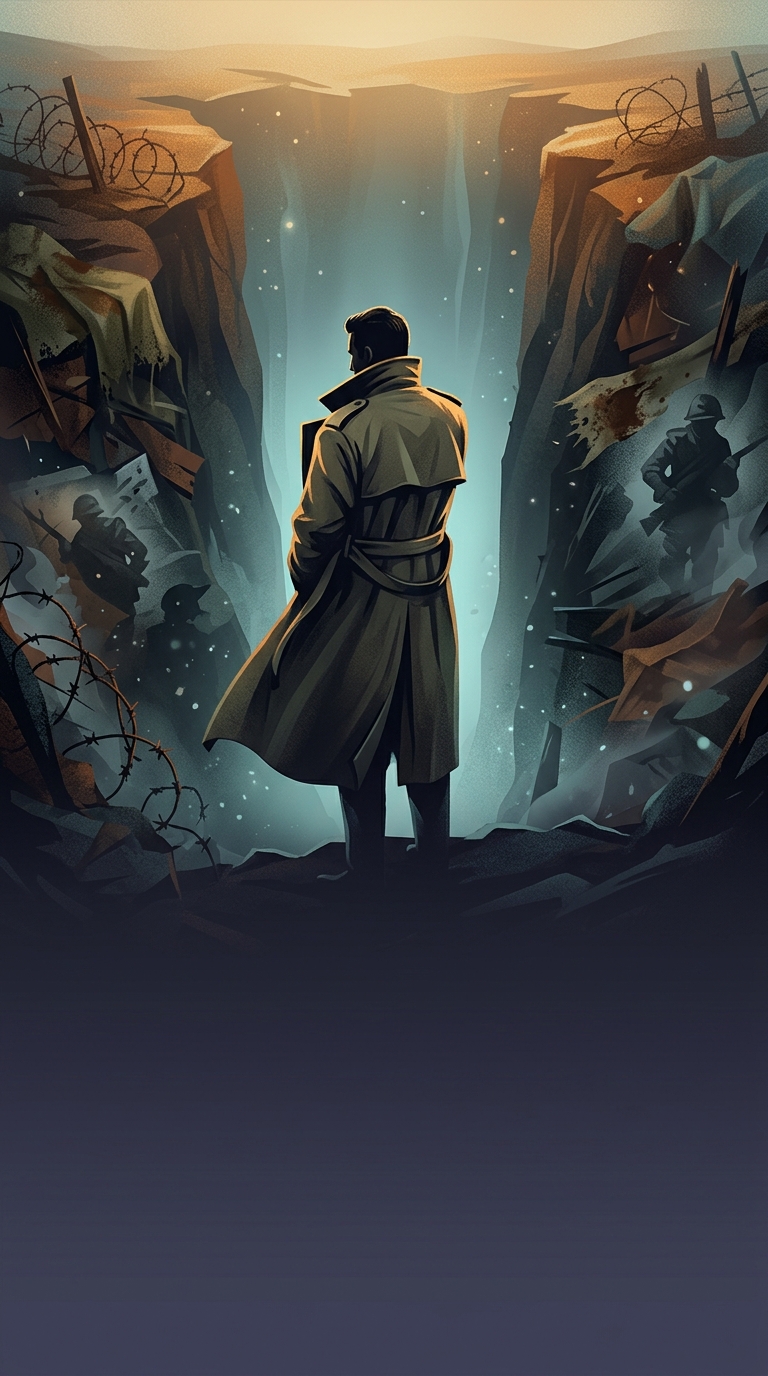
The trench coat’s name comes from its association with the muddy, exposed trenches of World War I. But it was not simply invented in the trenches: it grew out of earlier waterproof coats and military outerwear, which were adapted for officers serving in the war.
The intended wearer was chiefly the officer, not every soldier. Officers often had to move between dugouts, command posts, and the open battlefield, where a long coat could shield them from rain and wind while remaining easier to move in than a heavy greatcoat. The coat’s water-resistant fabric helped, though it was not a sealed, modern rain jacket.
Details shaped by military use
Many classic trench coats carry features that made sense in that setting. A storm flap—an extra layer over the chest—helped direct rain away from the front opening. Epaulettes, the shoulder straps, could mark rank or hold equipment in place. The belt’s metal D-rings offered attachment points for gear. These details varied by maker and model; they were practical design choices, not proof that every coat served the same purpose.
After the war, returning officers brought the style into civilian life. Its military associations remained visible in the cut and hardware, while the coat became useful for commuters and travelers facing ordinary wet weather. The name stuck: a garment shaped by wartime conditions became a familiar city raincoat, still carrying traces of the job it was first meant to do.