The waistband changed the body’s proportions
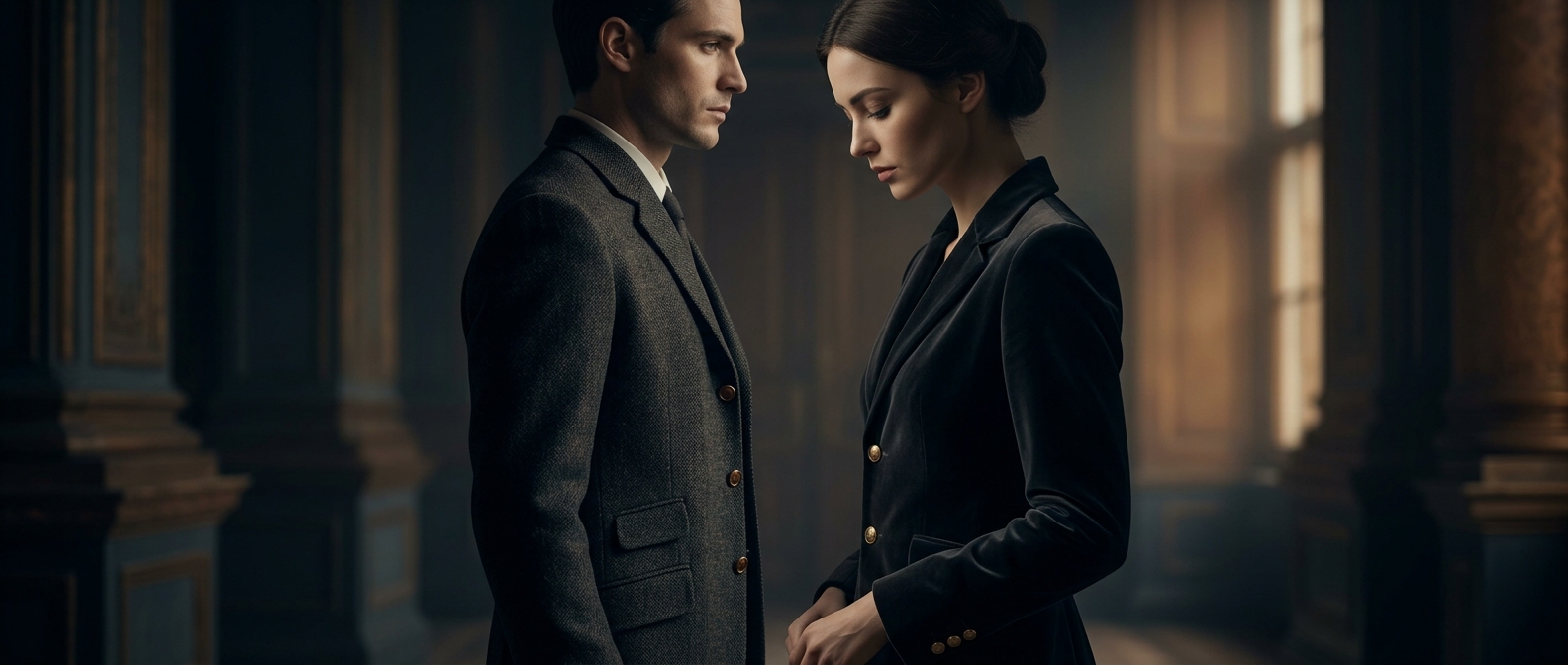
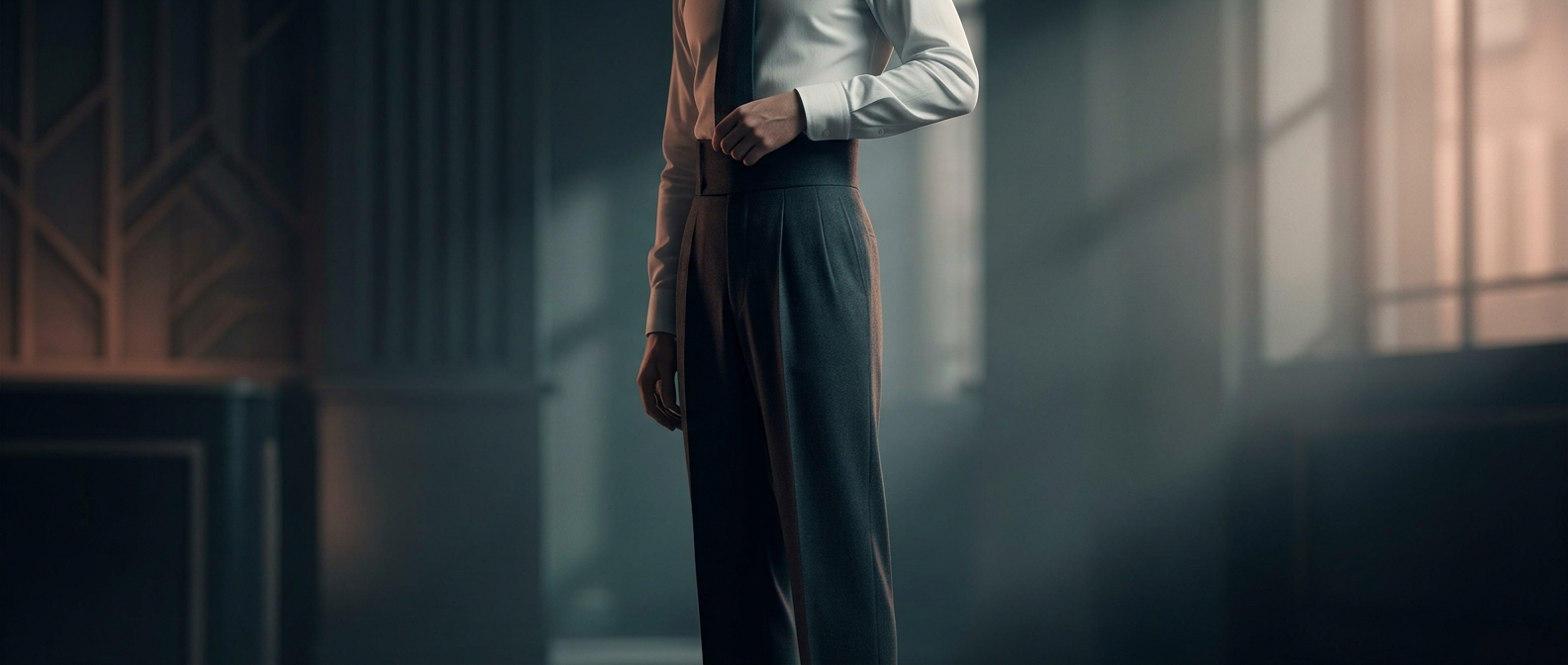
A high waistband did more than hold up a pair of trousers: it changed where the eye read the wearer’s waist. When the trousers began just below the ribcage, the visible leg appeared to start much higher than it does in modern low-rise styles. That longer stretch from waist to shoe could make a man look taller or unusually long-legged, even though his actual proportions had not changed.
The effect depended on the cut. Tailors shaped the trousers’ rise—the distance from the crotch seam to the top of the waistband—to fit high on the torso. Pulling an ordinary low-rise pair upward would not create the same silhouette; the seat and crotch would sit incorrectly.
A different place for the waist
Modern clothing often treats the hip as the natural place for a trouser waistband. High-waisted trousers instead aligned the garment’s top with the wearer’s higher waist, so the waistband could sit close to the lower ribs. The shirt was tucked in beneath it, and a waistcoat, when worn, helped make the transition from shirt to trousers look deliberate rather than exposed.
That placement made the waistband a prominent part of the outfit’s architecture. It divided the body higher up, compressing the apparent torso and lengthening the apparent legs. The striking silhouette came not from longer trousers, but from moving the visual starting point of the legs upward.