When a gap in the armor became a feature
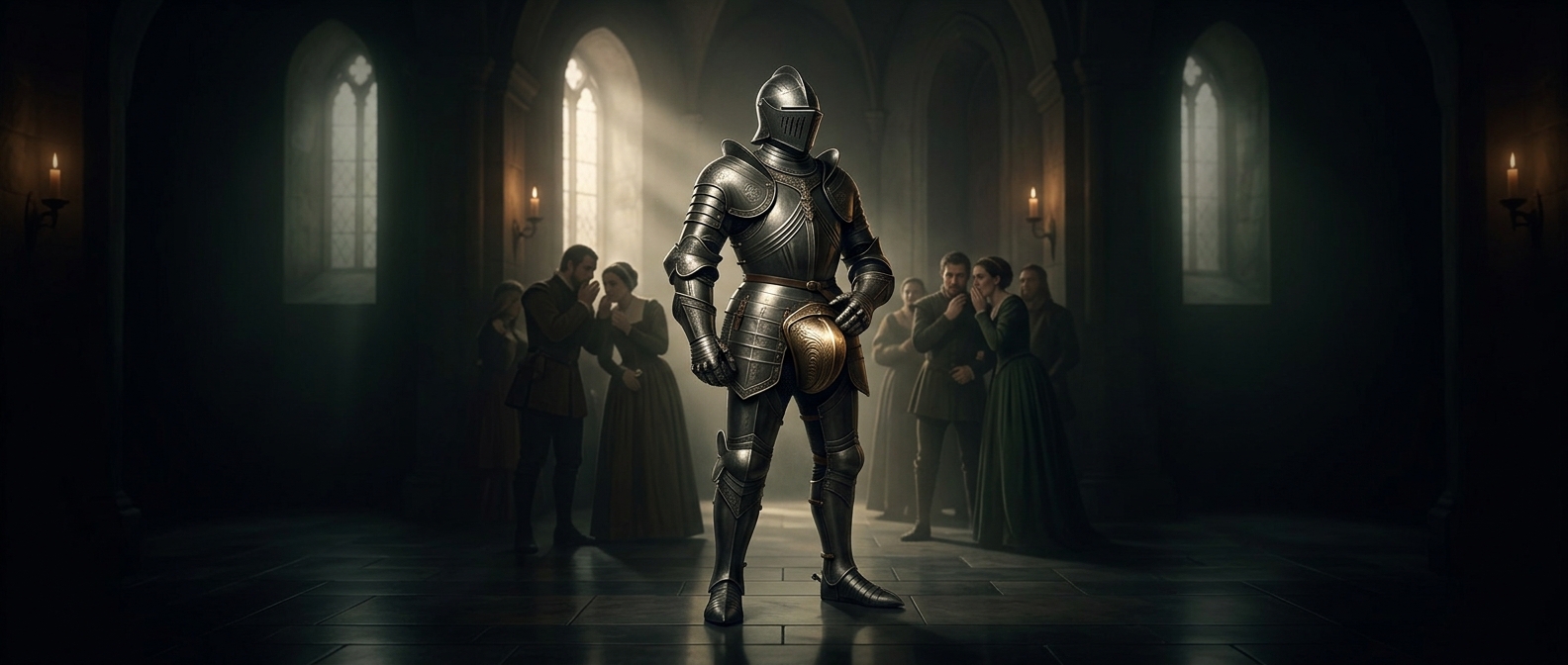
A suit of plate armor was made from separate pieces that had to move with the body. At the hips, those pieces could leave an exposed gap between the torso armor and the leg defenses. The codpiece—a shaped cover at the front of the pelvis—helped protect that vulnerable area while allowing the wearer to sit, walk, and ride.
Its origins were practical, but its appearance changed with fashion. As men’s clothing increasingly emphasized the front of the body, codpieces grew more prominent. Armor followed the same visual trend: a metal piece could be formed into a projecting shape that made the wearer’s silhouette look larger and more imposing.
Protection with a public message
Henry VIII’s steel codpiece took that idea into armor. Several pounds of metal concentrated at the front was not simply a decorative flourish: it covered a vulnerable part of the body. But its conspicuous shape also made the protection impossible to overlook. In a courtly world where clothing and armor displayed status as well as serving practical purposes, the wearer’s outline could make a statement before he said a word.
The result was an unusual compromise. The same piece that helped close a defensive gap turned a necessary part of a suit of armor into a highly visible signal of masculine power. A practical solution became part of the performance of authority.