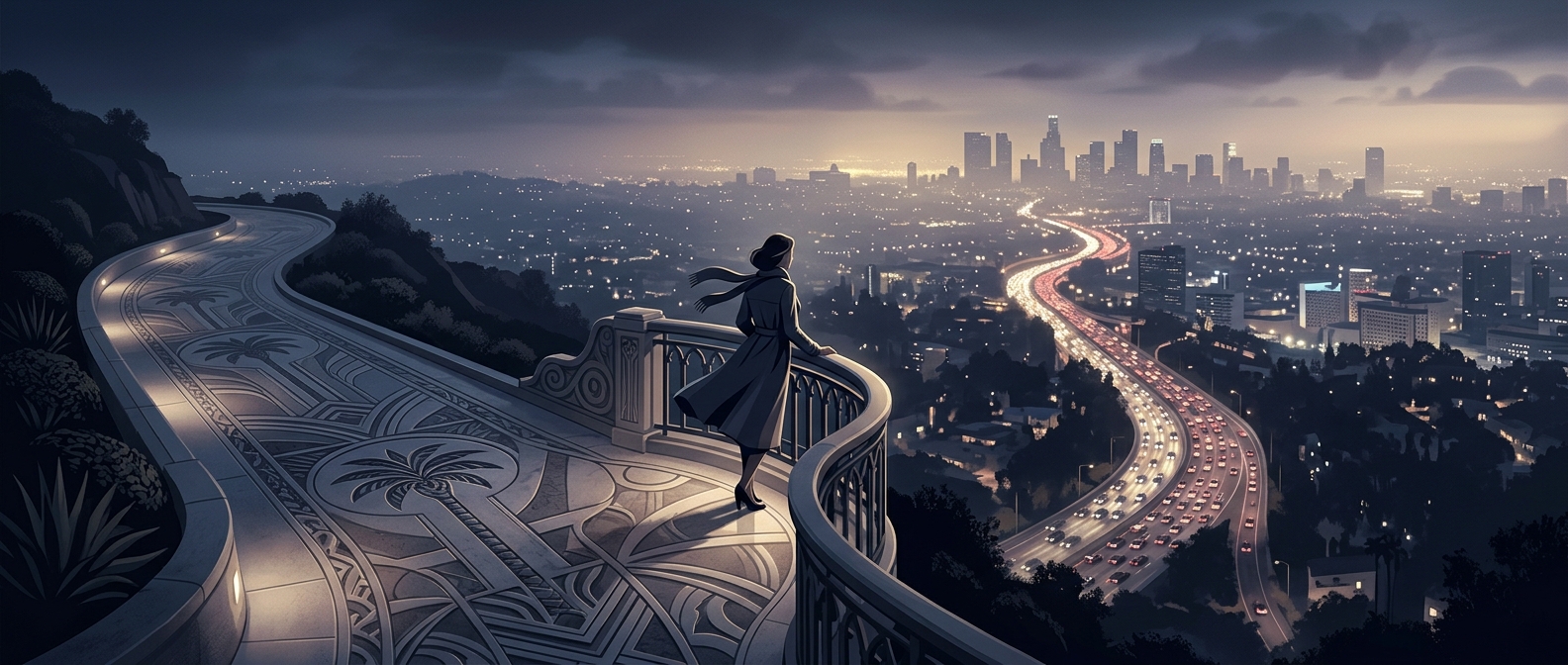
Distance changes what a sidewalk is for
In a compact neighborhood, a sidewalk can connect a home to a corner store, a bus stop, or a friend’s front door within a few minutes. In much of Los Angeles, homes, workplaces, and shopping areas are farther apart. Walking may still work for a short errand, but it is less practical when the destination is miles away.
That distance is not just a matter of how far apart buildings sit. When homes and shops are separated by wide roads, parking lots, and large blocks, a pedestrian may have to walk a long way even to reach a nearby destination. The route can feel indirect and exposed, while driving offers a direct trip from one parking space to another.
Streets built around driving reinforce the choice
Los Angeles developed with extensive road space and abundant parking, making car travel convenient for many trips. That convenience can reinforce itself: businesses are easy to reach by car, so more people drive; sidewalks then see fewer passersby, and walking feels less like the natural way to get around.
The result is a mismatch between the sidewalk and the city around it. Pavement may be continuous, but it cannot make a distant grocery store, job, or café close. A busy sidewalk depends on destinations within walking distance, not simply on the presence of concrete.