Heat rising through a volcanic landscape
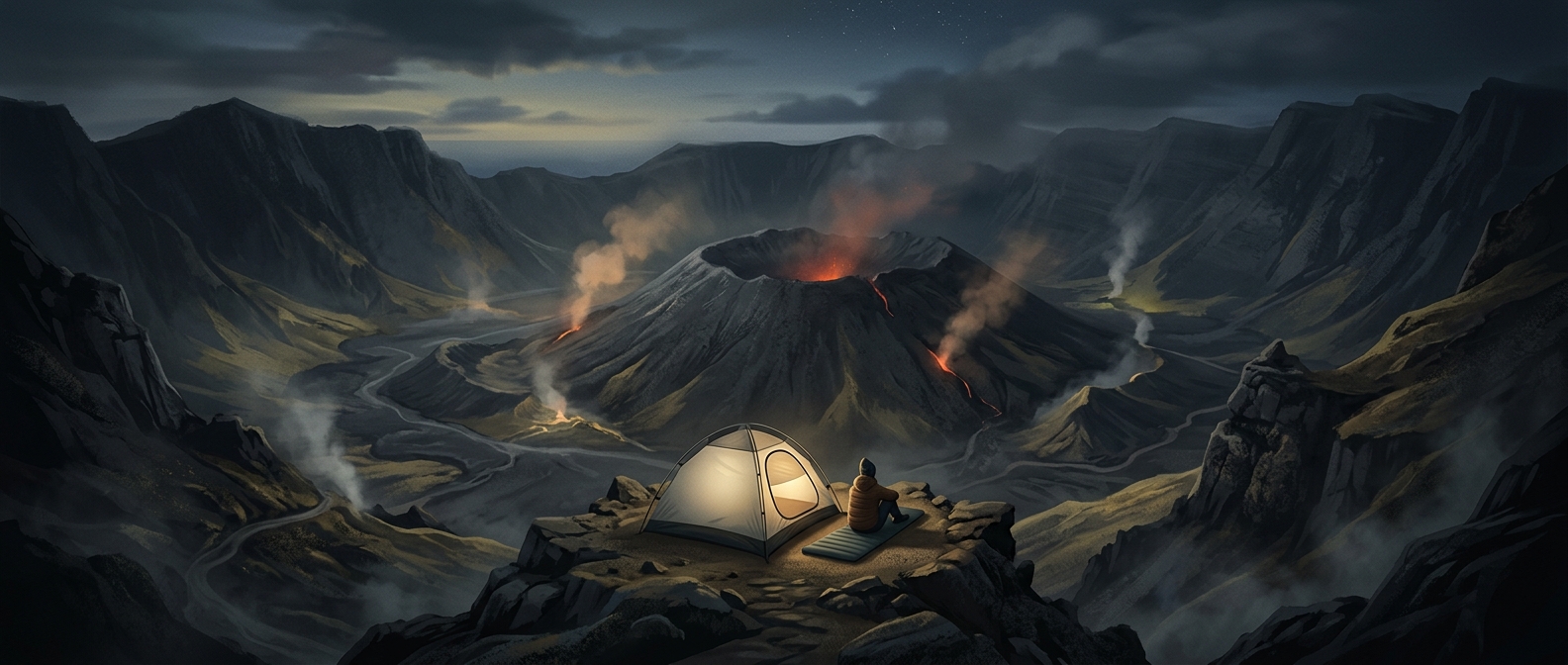
Aogashima’s useful heat comes from more than warm ground. Rainwater can seep underground, where hot rock heats it; steam and volcanic gases then find paths back toward the surface through vents. Where that heat emerges, it can be put to work without first burning fuel to make it.
The island’s nested volcanic craters are part of the same geological story: eruptions built and reshaped the land, leaving a landscape where volcanic heat remains close beneath the surface. The vents are not simply ordinary hot springs—the heat and gases come from an active volcanic system, so their locations and conditions matter.
Turning a vent into a local amenity
At public saunas, vent heat supplies warmth for bathing; the same underground energy can cook eggs. In practical terms, the volcano acts like a natural heat source, with people using the warmth where it reaches the surface rather than extracting it through a large power plant.
That arrangement also has limits. A vent’s heat is tied to a particular place, and volcanic gases and high temperatures require care. The result is a distinctly local use of the island’s geology: visitors can experience volcanic activity not only in the shape of the landscape, but in the warmth of a sauna and a meal cooked with heat from below.