Treaty ports made “Japan” a carefully staged encounter
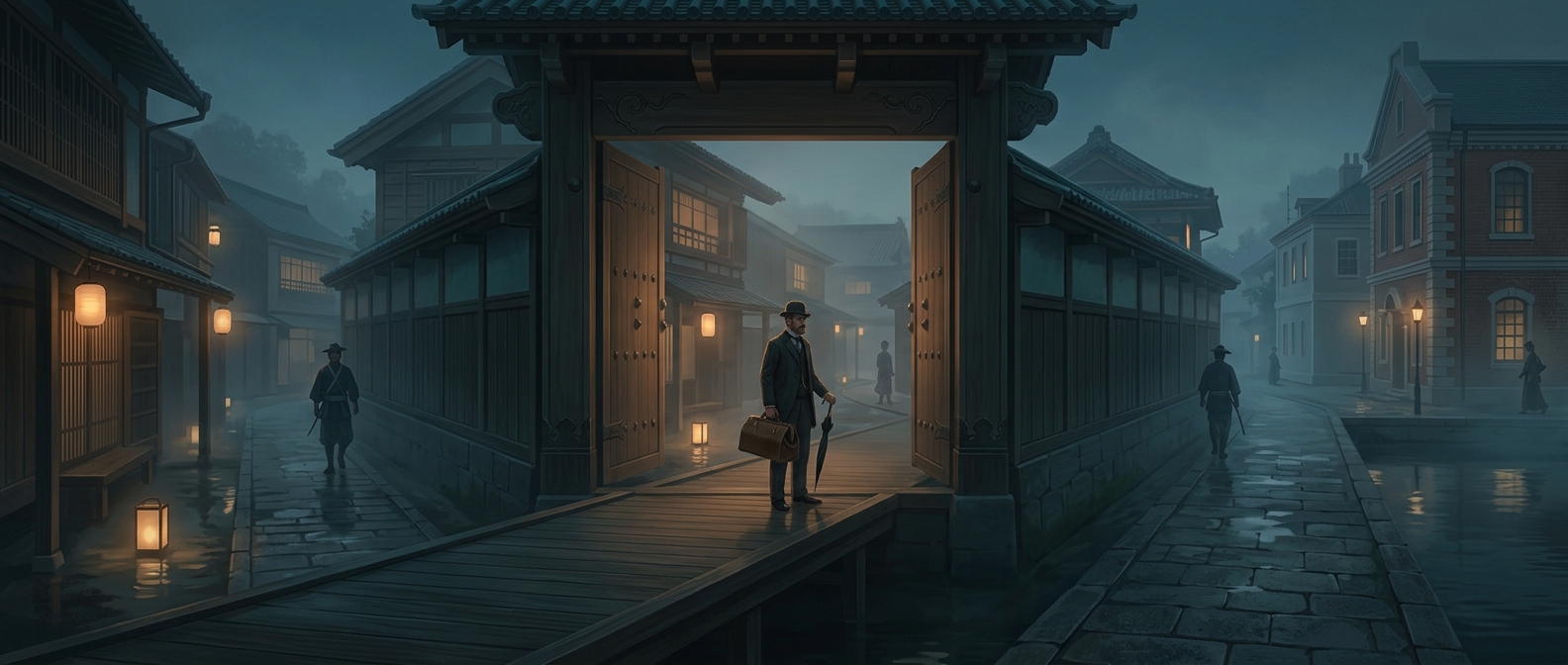
When Japan opened treaty ports to foreign trade in the nineteenth century, foreigners did not immediately enjoy unrestricted access to the country. Treaties concentrated much foreign residence and commerce in designated ports, including places such as Yokohama. The limits were not a literal tourist quarantine, but they did funnel many visitors into a small number of busy, outward-facing districts.
That concentration shaped what travelers could see—and what local businesses could sell them. In port neighborhoods, merchants and photographers served a foreign clientele eager for portable souvenirs and memorable images. Mass-produced swords made to look like samurai weapons offered an easy-to-carry emblem of Japan; studio photographs could place customers in costumes and settings that suggested a more traditional world.
The souvenir and the photograph completed the scene
These objects were not simply records of everyday Japanese life. They were products designed to make a legible impression on outsiders. A visitor could buy a sword without entering a samurai’s world, then pose for a picture that turned the purchase into a personal encounter with it. The commercial scene supplied both the prop and the story.
The result was a narrow but persuasive view of the country: foreigners encountered Japan through port districts where access, trade, and representation overlapped. Those staged images could travel home more easily than firsthand knowledge of a complex society. The “authentic Japan” in a souvenir portrait was therefore partly a performance—one shaped by the visitor’s limited route and the sellers who knew what visitors hoped to find.