A bow shaped by the snack trade
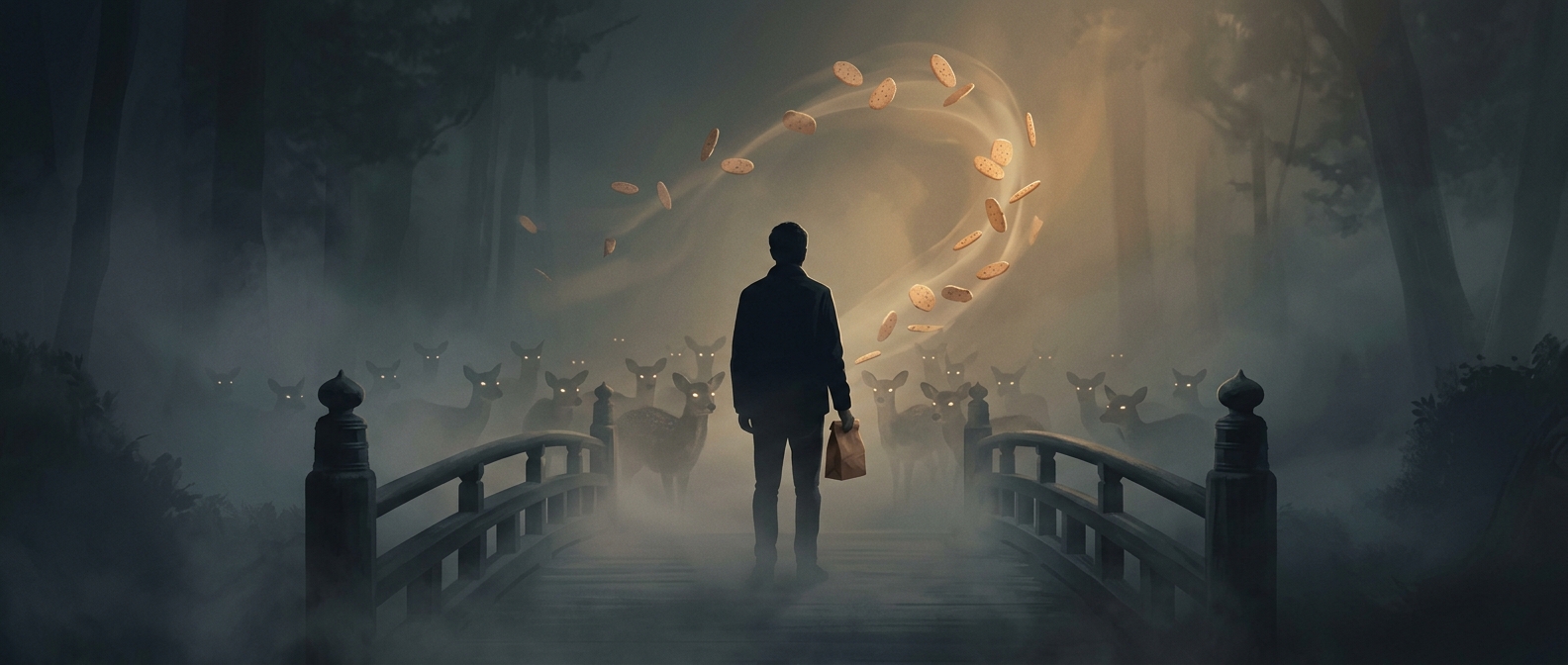
Nara’s deer are sika deer, a species native to Japan, but the bow visitors see is less a formal greeting than a learned part of a food exchange. People offer shika senbei—crackers made for feeding the deer—and deer that lower their heads are more likely to get one. Repeated encounters teach them that a bow can make a snack appear.
The exchange can become familiar enough that visitors bow back, turning a feeding routine into a memorable ritual. But the deer are not following human etiquette: they are responding to cues and rewards. When food is visible and a reward does not arrive, an animal may keep pressing for it rather than politely moving on.
When the reward disappears
That persistence is a reminder that Nara’s deer are wild animals accustomed to people, not tame pets. A pocket or bag that smells like food can attract attention, and waving a cracker around without giving it can prolong the encounter. Feeding only the designated deer crackers, following local guidance, and putting food away once it is gone helps keep the interaction from escalating.
The bow is charming because it looks so human. Its practical meaning is simpler: the deer have learned that lowering their heads sometimes pays—and they may keep asking when they think another snack is still within reach.