How a Nearly Invisible Touch Can Deliver a Sting
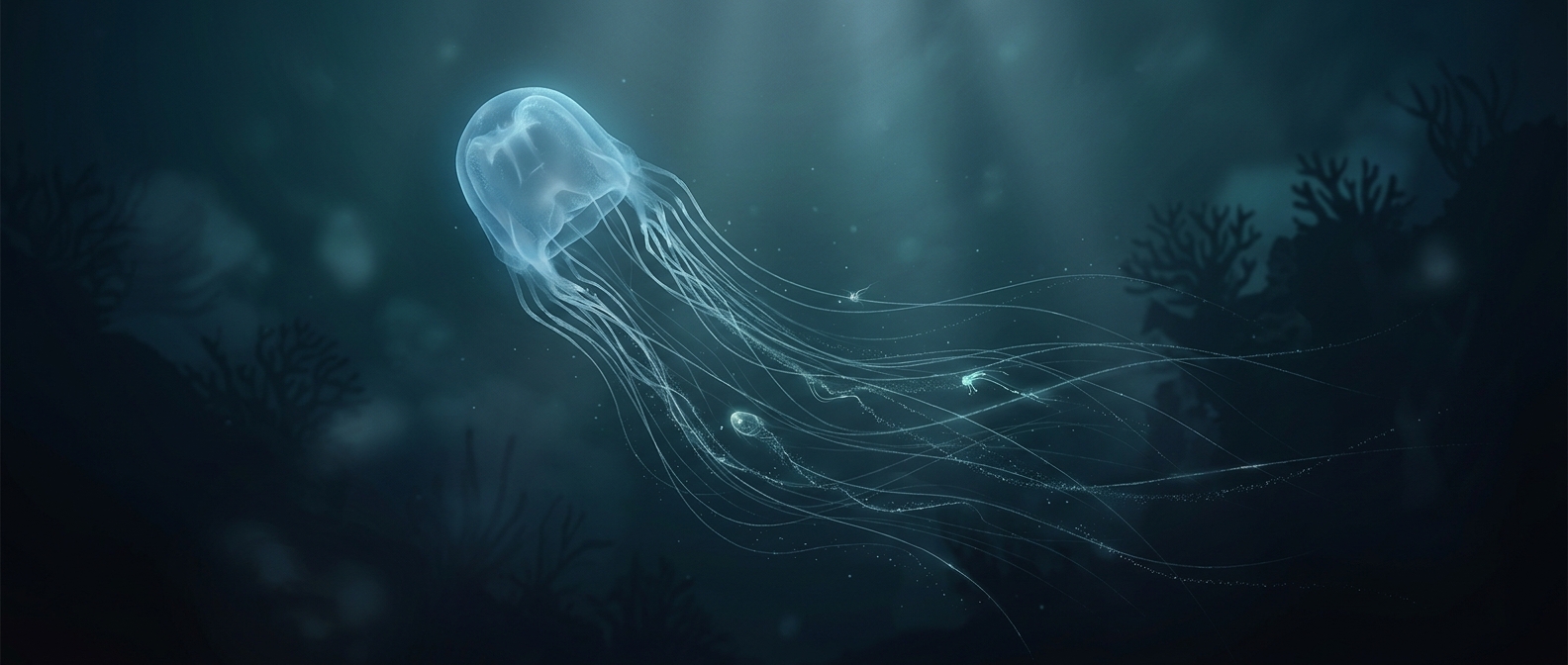
A box jellyfish’s tentacle is not a single stinging thread. Its surface is covered with tiny stinging cells, each holding a tightly coiled, barbed capsule. When triggered by contact, the capsule fires a microscopic thread that pierces the skin and delivers venom. The discharge happens so quickly that a swimmer may feel the sting before seeing what touched them.
The tentacles’ transparency helps them blend into the water, while their reach lets the jellyfish encounter prey without bringing its bell—the box-shaped body—right up to it. That combination makes a jellyfish difficult to spot and its trailing tentacles easy to underestimate.
Why a Sting Can Be More Than a Skin Injury
The venom’s effects vary with the species and the amount delivered. In some box jellyfish, it can disrupt the heart as well as cause intense pain and damage at the contact site. A sting can therefore become a medical emergency, not merely a painful brush with marine life.
For swimmers, the practical hazard is the gap between visibility and reach: clear-looking water does not guarantee that the tentacles are easy to see. Local beach warnings and guidance matter because the danger can extend beyond the jellyfish’s conspicuous body.