A Harpoon Hidden Inside the Snail
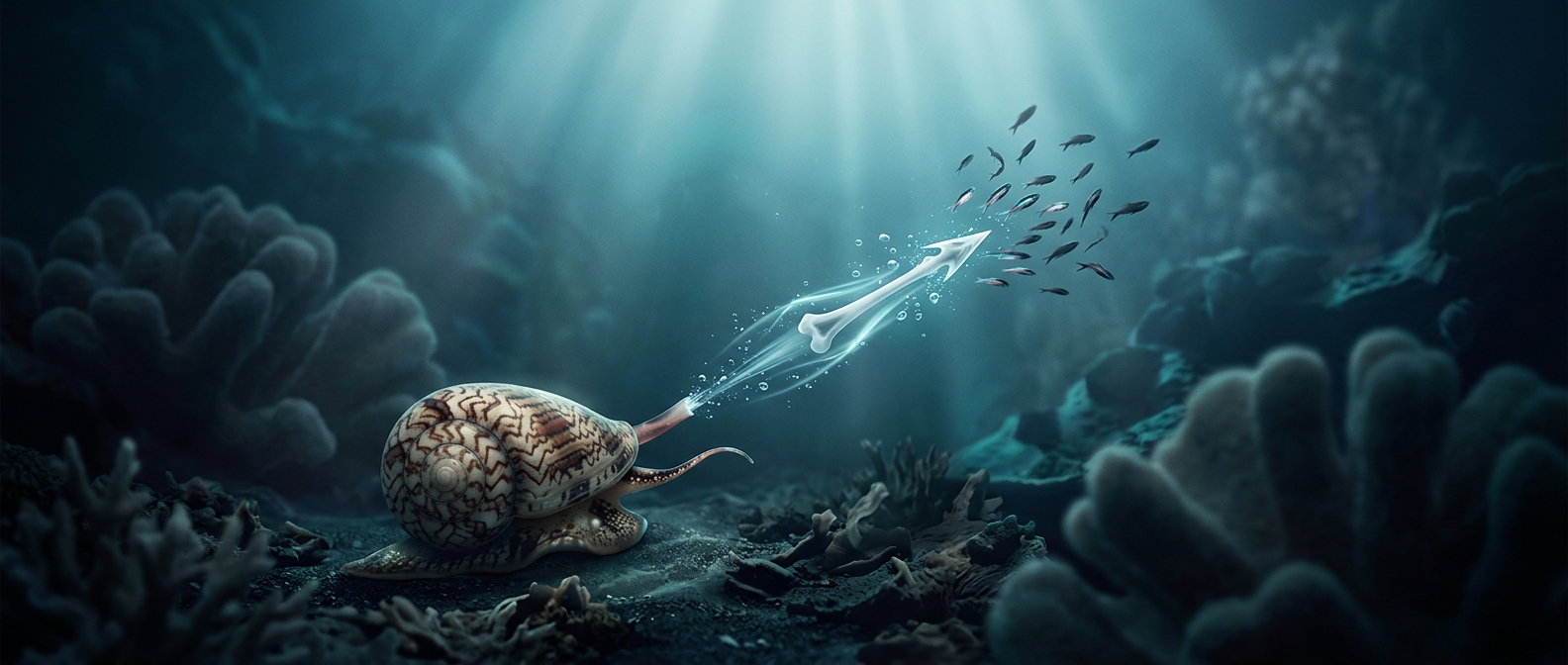
The shell is only the hard exterior. In cone snails, the weapon belongs to the animal inside: a long, flexible feeding tube reaches out from the shell and places a tiny, hollow tooth against prey. That tooth is shaped like a barbed dart and connected to a venom-producing gland. A rapid muscle-driven thrust injects venom, which can disable prey before the snail draws it in.
The tooth is part of the radula—the ribbon-like structure many snails use to scrape food, modified here into a delivery system. Different cone snails hunt different prey, so their venom mixtures vary. Some toxins disrupt nerve signals, interfering with the messages that control muscles and other vital functions.
Why a Pretty Shell Can Be a Risk
To a person walking a tropical shore, a cone shell may look like a collectible. But a live snail can extend its feeding tube and sting when handled; the animal does not need to chase someone to make contact. Depending on the species and exposure, a sting can cause severe illness, including paralysis or trouble breathing.
The practical distinction is simple: an empty shell is not the same thing as a live animal concealed inside one. A shell’s beauty can hide a working predator’s weapon, so leave unfamiliar live shells where they are rather than picking them up.