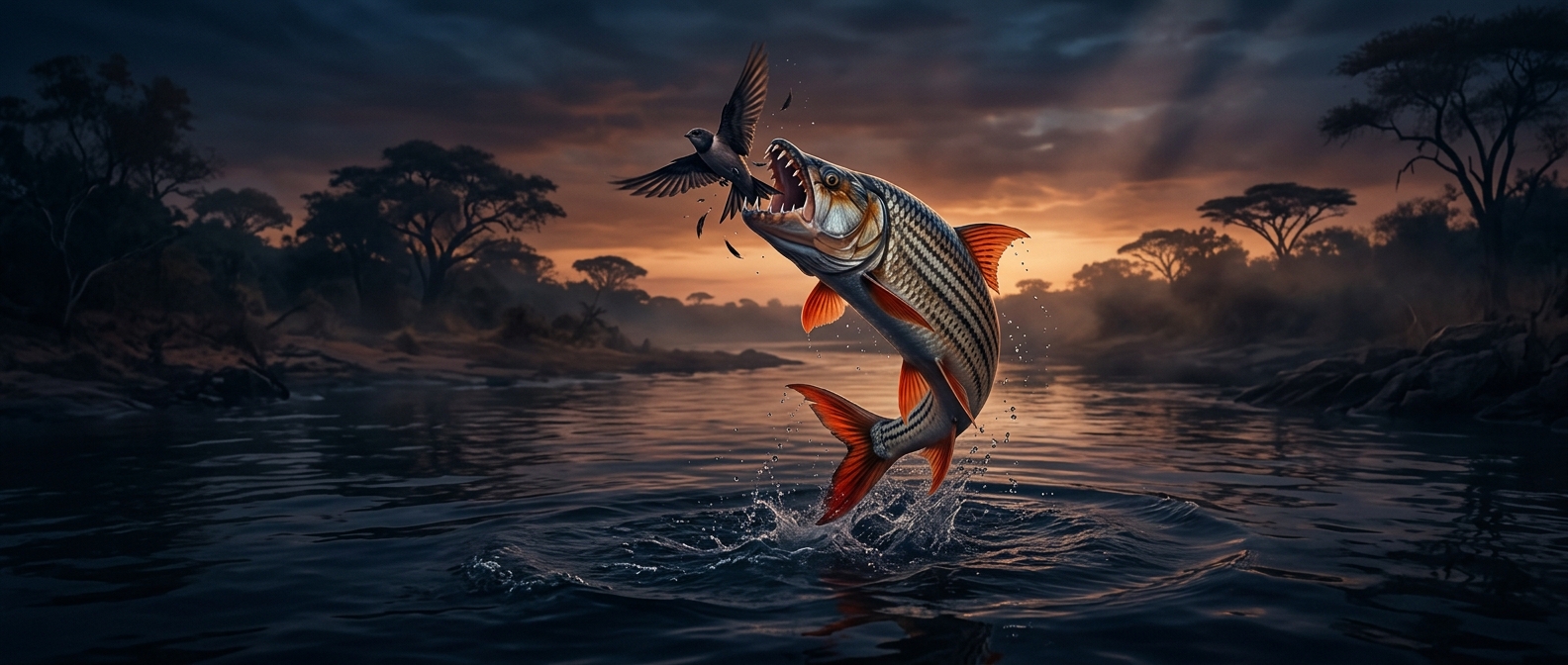
A strike timed to a swallow’s water stop
A swallow is easiest to reach when it drops close to the surface to drink. The bird makes a brief, low pass; a tigerfish waiting below can surge upward and meet it in the air. The leap is a burst of pursuit, not a fish pursuing birds across the sky: the target is within reach for only a moment, so speed and timing matter more than a long chase.
Breaking through the water also costs the fish its support. Beneath the surface, water helps it steer and push forward; above it, the fish has only the momentum it brought into the leap. That makes the attack a narrow window: it must launch from the right place and intercept the bird before gravity pulls it back down.
Teeth built to hold on
Tigerfish have long, pointed teeth that fit between teeth in the opposite jaw when the mouth closes. This interlocking arrangement helps keep slippery prey from escaping. Because the teeth are prominent, their points can still show when the jaws are shut—a visible sign of a mouth adapted for seizing prey, whether that prey is underwater or just above it.
For a swallow, drinking turns the river’s surface into a moment of danger. For the fish, it turns the boundary between water and air into part of the hunting ground.