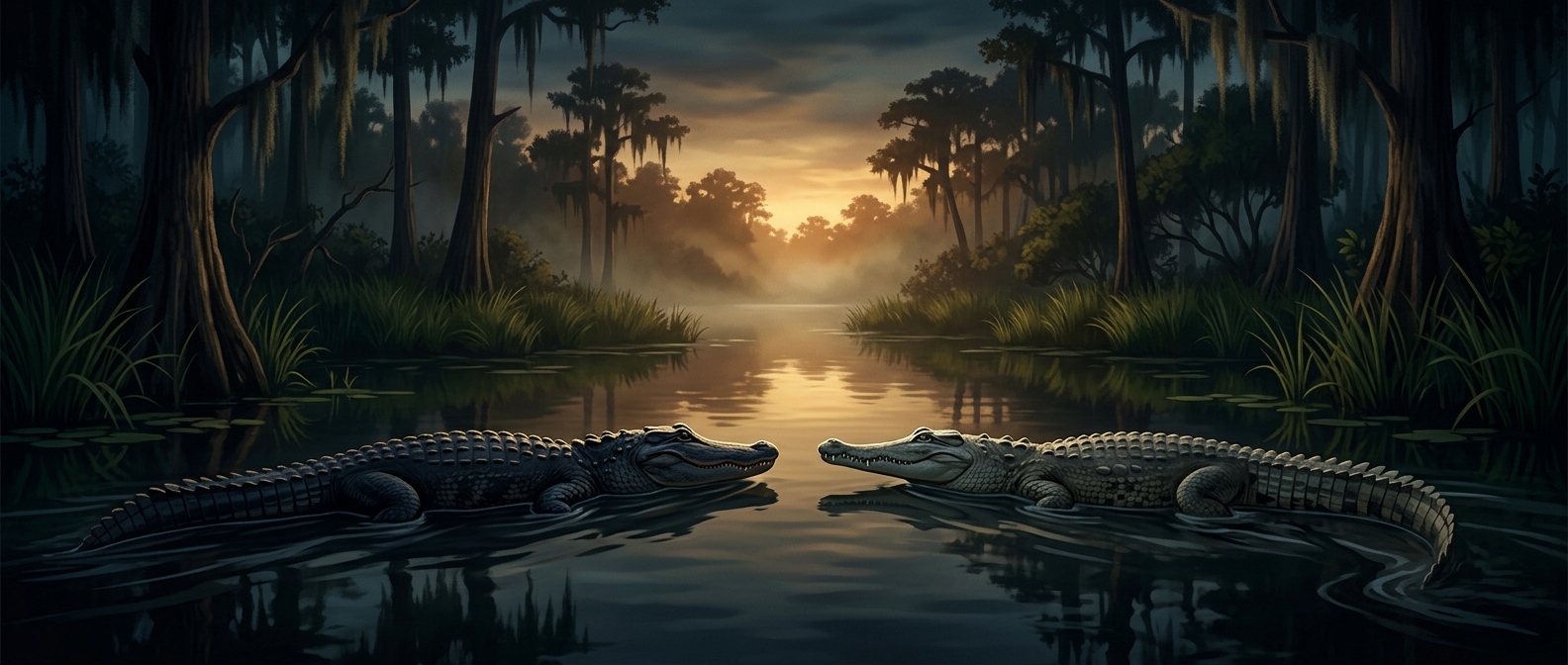
Where Freshwater and Saltwater Meet
The Everglades is not one continuous swamp. It is a shifting patchwork of freshwater marshes, mangrove-lined channels, and coastal bays. That variety lets two close relatives occupy the same broad region without needing the same conditions: American alligators favor freshwater, while American crocodiles are more often found in brackish or salty coastal water.
Brackish water is a mixture of fresh and salt water. In South Florida, tides and the slow movement of water connect inland wetlands to the coast, creating a gradient of habitats. The animals’ ranges overlap across this landscape, though they are not necessarily sharing the same pond or resting place.
Different Reptiles, Different Strengths
Both are large ambush predators, but their features reflect different ways of living. An alligator’s broad, rounded snout is well suited to gripping prey in freshwater wetlands. A crocodile has a narrower, more pointed snout and glands that help it handle salt, making coastal waters more accessible. Crocodiles can also use freshwater, so the boundary between their habitats is not absolute.
That flexibility, combined with South Florida’s unusual mix of inland and coastal environments, makes the region a rare natural meeting ground. A trip through the Everglades can pass from alligator habitat toward crocodile habitat without crossing a sharp line—just a gradual change in the water beneath the boat.