Roads Cross the Bison’s Range
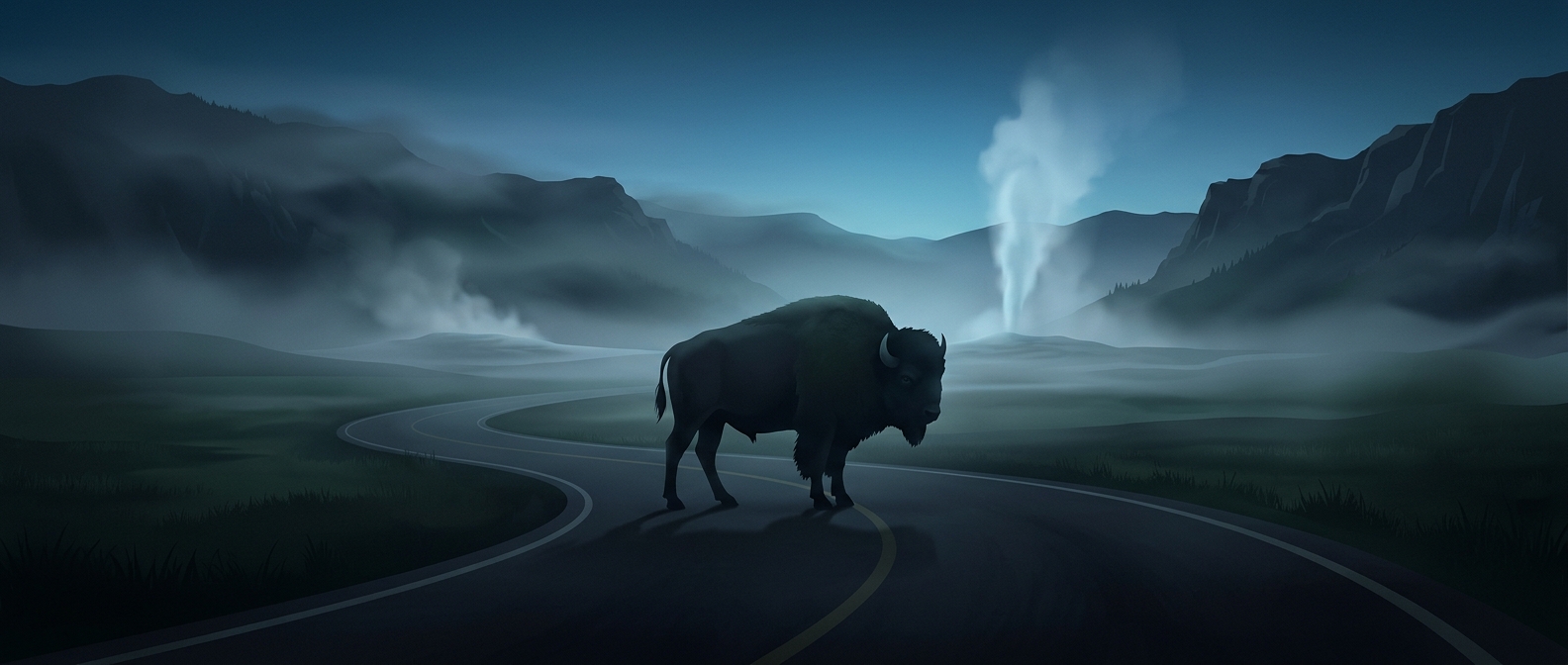
Yellowstone’s roads run through open valleys and meadows that bison use for grazing and travel. The animals roam across the park rather than staying in designated viewing areas, so a herd may reach a road while moving between feeding grounds—or simply walk along the pavement. Drivers can’t predict which way the herd will go, and a line of animals may take time to clear.
The road becomes a bottleneck because the bison set the pace. A single animal can pause, turn back, or be followed by more of the herd. Even when the pavement looks open ahead, animals may be just out of view or stepping into the roadway. Traffic stops while drivers wait for a safe opening instead of trying to squeeze past.
A Close View Is Not an Invitation
Bison can seem calm as they graze beside cars, but they are powerful wild animals whose behavior can change quickly. A vehicle offers some protection; a person on foot is much more exposed, especially if an animal feels crowded or startled. Getting closer to pet, photograph, or move a bison can make a dangerous encounter more likely.
That is why a Yellowstone traffic jam may require patience rather than a clever detour: the animals are moving through their habitat, and the road is temporarily in their way. From inside the car, the herd’s unhurried crossing is also a reminder that the park’s roads do not divide wildlife from the landscape—they pass through it.