Why reindeer make sense in Mongolia’s northern taiga
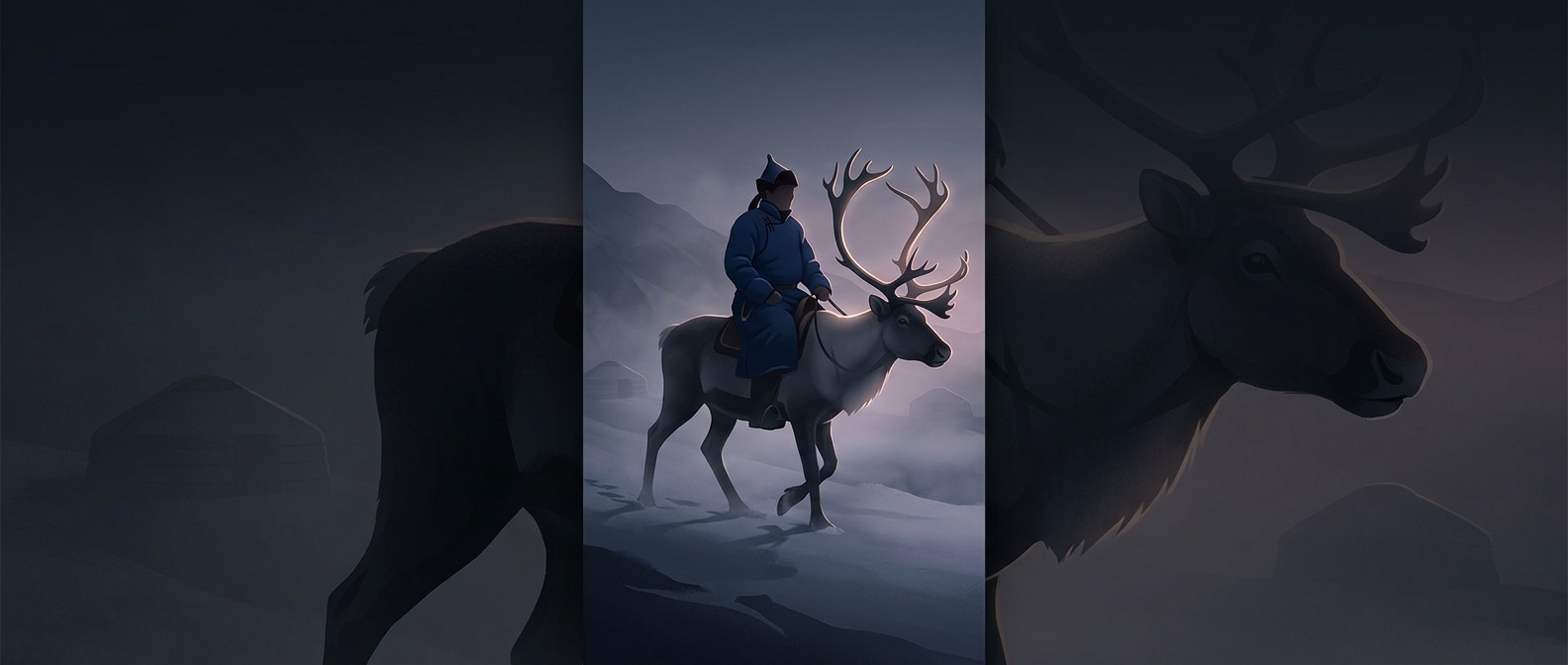
In the forested mountains of northern Mongolia, especially around Khövsgöl, some Dukha communities move with their reindeer between seasonal camps. The taiga—cool, often difficult-to-cross woodland—has narrow trails, uneven ground and patches of wet terrain. A large sled needs room to travel; a reindeer can pick its way along paths where hauling one is awkward. The animal can also carry a person or supplies, making it useful for short journeys between camps or across nearby grazing areas.
A working partnership, not just a way to travel
Reindeer are valuable because they fit into a herding life built around movement. Families guide their animals toward places where they can find food, including lichens, and shift camp as conditions change. Riding is one part of that relationship: herders manage and handle the animals closely, using them for transport as well as other practical needs.
The practice belongs to particular communities and landscapes; it is not a general feature of life across Mongolia. In the northern taiga, though, the choice of mount reflects the terrain: when paths are tight and ground is irregular, a sure-footed animal can be more useful than a vehicle or sled.