Why a Kangaroo Can’t Simply Step Back
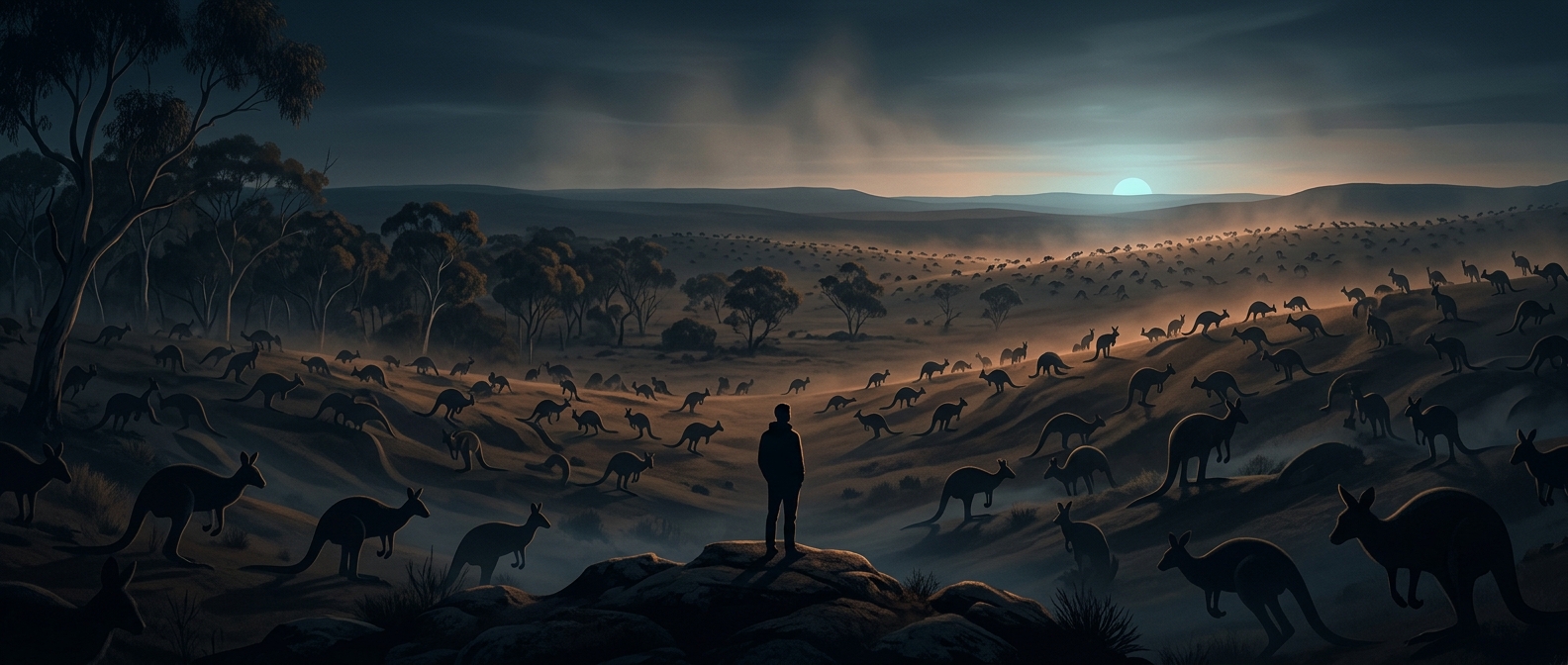
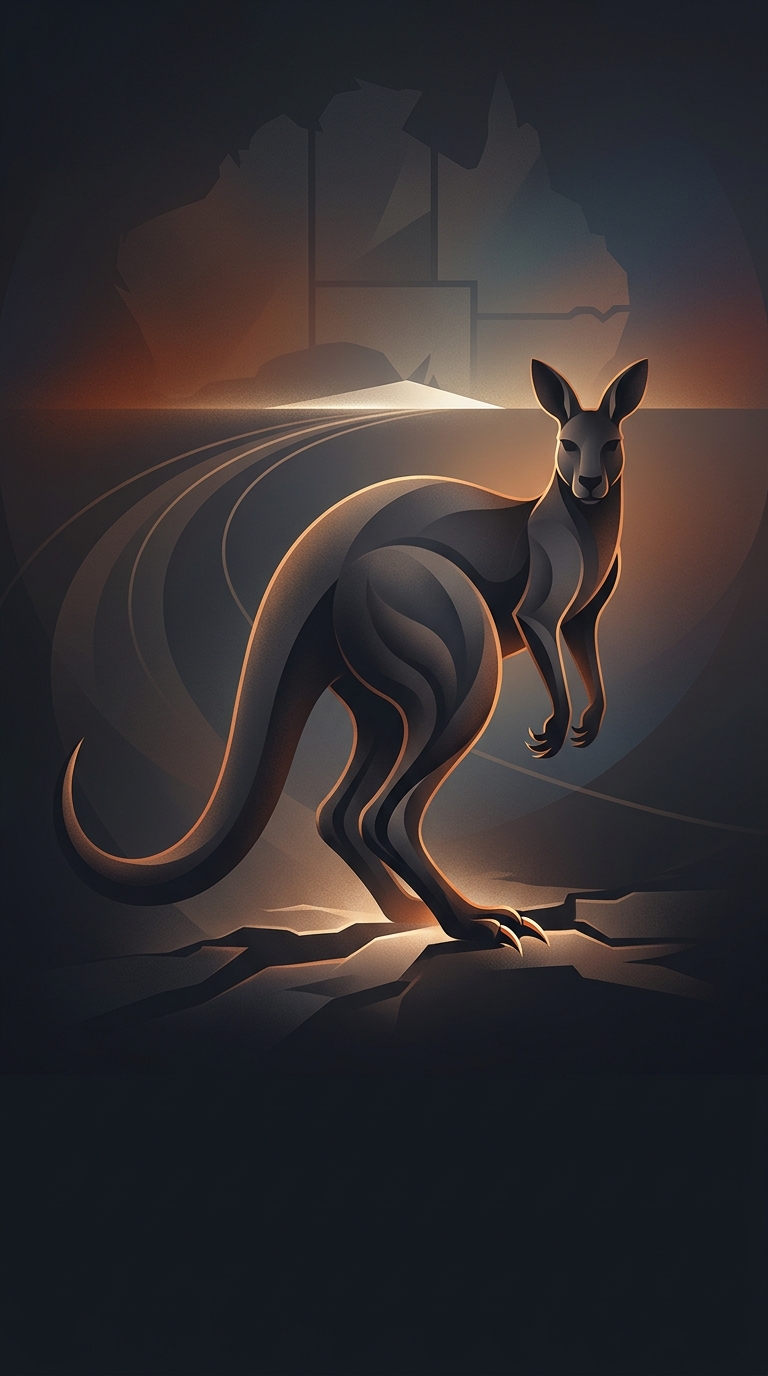
A kangaroo’s body is built around powerful forward movement. Its long hind legs and oversized feet work together in a hopping gait: the legs push off, the body travels forward, and the feet land to absorb the impact. That arrangement is excellent for covering ground, but awkward for taking the small, alternating steps that ordinary backward walking requires.
The tail adds another constraint. It is muscular and helps balance the animal while it hops. At a slow pace, a kangaroo can even use its tail as a support while moving its hind legs forward, much like a fifth limb. But that specialized movement is not a neat reverse gear; the animal is poorly suited to backing up on foot.
From Locomotion to National Symbol
That limitation helped make the kangaroo a memorable emblem. Australia’s coat of arms features a kangaroo and an emu, both commonly associated with difficulty moving backward. The pairing is often read as a symbol of a country intent on moving forward rather than retreating.
The image turns an animal’s practical design into a national idea: the kangaroo’s spring-loaded stride is made for going somewhere, not retracing its steps. So the next time you see it on an Australian sign or crest, its forward-looking symbolism has a literal foothold in the way the animal moves.