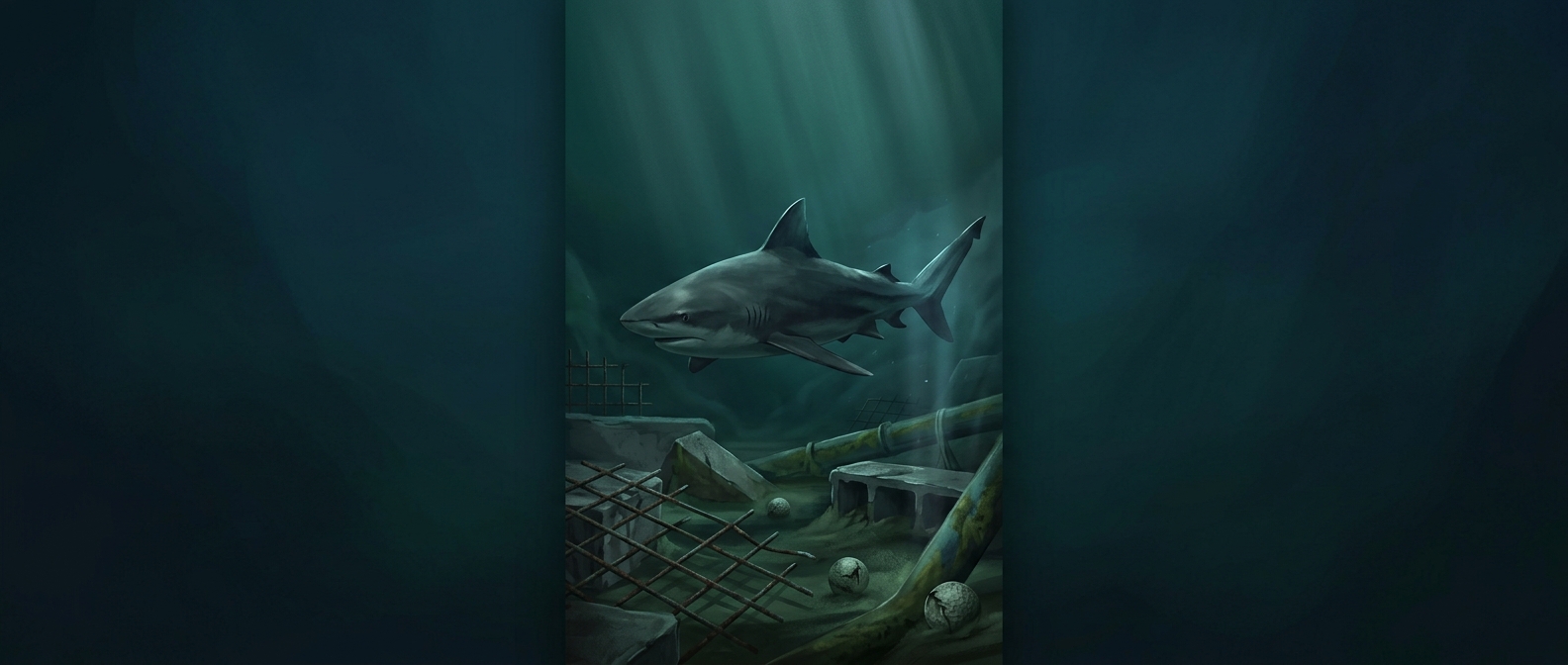
How a Flood Can Turn a Pond Into Shark Habitat
A golf-course pond may look sealed off, but during a flood it can become part of a much larger waterway. Rising rivers and overflowing creeks spread across low ground, linking channels, drains, and ponds that are normally separate. A bull shark moving through a river can then enter a course pond with the floodwater—or swim in through the temporary connection.
The unusual part is that the pond’s fresh water does not immediately drive the shark back out. Bull sharks can tolerate a wide range of salinities, from seawater to fresh water. Their bodies regulate the balance of water and salts differently from those of many other sharks, allowing them to travel upriver and remain in freshwater for a time.
When the Water Recedes
As flood levels drop, a pond can become cut off again. If the shark is left in a sufficiently deep pond, it may persist there until water levels rise or another route opens. That does not make every flooded course a shark habitat; the right combination of a connected waterway, a passing shark, and suitable water conditions is needed.
For golfers, the practical consequence is simple: a ball near the water is not worth an impulsive recovery. A pond that seems isolated in ordinary weather may have been connected to a river during the last flood—and a bull shark can make use of that brief connection.