Why Kangaroos Can Become So Numerous
Australia’s kangaroos are not one uniform population. Several species live across different parts of the continent, and their numbers rise and fall with local conditions. After good rains, grasses and other plants grow more abundantly, giving kangaroos more food and improving the odds that young animals survive. Drought can reverse that pattern, so the national balance shifts over time.
Kangaroos also have a reproductive flexibility suited to changing conditions. A female can care for a joey in her pouch while another young one develops, and she may pause an embryo’s development when conditions are poor. That does not make population growth limitless; it lets reproduction respond to whether food and water are available.
What Abundance Means on the Ground
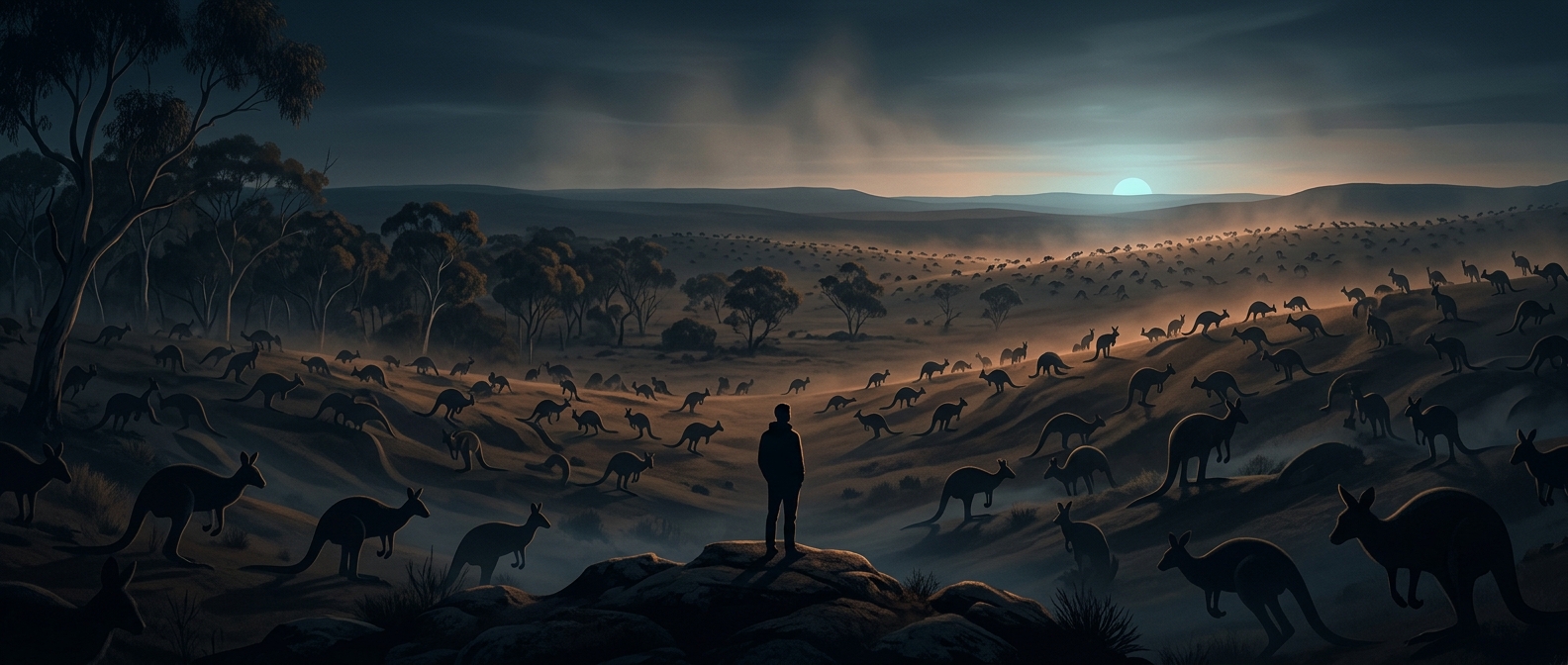
The result is a striking contrast between Australia’s sparse human settlement across large areas and kangaroos’ ability to thrive where suitable habitat and forage are plentiful. Their numbers matter beyond the wildlife count: where kangaroos feed, they share vegetation with livestock, and where they cross roads, collisions can become a serious risk, especially in rural areas.
For travelers, the practical consequence is simple: a quiet stretch of open road is not necessarily an empty one. Kangaroos are most active around dawn and dusk, when reduced visibility can make an animal near the roadside hard to spot until it moves.