Why a walk beyond town needs preparation
In Svalbard, the boundary between a settlement and polar-bear country can arrive quickly. Outside the main settlements, people may cross open tundra or coastline where there is little shelter and no reliable way to summon help at once. Polar bears move over large areas, often following sea ice in search of food, so an encounter can happen far from buildings or roads.
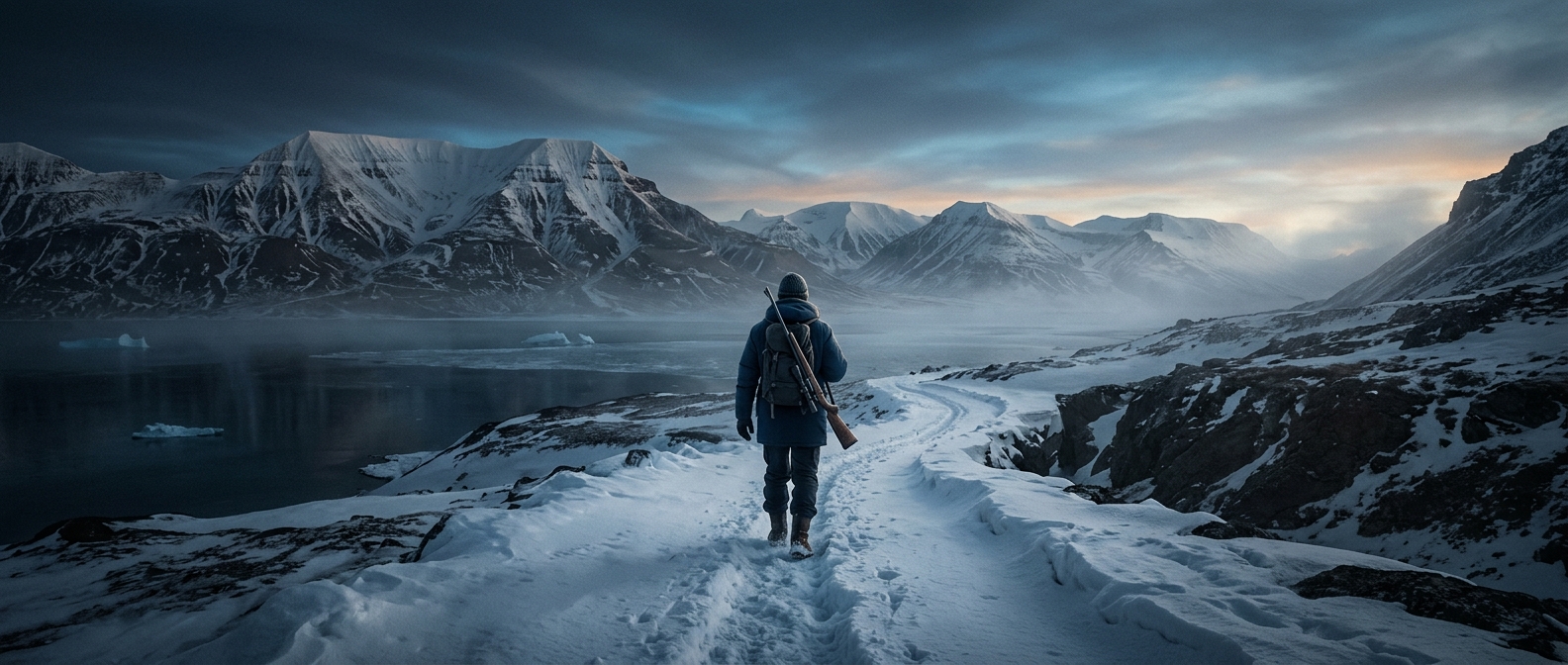
That is why trips beyond town are treated as outdoor expeditions, not ordinary walks. Travelers generally go with someone trained to manage bear risk and carry equipment for detecting or deterring an approaching animal. A rifle is part of that safety setup; it is a last line of defense, not permission to hunt. Polar bears are protected, and avoiding an encounter is safer than trying to confront one.
The goal is to prevent a close encounter
Guides watch for bears, choose routes with visibility, and keep people together. If a bear is spotted, the priority is to create distance and leave the area. Deterrents such as flares can help drive an animal away without injuring it. A firearm matters because, in the rare situation when a bear comes close and cannot be turned back, a person may have only seconds to protect the group.
The practical consequence is that a simple outing can require planning, training, and specialized gear. In Svalbard, carrying a rifle outdoors reflects the seriousness of sharing an exposed landscape with a powerful, wide-ranging predator—not the expectation that bears should be shot.