Why San Francisco’s parrots could stay
A parrot escaping its cage is usually a brief story. A flock can become a lasting one when the birds find what a city rarely offers all at once: tolerable weather, reliable food, places to roost, and other parrots.
San Francisco’s coastal climate is mild compared with the cold winters that would challenge many tropical birds. Its gardens, street trees, and parks add another advantage: a varied supply of fruit, seeds, and other plant food across the urban landscape. The city’s greenery is not just scenery; it helps turn separate escapees into birds able to survive year-round.
From pets to a social flock
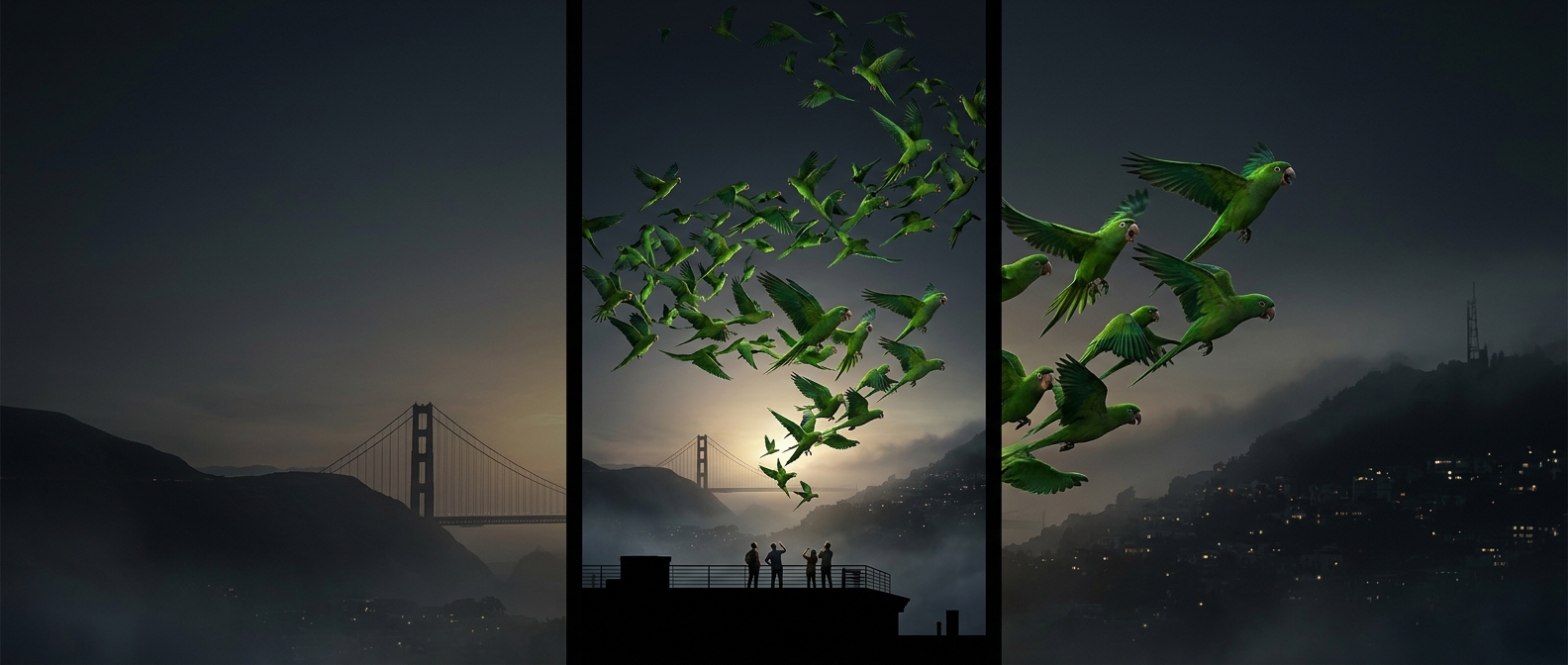
The birds most associated with the city are red-masked parakeets, often called cherry-headed conures. Like other parrots, they are highly social. They travel and feed in groups, call loudly to keep track of one another, and gather at communal roosts. That behavior makes a small population conspicuous—and helps individuals locate potential mates.
The flock is often linked to birds that escaped or were released from captivity. Once enough found one another and bred, their descendants no longer depended on a human owner for food or shelter. A city tree could serve as a stopping point, feeding place, or nighttime gathering spot; nearby gardens and parks connected those resources into usable habitat.
A wild flock in a built landscape
The parrots’ presence is a reminder that “urban wildlife” does not always mean animals pushed to the margins. In San Francisco, the same planted landscape that makes neighborhoods leafy also gives adaptable birds room to forage and gather. Their noisy flights over the city are the visible result of a few displaced pets finding not just shelter, but a community that could sustain itself.