Why raccoons can get into picnic food
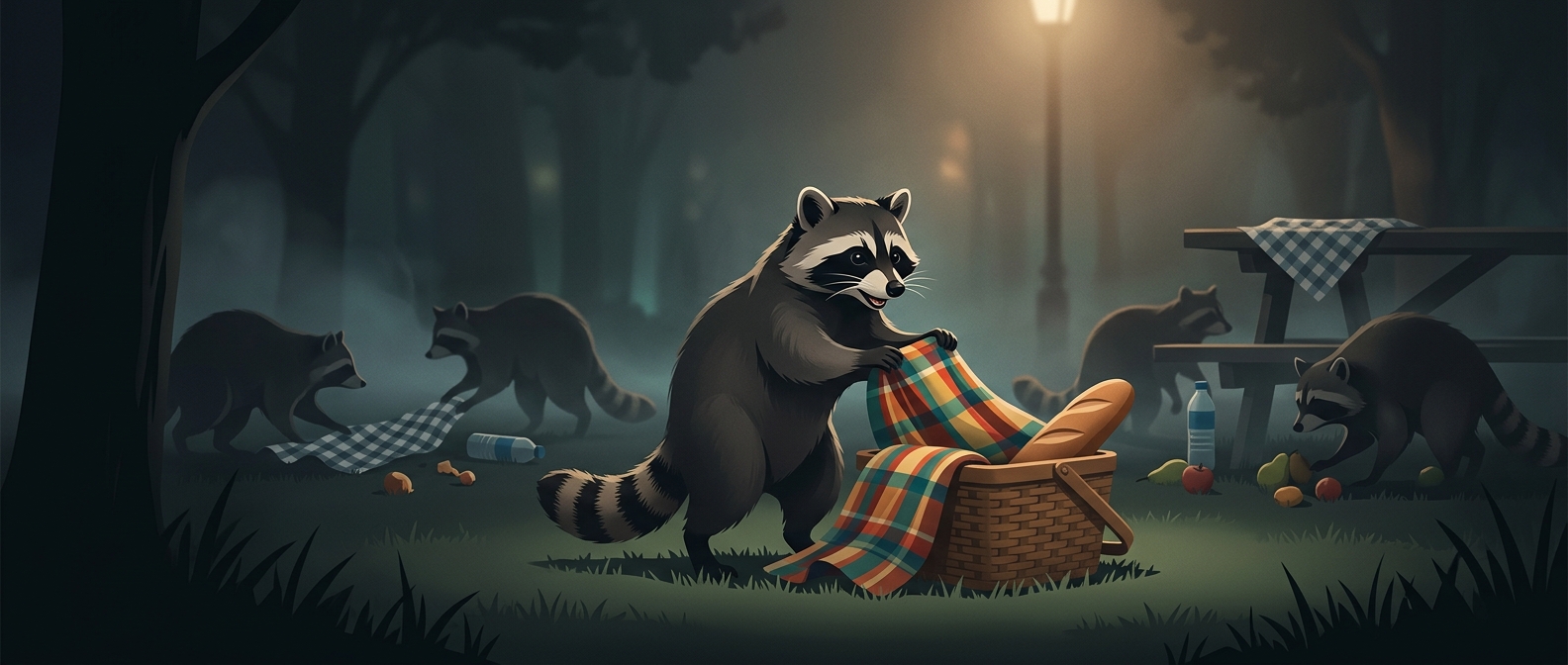
A raccoon’s front paws are unusually useful for a wild animal: flexible fingers and sensitive touch help it feel, grasp, and work at objects. That does not make every cooler or tent an easy target. But a loose lid, simple latch, or partly open zipper can give a persistent animal something to probe until it finds a way in.
Food near people also rewards that persistence. Raccoons are adaptable omnivores, meaning they eat many kinds of food, and a campsite can offer a concentrated supply of appealing smells and easy meals. When an animal succeeds at finding food around people, it may return to similar places. The picnic table is not a special attraction; it is a reliable opportunity.
How a picnic changes the stakes
A raccoon that approaches while people are watching may seem fearless, but it is usually focused on the food rather than making a bold social gesture. If people leave snacks within reach—or toss food to drive it away—the animal can learn that human activity is compatible with a meal. That can bring it closer to people on later visits and make encounters harder to manage.
Keeping food sealed and secured is therefore more than a way to save lunch. It prevents an easy reward and reduces the chance that a raccoon will keep treating campsites as feeding spots. A cooler that looks closed to a person may still be an invitation if its lid or latch gives a determined paw a foothold.