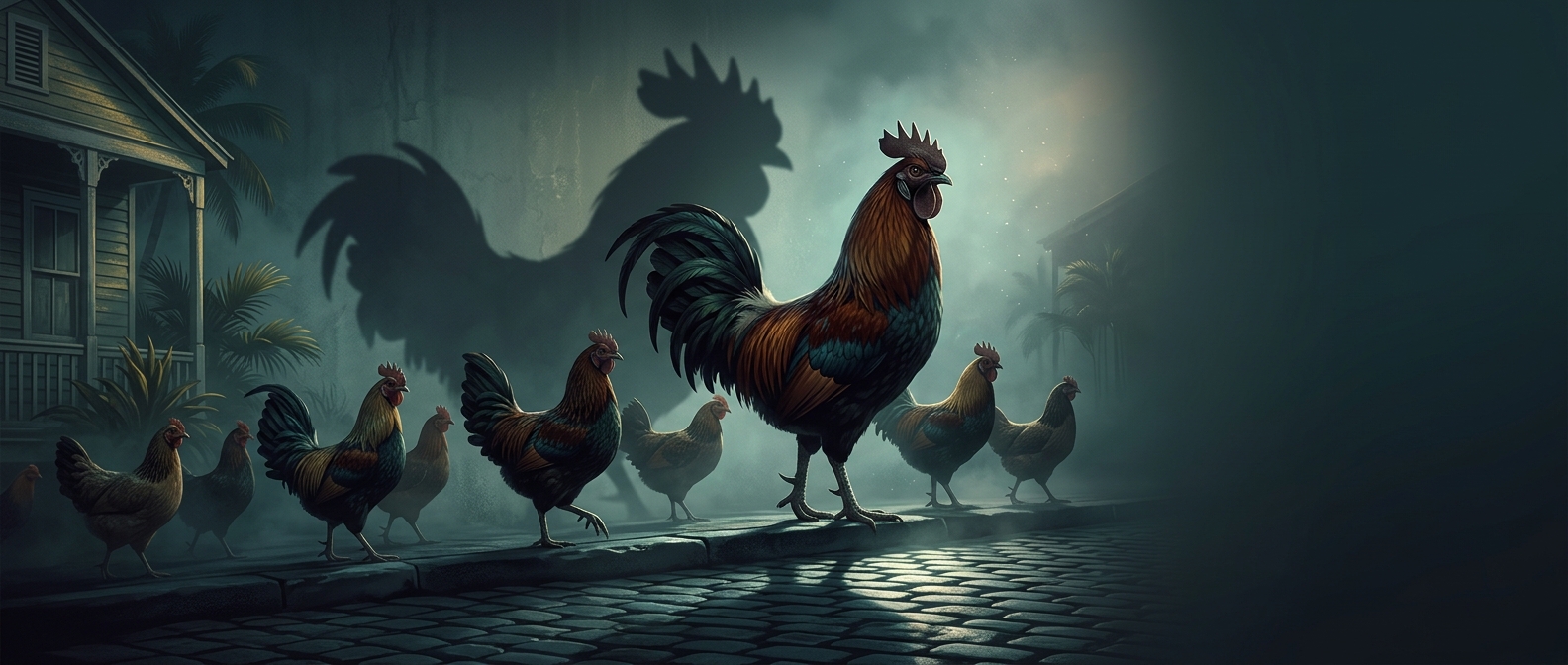
How household birds became part of Key West’s streets
Key West’s chickens are not a native wild species. They descend from domestic birds kept on the island, where generations of chickens established themselves outdoors. In a warm climate with few cold-season interruptions, birds can keep foraging and reproducing through the year rather than retreating indoors for winter.
The city’s compact streets put people and chickens in close quarters. Hens scratch for food in yards and along sidewalks; roosters announce themselves from porches, parks, and other perches. Dropped food can become an easy supplement, but the birds’ streetwise routines are also a practical response to living among houses, businesses, and traffic.
Protection turns a nuisance into a neighbor
That closeness creates friction: a rooster’s crow can disturb residents, and chickens crossing a road are vulnerable to cars. Local ordinances protect the birds, making it harder to treat them as ordinary pests or simply remove them. The rules help preserve a population that has become part of daily life, while leaving residents to navigate the mess and noise of sharing space with it.
The result is a distinct Key West scene: a flock can move past a café as if it owns the pavement, while people adjust their steps and drivers watch for a bird that may not hurry out of the way.