Why a Moose Can Seem to Fill the Road
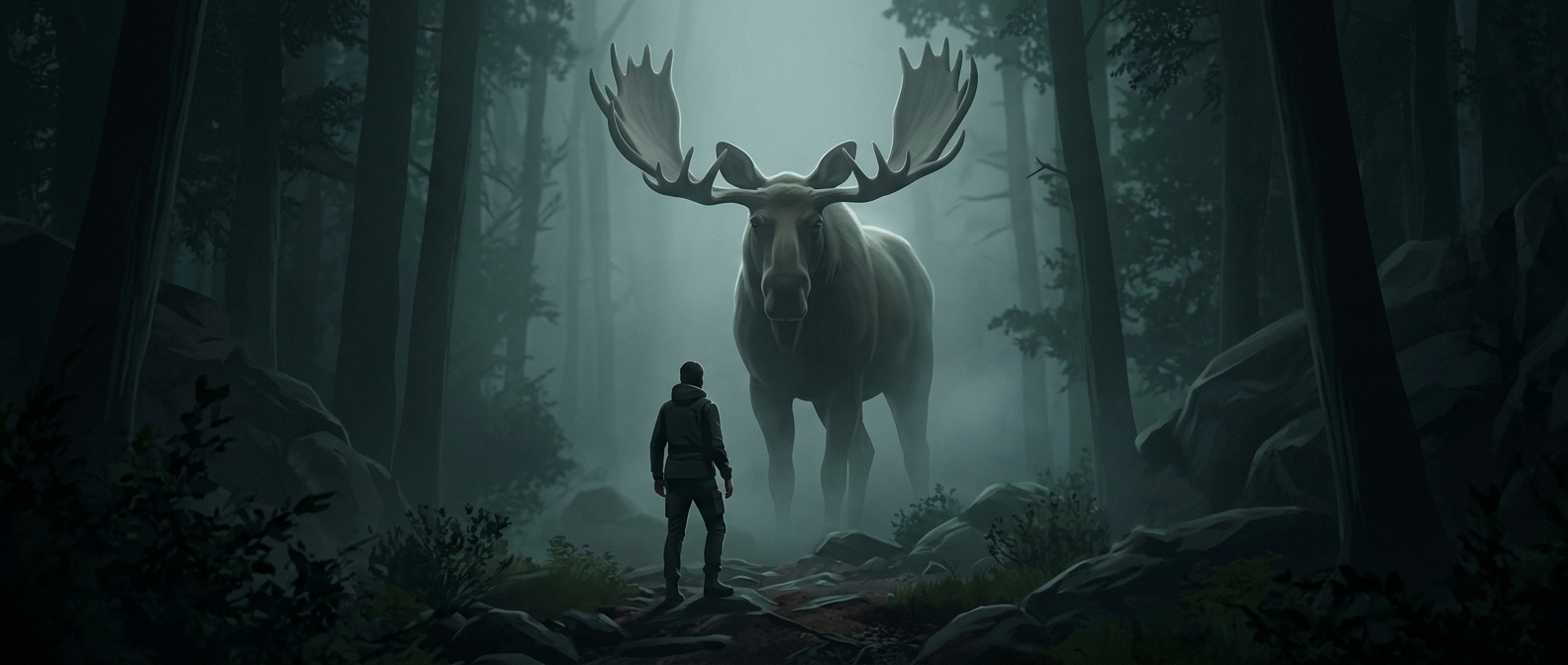
A moose’s height is measured at the shoulder—the top of its back near the front legs—not at the tips of its antlers. That matters on a road: its long legs lift a broad, heavy body unusually high above the pavement, so a driver may see a dark shape that looks less like an animal at first and more like an obstacle spanning the lane.
The impression is especially startling at night. In wooded country, a moose can emerge from the roadside quickly, and its dark body may blend into the trees until it enters the headlights. Because the animal is tall, a collision can bring its body up toward the hood and windshield rather than striking only low on the front of a vehicle.
A Crossing Changes the Driver’s View
Moose travel through forests and wetlands, and roads cut across those habitats. A route that seems empty may still pass through an animal’s path; a bend, roadside vegetation, or darkness can leave little time to react. The animal’s sheer height also makes distance harder to judge: what looks far away can be much larger—and closer—than expected.
In moose country, the practical response is to reduce speed where visibility is limited and watch the road edges, not just the pavement ahead. If one appears, braking steadily and giving it room is safer than trying to dart around it. The unsettling scale is not just a matter of antlers: even before they enter the picture, a moose’s back can rise above the hood of many vehicles.