Why a Migration Becomes a Stampede
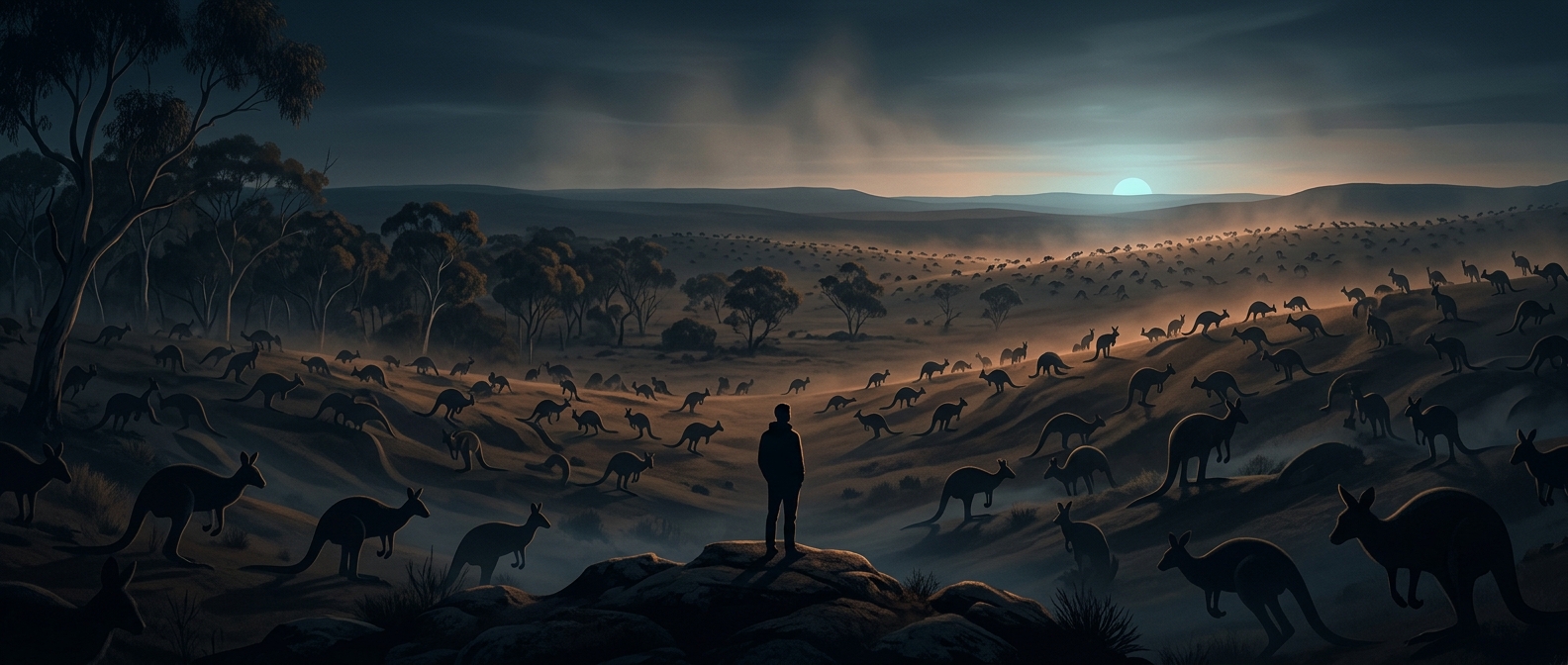
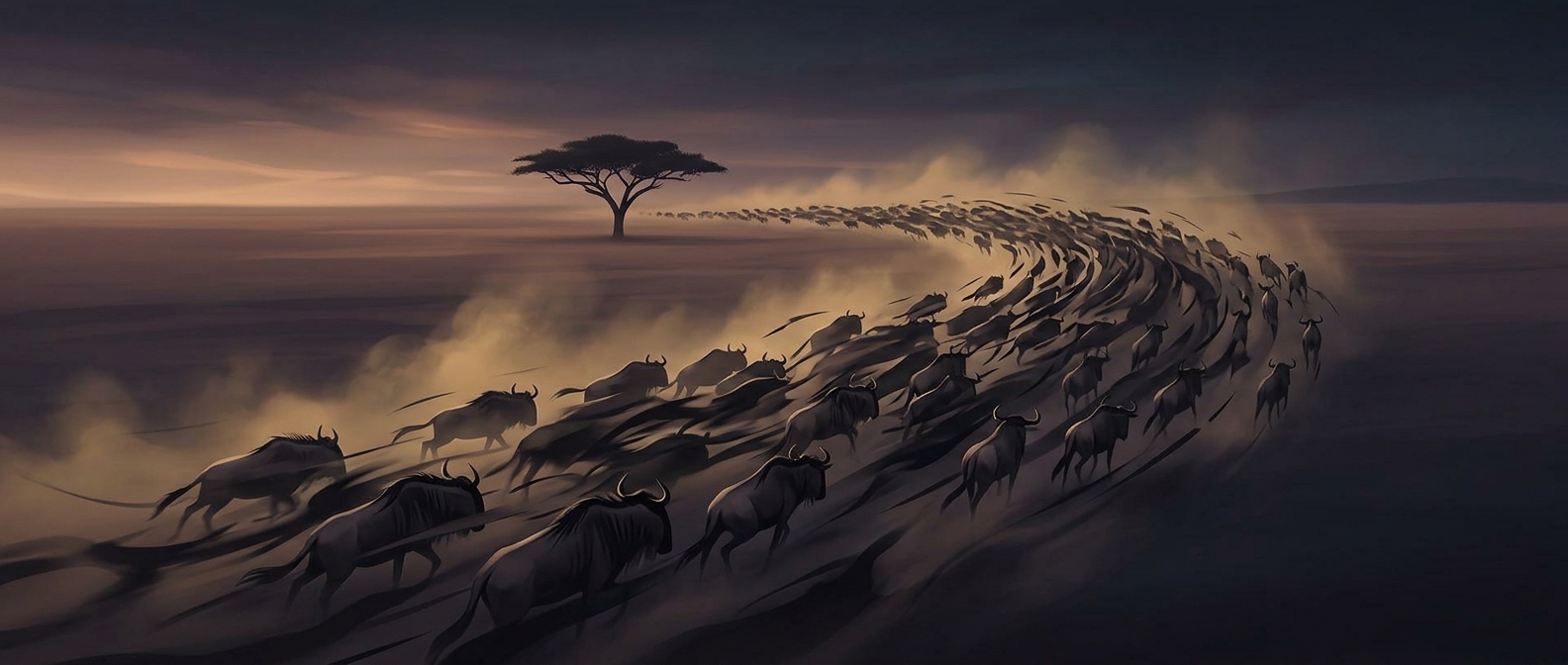
Wildebeest move across the Serengeti–Mara region in search of fresh grass and water, following seasonal changes in rainfall. The journey is not a single, synchronized march: herds spread across the plains, pause to graze, and shift direction as conditions change. When their route reaches a river, however, many animals may converge on the same limited crossing points.
A riverbank turns open country into a bottleneck. The animals must find a way down, judge the current, and climb out on the other side. Some hesitate while others press forward; movement at the front can prompt animals behind to surge after them. From a distance, that mix of hesitation and sudden motion looks like a single, uncontrolled rush.
The River Sets the Terms
Unlike traffic, a herd has no lanes or signals to regulate the flow. A steep bank, strong current, or crowded approach can make a crossing harder to navigate. In the crush, animals may be knocked off balance or forced into the water, so the most dramatic moments are also dangerous ones.
Once across, the herd can spread out again over the plains. That contrast—a tightly packed rush at the river followed by animals dispersing into open grassland—is part of what makes the crossings so striking: the apparent chaos is a consequence of many animals trying to pass through the same narrow natural gateway.