Cheese can change the dish the cook intended
In some Italian restaurants, cheese is treated less like a universal topping and more like a chosen ingredient. A cook may have balanced a dish’s salt, richness, acidity, and aroma around the ingredients already in it. Adding more cheese can shift that balance: a sharp, salty cheese may dominate a delicate sauce, while extra richness can blur the contrast that makes a dish work.
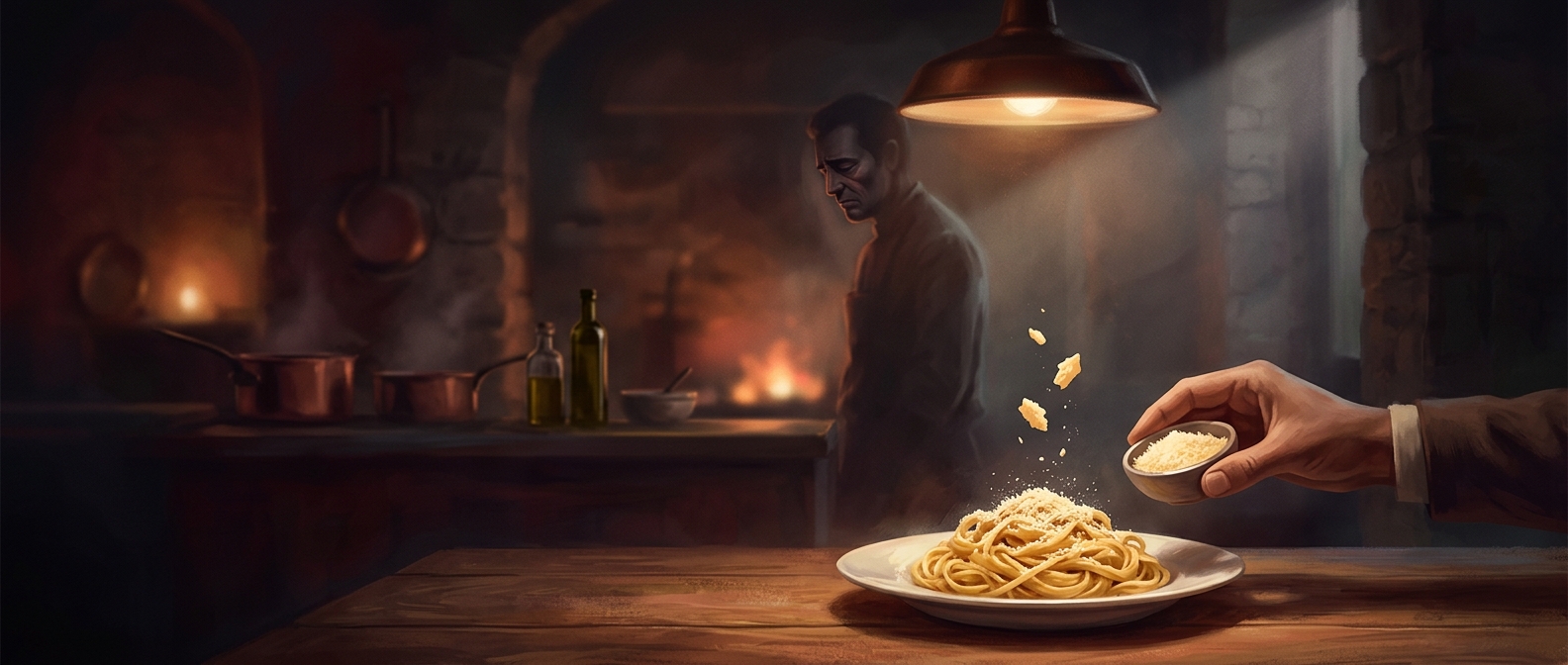
That is why the request can carry a message beyond “I like cheese.” If the dish arrives without it, asking for some may sound as though you assume something is missing—or that the kitchen’s version needs correcting. The implication can be especially awkward when the chef has deliberately left cheese off to preserve a particular flavor.
Read the dish, not a blanket rule
This is a matter of dining etiquette and local habit, not a rule that applies to every Italian meal. Many dishes are served with cheese, and some restaurants will readily bring more. Others may discourage it on seafood or other preparations where cheese would overwhelm the intended flavors. Practices also vary by restaurant and region.
A tactful approach is to ask whether cheese is served with the dish, or to accept it if the server offers it. That small pause lets the kitchen explain its choice—and keeps a request for a favorite topping from sounding like a verdict on the cook’s work.