Why a Rebound Helps Acrobats Learn
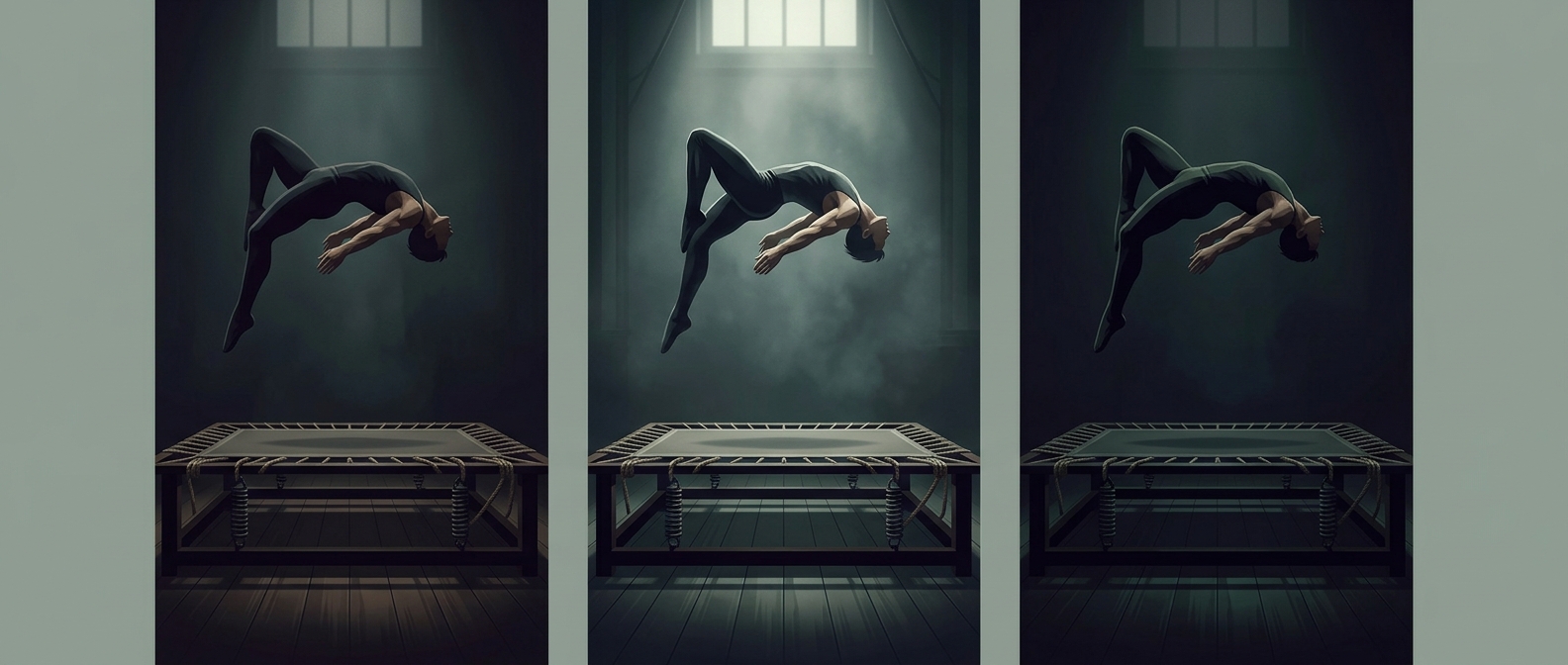
An acrobat in the air has only a brief moment to recognize where the body is and adjust its position. A trampoline changes the practice problem: instead of relying on a single jump, the performer can use repeated rebounds to work through a movement again and again.
The stretched fabric and springs briefly store energy when a jumper lands, then return much of it as the bed pushes back. That upward force creates extra airtime. More time in the air gives an acrobat a chance to rehearse a tuck, twist, or change of body position and to feel how each movement affects balance and rotation.
Repetition Makes Timing Visible
Aerial skills depend not just on strength but on timing. Pulling the arms and legs closer to the body, for example, can speed a rotation; opening the body can slow it. On a trampoline, performers can sense those changes over repeated attempts and make small adjustments to when they begin or finish a movement.
The bounce is not a perfect substitute for a stage, apparatus, or landing surface. Its height and rhythm differ, and a skill learned on it still has to be adapted to the setting where it will be performed. But it offers a useful training space between imagining a move on the ground and attempting it in a more demanding aerial routine.
That training role explains why the trampoline’s defining feature is more than fun: it turns a fleeting airborne movement into something an acrobat can repeat, observe, and refine.