Why a Small Shake Can Feel Demanding
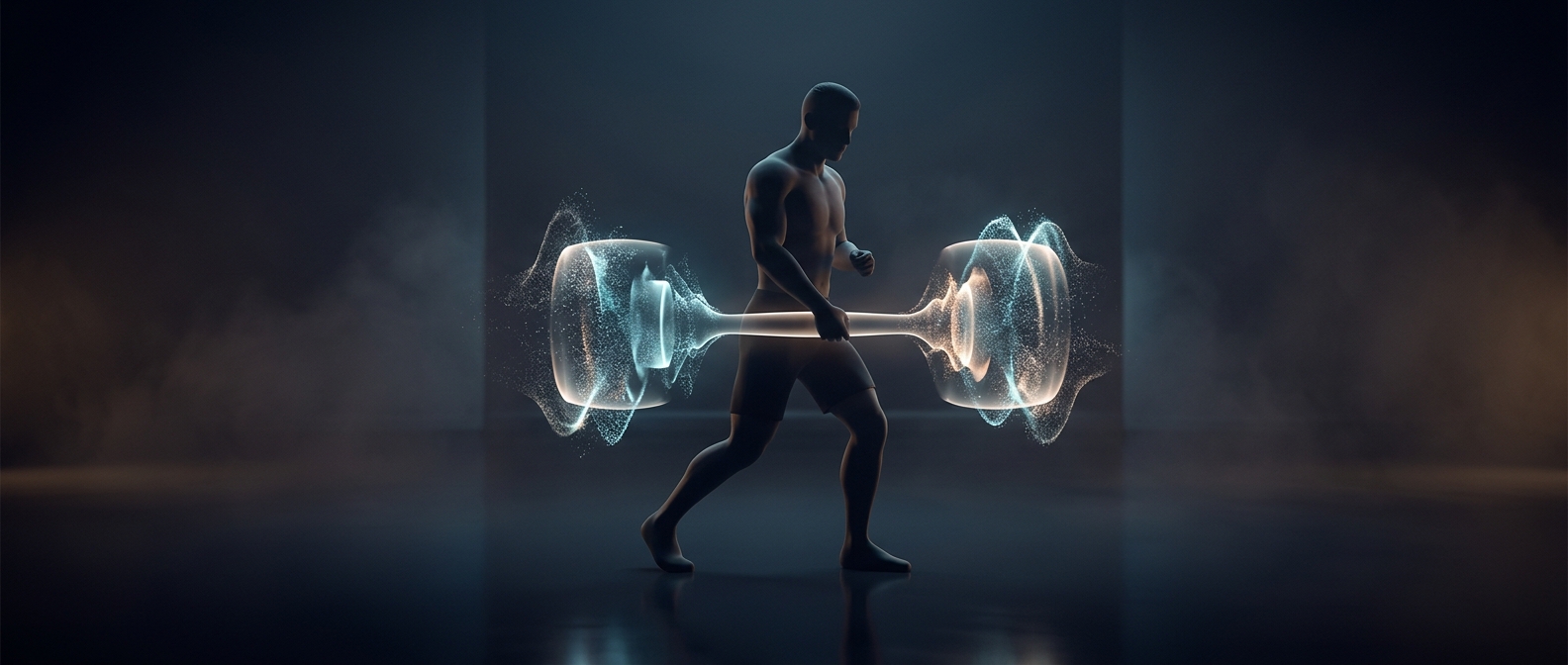
The effort comes from having to control a load that keeps changing its pull. With an ordinary dumbbell held still, your muscles mainly resist gravity in a predictable direction. With an oscillating weight, each reversal creates a brief disturbance: the handle is moving one way, then the weighted ends continue to carry momentum as you try to redirect them.
Your arm muscles must repeatedly adjust their force to keep the handle from wobbling out of control. The nervous system coordinates those quick corrections, often tightening muscles on opposing sides of a joint together. That joint-bracing response is called co-contraction. It can make the movement feel strenuous even when the device is not especially heavy.
The Motion Is Part of the Resistance
The harder and faster the shake, the more abruptly the load’s momentum changes—and the more force your hands and arms may need to manage. But the resistance is not a fixed setting: it depends on how the device is moving, how firmly you hold it, and what exercise you are doing. Slow, controlled movement produces a different challenge from rapid oscillation.
That makes the device a form of resistance training, not a shortcut around it. It still asks muscles to produce force, and the exercise is only as useful as the movement, effort, and progression it supports. Its distinctive feature is the unpredictable-feeling motion the user must control—not a special muscle-building effect hidden inside the handle.