Why a Swinging Club Trains More Than the Arms
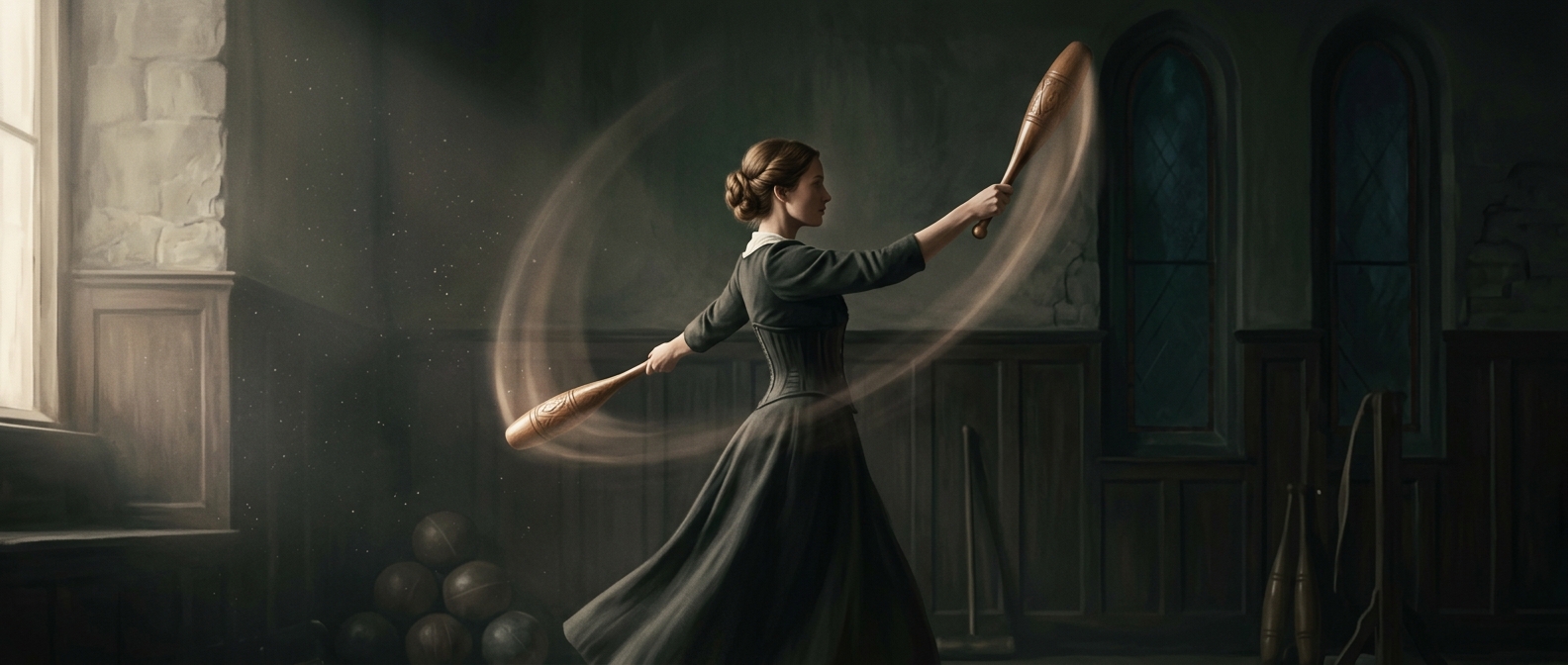
A heavy club is an awkward load: much of its weight sits far from the hand holding it. As the club moves, its momentum pulls on the grip and tries to carry the body along with it. The exerciser must control that pull through the shoulders and trunk, rather than simply lift the weight straight up and down.
That makes the movement a form of resisting rotation. The torso braces while the arms guide the club through an arc; changing direction requires the body to slow the load and set it moving the other way. The challenge is not just producing force, but coordinating it while keeping the movement under control.
From Wrestling Practice to Home Exercise
Club swinging had a practical appeal for wrestling conditioning: it challenged the body while moving through patterns that a simple vertical lift does not. The exercise could then be presented to household users as a way to develop rotational strength and control, bringing a training implement associated with athletic preparation into the market for home exercise.
The key difference from a dumbbell is leverage. With a compact weight, the load stays close to the hand; with a long club, even a modest swing creates a strong turning pull. That is why controlling the arc—not merely raising a heavy object—is the work at the center of the exercise.