The “dumb” in dumbbell means silent
Here, dumb is an older sense of the word: unable to speak or make a sound. The name preserves a practical feature of an early training aid, not a judgment about the people who used it.
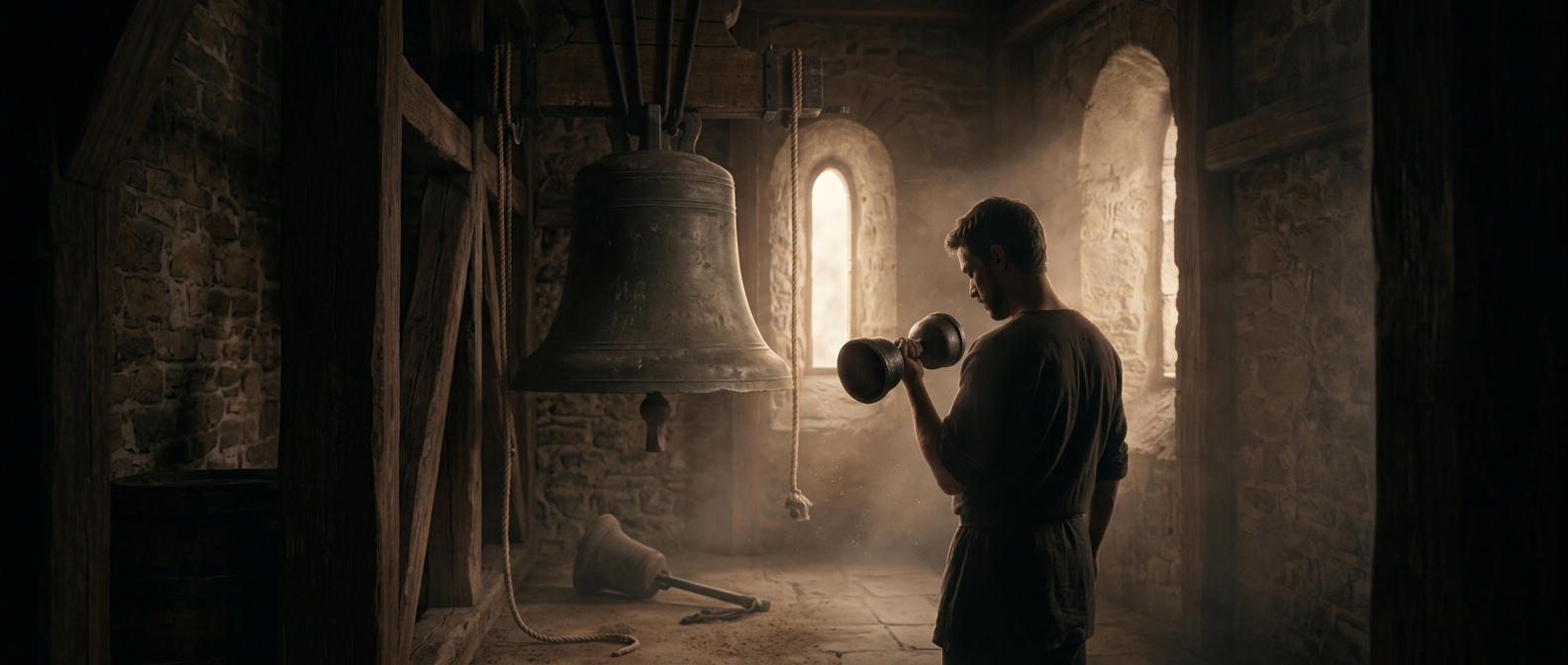
A bell’s clapper—the swinging piece that strikes its inside—makes the ringing sound. Without it, a bell-shaped object can be moved without ringing. That made it useful for practicing the pulling and lifting motions associated with bell ringing when a full, noisy practice session was impractical.
From bell practice to exercise weights
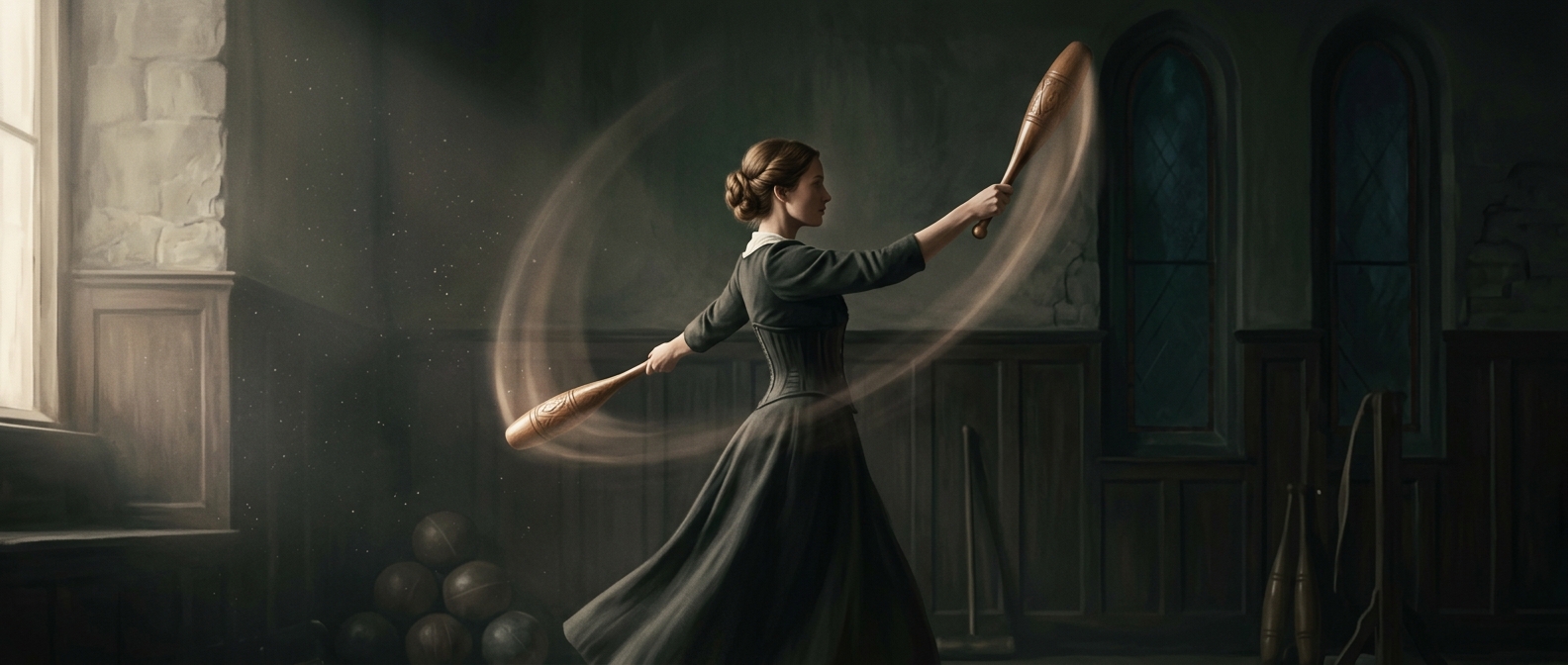
The quiet bell was also a way to work the arms and shoulders. Over time, the bell-like training object became associated with strength exercise more generally, even as its design changed into the familiar short handle with a weight at each end. The old label stayed attached to the newer equipment.
That history explains why the word does not seem to match what a modern dumbbell looks like: it names an ancestor’s silence, not the sound—or shape—of today’s weight.