How Indoor Pedaling Preserved a Racer’s Training
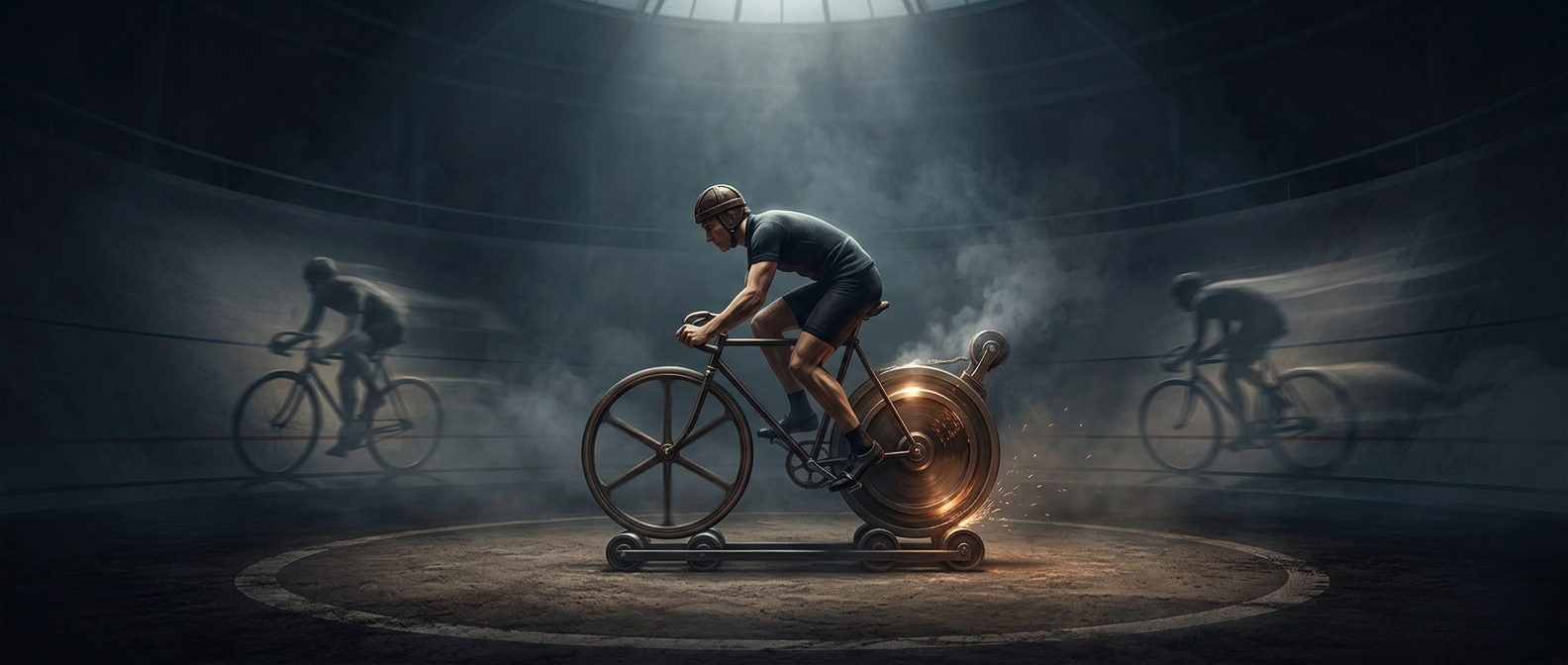
A bicycle race asks the legs to repeat the same basic action—pushing the pedals around—over and over. A stationary bike made that effort possible without the hazards of winter riding. With the wheels held in place and resistance creating a workload, a cyclist could keep turning the pedals and adjust how hard the effort felt.
That mattered because fitness depends partly on regular training. A long interruption can make sustained effort feel harder when riding resumes. Indoor sessions let racers maintain the habit of pedaling and challenge the heart and leg muscles even when icy roads or tracks made outdoor practice impractical.
What the Substitute Could—and Couldn’t—Train
The stationary bike preserved the repetitive effort, but not the whole experience of racing. It could not reproduce changing road conditions, cornering, balance, or the need to respond to other riders. Indoor training therefore offered continuity, not a complete replacement for riding outdoors.
Its practical value was simple: winter did not have to mean a complete break from the physical work of cycling. When conditions improved, racers could return to the road or track with more of their pedaling fitness intact.