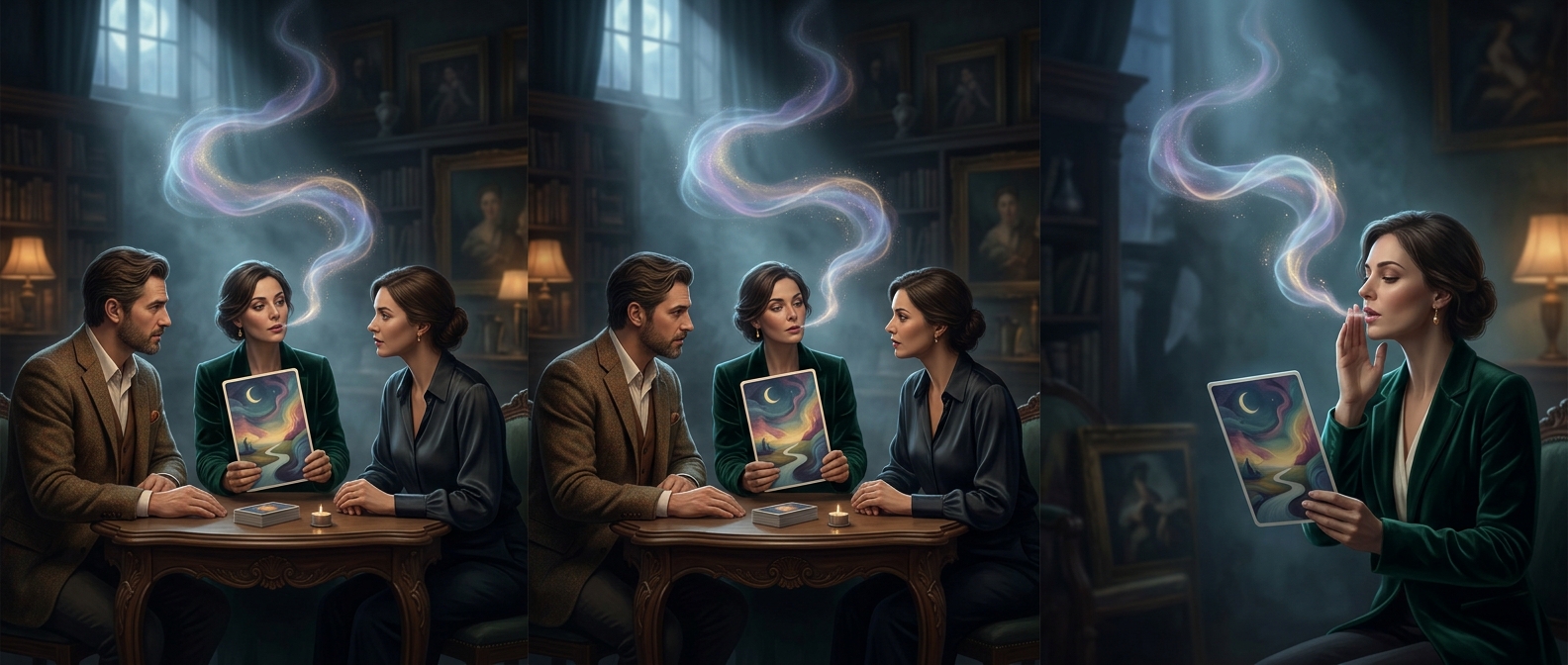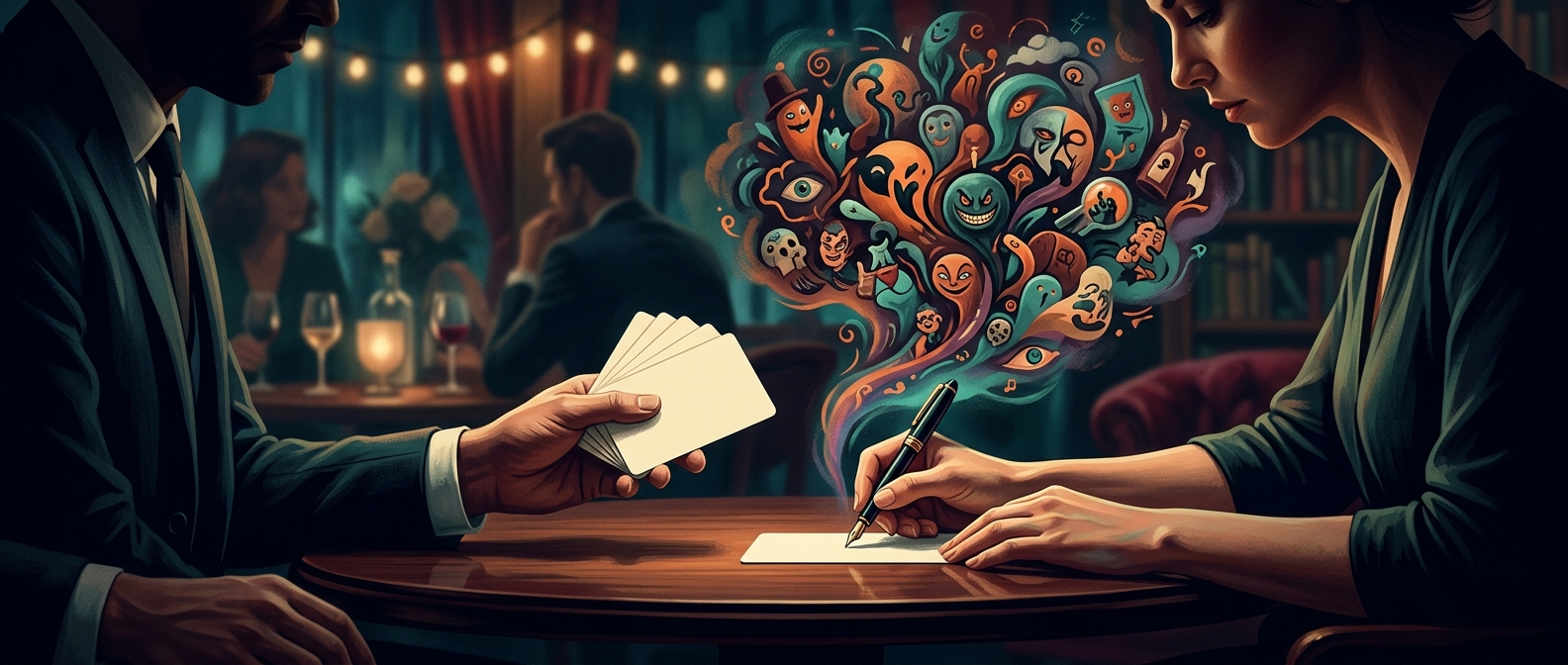
A blank card turns players into co-designers
A printed deck gives everyone the same pool of possible answers. A blank card changes that: players can add material the game’s creators could not have written in advance, from a friend-group reference to a deliberately absurd phrase. The deck becomes partly a record of the people playing, not just a product they brought to the table.
That flexibility matters because party-game humor depends on context. A line that would be merely odd to strangers can become funny when everyone knows the person, mishap, or running joke it points to. The blank card lets a group turn that shared context into something playable.
Why an outrageous answer can land
In many party games, players choose an answer to fit a prompt, and one person selects the response they find funniest. A custom answer adds a second layer to that choice: the judge is weighing not only how well the line fits, but also its surprise and its local meaning. Shock can win attention, but it is not a guaranteed advantage; a reference that only one player understands may fall flat with the rest.
The result is a small design tradeoff. Prewritten cards offer consistency, while handwritten ones invite uneven wording and jokes that may only work once. That unpredictability is part of the appeal: the group can produce a response no standard deck could contain, then decide together whether it is funny enough to keep in circulation.