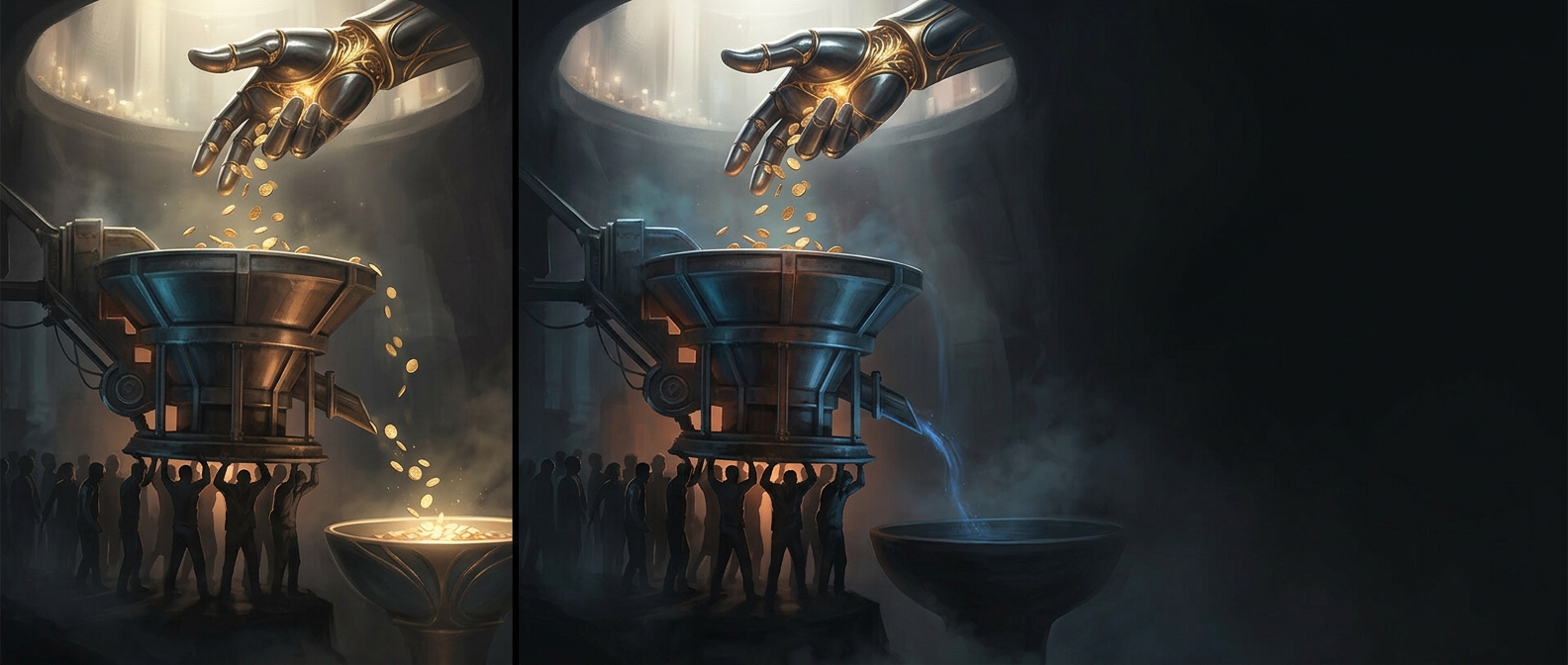
How a lower-priced funding round changes ownership
A startup’s valuation is not a cash balance or a guaranteed resale price. It is the price investors assign to the company when they buy newly issued shares. In a down round, that price is lower than in the previous financing. The company can still raise the money it needs, but it generally must issue more shares to do so.
Imagine an investor paid $10 per share in an earlier round, and the next investors pay $5. To raise the same amount of cash at half the price, the startup must sell roughly twice as many new shares. The original investor’s share count may stay the same, but those new shares make up a larger portion of the company, so the original stake is diluted.
Why the hit can be especially sharp for early backers
Early investors often bought at a higher price before the company’s prospects weakened, its growth slowed, or market conditions changed. A down round resets the price of new ownership; it does not automatically refund earlier investors or restore what they paid. Their stake can therefore lose value on paper while also becoming a smaller fraction of the business.
Some investment contracts include anti-dilution protection, which adjusts an investor’s terms when a later share price falls. Depending on the clause, an investor may receive additional shares or have the conversion price of an earlier investment adjusted. This shifts some of the dilution onto other shareholders, including founders, employees with stock options, and investors without the protection. It cushions the protected investor; it does not make the company’s lower valuation disappear.
The tradeoff behind accepting a down round
For a startup short on cash, raising money at a lower valuation may be preferable to running out of funds. But the new financing can reshape who owns the company and may leave founders and employees with smaller stakes just as they are being asked to keep building it. The practical consequence is that a funding round can keep a company alive while changing the incentives and ownership balance among nearly everyone already involved.