How astrologers build a synastry chart
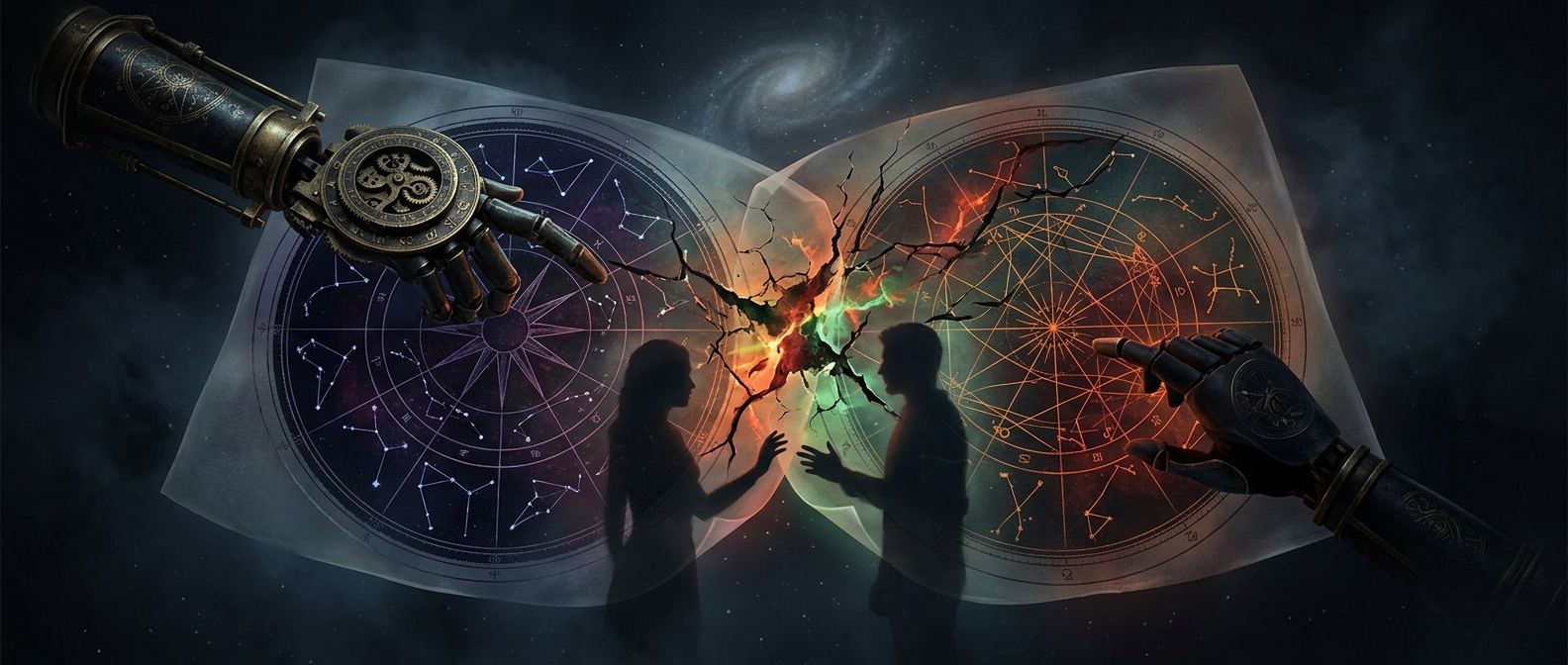
A synastry reading begins with two natal, or birth, charts: maps astrologers cast from each person’s birth date, time, and place. Each chart places the Sun, Moon, and planets in signs and houses, and marks their apparent positions in the sky at birth. In synastry, the astrologer compares the two maps, looking at where one person’s planets fall in the other person’s chart and at the angles—known as aspects—between planets in the pair.
These comparisons are treated as a symbolic vocabulary for discussing how two people might relate. For example, an astrologer might read a connection involving the Moon, which is associated with feelings in astrology, as relevant to emotional rapport. The reading depends on the astrologer’s interpretive rules; it is not a measurement of the relationship itself.
A map for interpretation, not a verdict
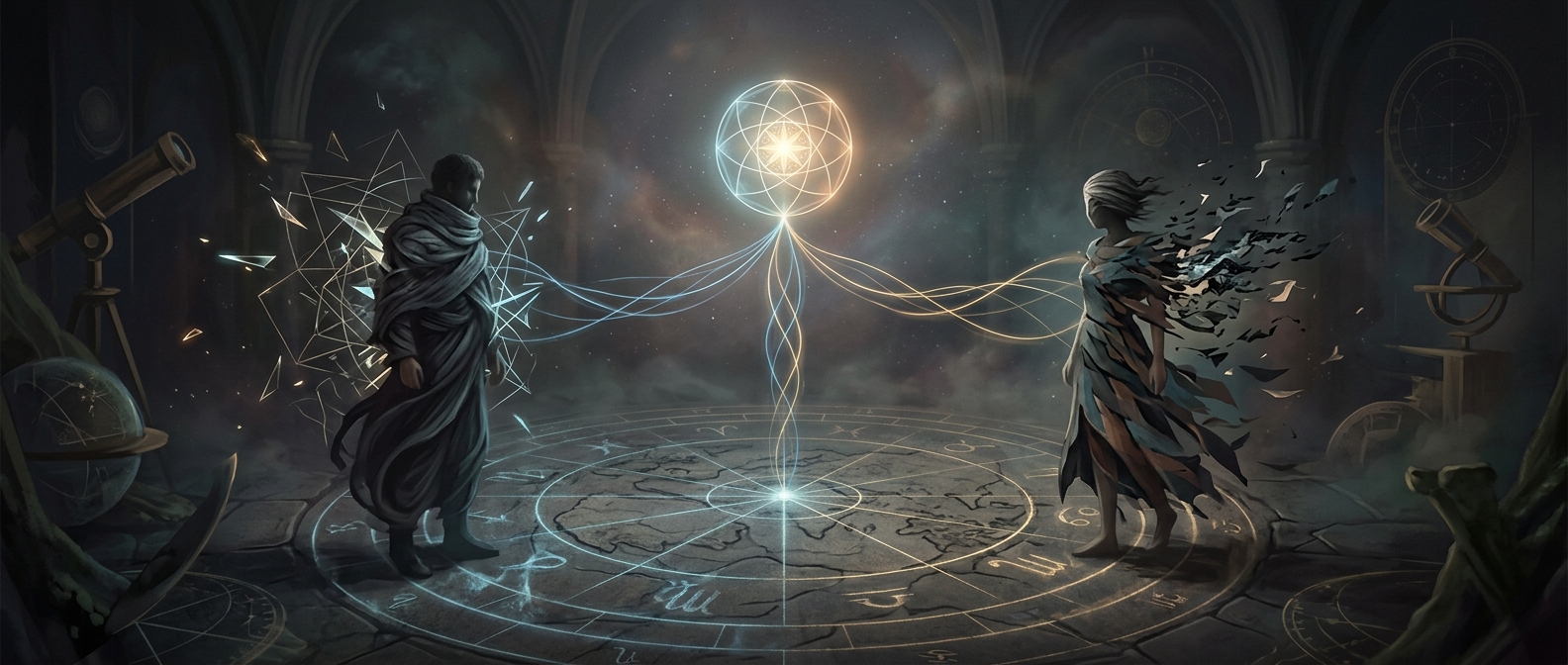
The overlay can make a reading feel personal because it combines details from both charts rather than describing either person alone. Astrologers may use it to frame questions about attraction, communication, tension, or differing needs. A challenging aspect might be interpreted as friction to navigate, while a harmonious one might be read as ease—but neither tells a couple what they will actually do when disagreements arise.
That distinction matters especially when a chart is presented as a prediction. Synastry does not scientifically establish that a relationship will succeed or fail. The charts provide an astrological interpretation, not evidence that a couple is doomed. Their practical effect may be to give people a story or set of prompts for thinking about a relationship; the choices, circumstances, and behavior of the people involved remain outside the chart.