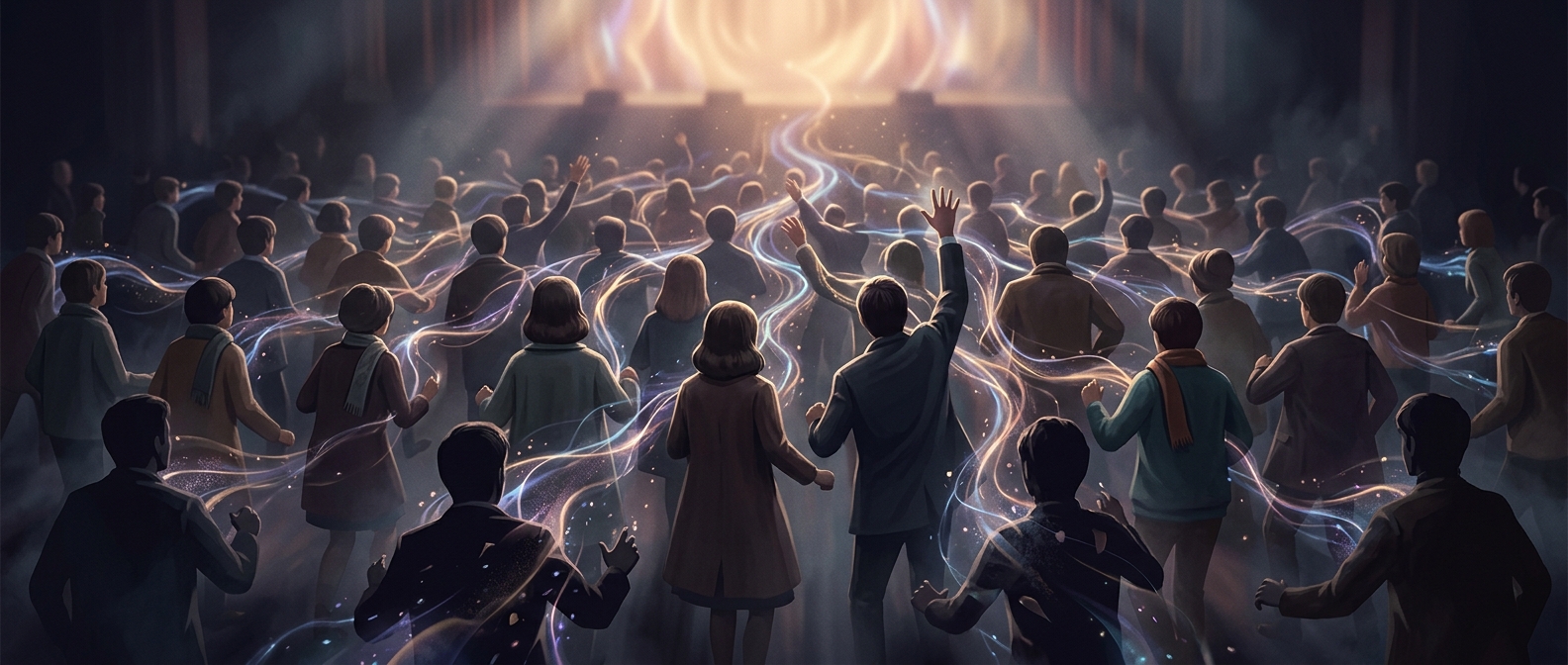
How excitement became a cue everyone could read
In a packed audience, people do not experience a performance in isolation. They see faces, hear voices and notice when those nearby stand, cheer or strain to get a better view. Those reactions act as social information: they signal that something exciting is happening and that expressing excitement is acceptable.
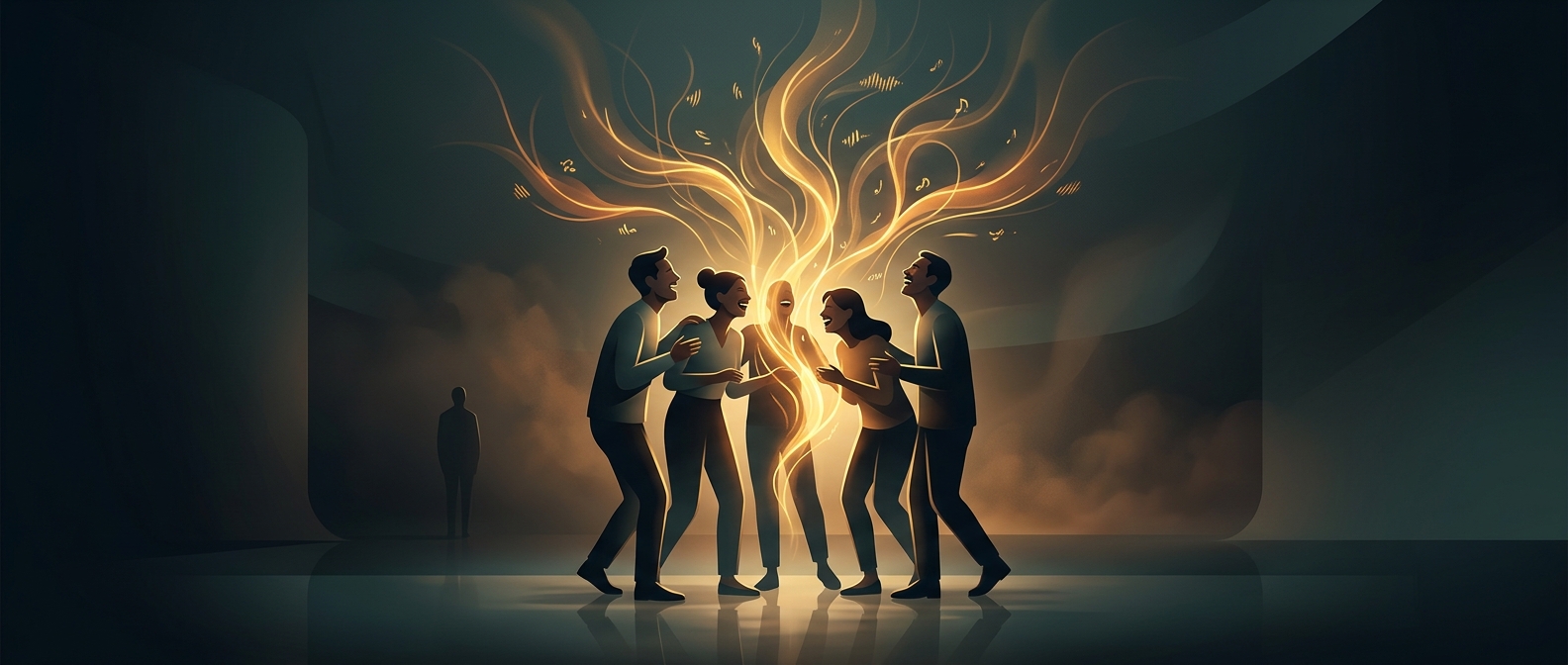
Psychologists call the spread of emotion through such cues emotional contagion. It does not require fans to consciously copy one another. A person may catch the energy in a neighbor’s shout, become more alert, and respond with a cheer of their own. That response becomes a fresh cue for the people around them.
A feedback loop, not a single wave
The process can reinforce itself. One pocket of enthusiastic fans makes the room feel more charged; that atmosphere draws louder reactions from others; the growing noise then makes the excitement seem even more widespread. Even someone who arrived feeling uncertain may join in because the crowd’s behavior changes what the moment feels like—and what seems normal to do.
For Beatlemania, the audience’s reaction therefore became part of the event. Screaming could make it harder to hear the music, but it also made excitement visible and audible across the venue. The Beatles drew the crowd’s attention, and the crowd’s response kept directing attention back to the spectacle unfolding around them. A fan did not have to start the frenzy to help sustain it: each reaction could become the next person’s cue.